From our field notes
When to visit Namibia
Published 25 March 2026 · updated 30 July 2026 · 11 min read
By Clément Lacaille, publisher · our method
When is the best time to visit Namibia? There is no bad season — only different trips. The dry season (May-October) maximises wildlife, the green season (November-April) offers landscapes, light and soft prices. Here is the best period for your plan, the month-by-month detail, then the region-by-region calendar.
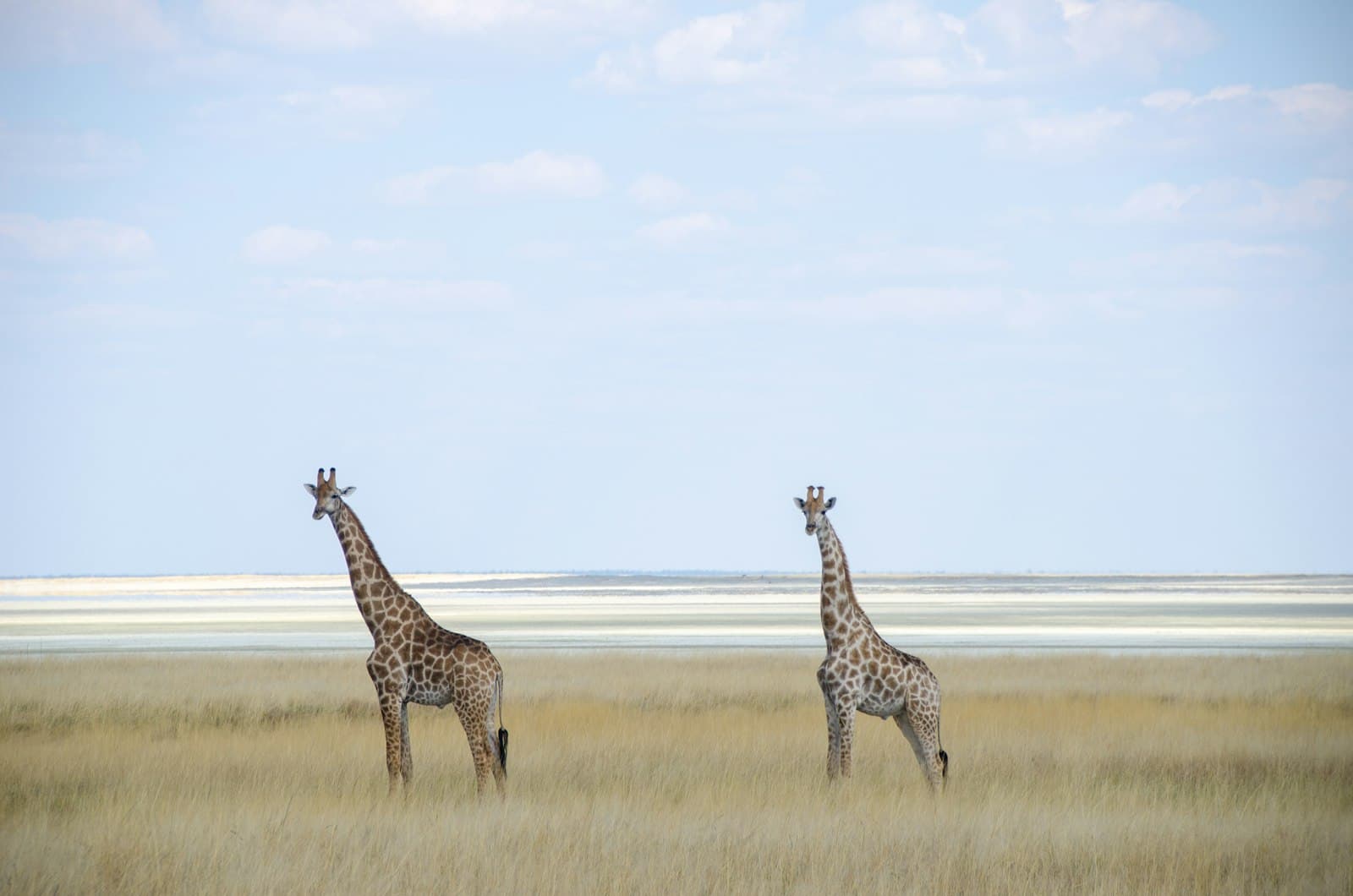
Best time to visit Namibia: the short answer
If you only remember one thing: for a first trip focused on wildlife, go between May and October, with a viewing peak in September-October. For landscapes, storm light and prices 20 to 40% lower, aim for the green season from January to April. And if you want the best balance of climate, wildlife, budget and crowds, May-June is our favourite window of the whole year.
Namibia's climate is unusually readable: a hot austral summer (November-April) with thunderstorms mostly from January to March, and a dry, sunny austral winter (May-October) with cold nights. From this comes a golden rule: the less water there is in the wild, the more wildlife concentrates at the remaining water points.
This isn't just a guidebook impression. A study by Kasiringua, Kopij and Procheș published in 2017 in the Russian Journal of Theriology, conducted on the ungulates of Namibia's Waterberg park, shows that animals gather around water holes during the dry season — for water and for the forage that lingers nearby — then disperse as soon as rain multiplies temporary sources (study: doi.org/10.15298/rusjtheriol.16.2.02). This is exactly the mechanism that makes the dry season the prime safari season.
Dry season (May-October): the safe bet
Its strengths: maximum wildlife viewing, permanent blue skies, tracks in good condition, few or no mosquitoes in the centre and south, and pleasant daytime temperatures (20-28 °C). It's the season of photographers and first trips.
Its downsides, less often mentioned: nights are genuinely cold from June to August (frost possible inland — expect 0 to 5 °C in a roof tent, a warm sleeping bag is essential), dust is everywhere late in the season, and July-August draws the European crowd: NWR camps full months ahead, rental prices at their peak.
Within the dry season, not everything is equal: May-June is our gem (still-green landscapes, already-good wildlife, mid-range prices, few people), while September-October is the absolute wildlife peak (but rising heat, October can top 35 °C in the north).
Green season (November-April): the gamble that makes sense
From January to March, afternoon storms transform the country: the Kalahari turns green, ephemeral waterfalls flow, the Etosha pan can flood and draw thousands of flamingos. Births (springbok, wildebeest, zebra) attract predators, the storm light is magnificent and prices drop by 20 to 40%.
The trade-offs are real: strong heat (often 35 °C and above, gruelling at Sossusvlei from 10 a.m.), wildlife dispersed and harder to spot in tall grass, secondary tracks sometimes cut after a heavy storm, and malaria active in the north (Etosha included) — preventive treatment to discuss with your doctor.
Our verdict: the green season suits a second trip, landscape photographers and birdwatchers perfectly. For a first wildlife-focused safari, stay between May and October.
Month by month: Namibia throughout the year
The table at the top gives the climate / wildlife / crowds trade-off for each month; the paragraphs that follow detail the pivotal months, where the choice comes down to the finer points.
- January-February: heart of the rains, heat, green landscapes, births — for connoisseurs and photographers.
- March: fading storms, magnificent country, still hot; tracks dry out gradually.
- April: superb in-between — green, mild, quiet; wildlife starts to regroup.
- May: our favourite — light, mildness, reasonable prices, wildlife already very visible.
- June: dry, cold at night (pack the sleeping bag), excellent everywhere, still moderate crowds.
- July-August: peak season — superb wildlife, freezing nights, book 6 months ahead.
- September: the best wildlife month at Etosha; the water holes run at full throttle.
- October: maximum wildlife, serious heat (35 °C+ in the north) — for the waterhole-motivated.
- November: first rains possible, prices falling, fine transition month, hot.
- December: hot, stormy, local holidays on the coast (Swakopmund full) — book if spending the festive season there.
| Month | Weather | Wildlife at Etosha | Crowds | Prices |
|---|---|---|---|---|
| January | Hot, frequent storms | Scattered, calving | Low | Cheap (−20 to −40%) |
| February | Hot, peak rains | Scattered, birds +++ | Low | Cheap |
| March | Storms fading, green | Regrouping slowly | Low | Cheap |
| April | Mild, still green | Good, rising | Low to moderate | Moderate |
| May | Dry, mild, bright | Very good at waterholes | Moderate | Good value |
| June | Dry, cold nights | Excellent | Moderate, rising | Rising |
| July | Dry, freezing nights | Excellent | High | Peak, book early |
| August | Dry, cold nights | Excellent | Peak crowds | Peak |
| September | Dry, warming up | Maximum at waterholes | High | High |
| October | Hot (35°C+ north) | Maximum | High then falling | High then falling |
| November | Hot, first rains | Good, dispersing | Low | Falling |
| December | Hot, stormy | Dispersing | Local coast holidays | Cheap inland |
The pivotal months in detail
April is the most underrated in-between: the country is still green after the rains, temperatures are mild, crowds almost nil, and wildlife is already starting to regroup around permanent water points. An excellent choice for anyone who can travel outside school holidays and accepts viewing a notch below September.
May and June are our favourite window: still-photogenic landscapes, already very visible wildlife, reasonable rental rates and camps not yet stormed. One watchword: from June on, pack genuinely warm clothing, as nights regularly drop below 5 °C inland.
September and October are the wildlife summit: after five months without rain, the water holes become the country's only open bars, and the hides turn spectacular, especially at Etosha. The price to pay is October's heat (35 °C and above in the north) and crowds that stay strong in September.
November is the tipping-point month: the first rains can fall from one day to the next, prices start to drop and the country gradually regains its colours. It's a gamble — superb if the rains are late, harder for wildlife if they come early.
Each region has its own calendar
Namibia doesn't have one climate but four, and Etosha's "best time" is neither the coast's nor the Fish River Canyon's. If your itinerary favours one region, set your dates by it rather than by the country average.
The table below sums up each major zone's ideal window; our companion article "When to visit, region by region" details each case, calendar traps included.
| Region | Best period | Why |
|---|---|---|
| Etosha | August to October | Wildlife concentrated at water holes, maximum viewing |
| Sossusvlei / Namib | April to September | Good year-round, but scorching in summer — mornings only |
| Coast (Swakopmund, Walvis Bay) | December to March | The anti-summer: cool fog while the interior bakes |
| Damaraland / Kaokoland | April to June | Still green, tracks passable, desert elephants |
| Fish River Canyon | May to September | The hike only opens in winter (deadly summer heat) |
| Zambezi Strip (Caprivi) | June to October | After the floods, dense wildlife along the rivers |
Three concrete cases to decide
You're travelling with children and can only go in July-August: go for it — it's high season for good reasons — but book camps and 4x4 six months ahead and pack genuinely warm clothing for the nights.
You're flexible and want the best experience/price ratio: aim for May-June or September outside school holidays. Cheaper rental, accessible camps, wildlife present.
You dream of Etosha in full wildlife swing and can handle the heat: late September-October, without question. The "When to go" chapter of our guide fine-tunes these trade-offs region by region — the coast, in particular, plays its own tune with its permanent fog.
Free excerpt
The 7 mistakes to avoid on a first Namibia road trip
A real excerpt from our Namibia expertise: 4x4 insurance, gravel speed, NWR bookings, season, fuel, Etosha… The 7 costly mistakes, and the right reflex for each. Instant access, with the current promo code.
No time to do it yourself?
A professional can take care of it: tailor-made trip, equipped 4x4 rental or a local guide. Describe your plans and, with your consent, we pass them on to partner professionals.
1. What you need
Before you go
Readers' questions
When is the best time to visit Namibia?
For a first trip focused on wildlife, the best time is the dry season, from May to October, with a viewing peak in September-October. For the best balance of climate, wildlife, price and crowds, aim for May-June. For landscapes and softer prices, the green season from January to April is a fine gamble.
When to go to Namibia to see animals?
From August to October, without hesitation: after several months without rain, the water holes become wildlife's only meeting points, making viewing almost continuous, especially at Etosha. September offers the best balance between animal concentration and still-bearable temperatures.
What is the best period for Etosha specifically?
August to October: the further the dry season advances, the more the water holes become the park's only open bars, and the more productive the hides. September offers the best balance between animal concentration and bearable temperatures. In the rainy season the park stays beautiful, but viewing takes more patience and luck.
Can Sossusvlei be visited year-round?
Yes: the dunes ignore the seasons. The variable is heat — in summer (December-February), the pleasant window shrinks to the first 3-4 hours of the day, which means sleeping at Sesriem and entering at opening. In winter, mornings are cold but bright and you can stay on site until late morning.
Is there a season to avoid absolutely?
No, but January-February is the most demanding period for a first trip: heat, storms, dispersed wildlife, malaria active in the north. If you have no choice of dates, the trip stays superb — you simply need to adapt the itinerary (more south, days built around the mornings) and your wildlife expectations.
Does the rainy season ruin a trip to Namibia?
No, as long as you adjust your expectations. The rainy season (November to April, peaking in January-February) mostly means brief, often spectacular late-afternoon storms, not full days of rain. The country turns green, ephemeral waterfalls flow and prices drop by 20 to 40%. The real caveats: strong heat, wildlife more scattered and harder to spot in tall grass, a few secondary tracks cut after a big storm, and active malaria in the north. For a first wildlife-focused trip, the dry season is still more comfortable.
Should you avoid July-August in Namibia?
Not for wildlife: July-August offers superb game viewing, with the drought concentrating animals at waterholes. The real downsides are the crowds (NWR camps full six months ahead, rental prices at their peak) and freezing nights inland (0 to 5°C, frost possible). Worth noting too: a 2025 study published in Global Ecology and Conservation, conducted in Etosha National Park, shows that tourist traffic alters the seasonal movements and fine-scale habitat selection of lions and spotted hyenas. If you can shift by a month, May-June or September offer comparable wildlife with fewer people.
When is the best time for birdwatching in Namibia?
The green season, from November to April: the rains trigger the arrival of migrants, hornbills and raptors are very active, and the Etosha pan can fill with water and draw thousands of flamingos. Walvis Bay and the coast hold flamingos and waders for much of the year. To combine birds and big game, April is a good compromise: still some migrants, but wildlife already starting to gather at waterholes.