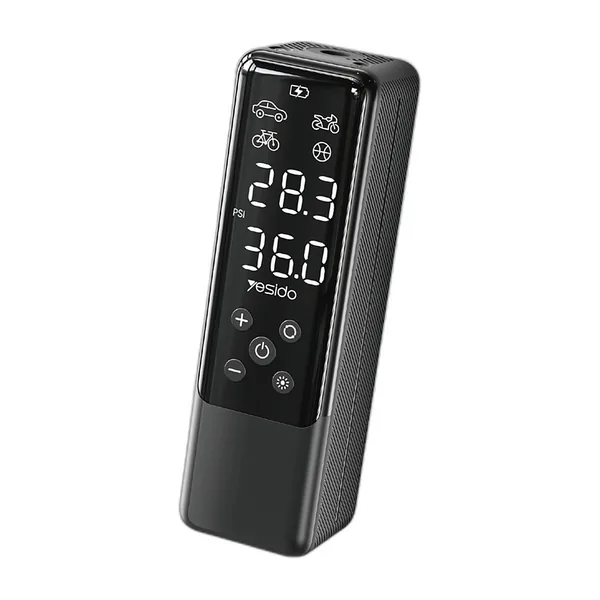
Compact 12 V tyre inflator with display and auto stop
Mini inflator for a 12 V socket with digital display, adjustable target pressure and automatic stop, built-in light: reinflate after the track without finding a station.
€82.90
Our flagship edition · Namibia
“Namibia on your own” is the complete ebook that plans your self-drive from A to Z: rent the 4x4 without getting trapped, drive gravel with confidence, choose between 10, 15 or 21 days, work Etosha and Sossusvlei like a regular, and set a budget line by line.
Available in English and French — both editions in every download.
Secure Stripe paymentInstant download14-day money-back guarantee
10 chapters · 11,000+ words · instant download · 14-day guarantee
The guide's terrain — the classic loop, ~2,850 km
Never driven on the left, never slept in a rooftop tent? The guide starts from zero and turns every unknown into a simple procedure: the 4x4 walk-around, your first gravel road, your first waterhole.
A hidden €3,000 excess, tyres excluded from the insurance, arriving at Sossusvlei at 11am in the furnace, Etosha camps fully booked: the classic traps are well known — and all avoidable.
Contradictory forums, dated blogs, rental brochures: we did the sorting and the checking. You get the ordered, actionable digest.
Table of contents
10 chapters that follow the real order of your preparation: decide, book, drive, live the trip.
What independence really changes, who this guide is for, and the three truths to accept before you go.
Why it's Africa's easiest country for a first self-drive safari · Self-drive vs organised tour: the concrete difference · How to use the guide depending on your profile
Dry season or green season, the coast's own microclimate, and the month-by-month calendar to choose your dates.
May–October vs November–April, without oversimplifying · The complete month-by-month rundown · Our recommendation by priority (wildlife, landscapes, budget) · When to book what
The chapter that pays for the guide: excesses, tyre/glass exclusions, the deposit, the walk-around, the clauses to check.
Which vehicle and which non-negotiable equipment · Understanding excess, super cover and exclusions · The deposit and your credit card · The walk-around in 5 steps · The clauses that bite (mileage, night, borders)
The trip's core skill: the 8 golden rules of gravel, a puncture fixed in 20 minutes, animals, fuel.
Left-hand driving without drama · The 8 golden rules of gravel (speed, corrugations, pressures) · Changing a wheel, full procedure · Why you NEVER drive at night · Breakdown and accident: the right reflexes
Three proven circuits with distances, driving times, daily plans and honest variants.
10 days: the essentials (~2,150 km) · 15 days: the great classic (~2,850 km) · 21 days: the grand tour with the south (~4,050 km) · The principles that hold an itinerary together
Why Namibian camping isn't camping, daily life with a rooftop tent, and our winning 70/30 mix.
NWR, private and community campsites: which to choose where · Rooftop tent daily life (cold, cooking, safety) · The 70/30 formula that saves ~€1,500 with zero sacrifice · When and how to book
The complete method: the waterhole strategy, the floodlit waterholes at night, the west-to-east crossing, photography.
How the park works (permits, hours, rules) · The waterhole strategy in 4 steps · Okaukuejo, Halali, Namutoni: the night shows · The ideal internal route over 3 nights
The trip's signature day, decided by logistics: where to sleep, when to enter, and the final 5 km of sand.
The accommodation hierarchy (the inside-the-gate advantage) · The perfect day, hour by hour · Driving the 5 km of sand (or taking the shuttle) · Dune 45, Big Daddy, Sesriem Canyon
Every line costed in NAD and euros, three complete profiles for 2 people over 15 days, and the savings that don't hurt.
Flights, 4x4, fuel, accommodation, parks: the 2026 ranges · The 3-profile table: €3,380 / €4,640 / €7,190 excluding flights · Where to save without impoverishing the trip — and where never to · Money day to day (NAD, cards, cash, tips)
The chapter to print: malaria, formalities, safety, and the complete gear + departure checklists.
Formalities (passport, international permit, minors) · Malaria: where, when, how to decide · The gear checklist by category · The final ten days checklist
Sample pages
Chapter 3 — Renting your 4x4
Where everything is decided: the insurance exclusions
« And here is the heart of the matter: on most contracts, even "fully comprehensive" cover still excludes the tyres, the windscreen, the windows, the headlights, the underbody and the tent cover. In other words, exactly what gravel damages. On Namibian roads a puncture is not an accident, it's a statistic: count on one per trip on average. Our doctrine, learned the hard way: take the maximum cover, plus the tyre and windscreen extension if it isn't included. Compare rental companies on the final all-inclusive rate, never on the headline price. »
Chapter 7 — Etosha like a pro
The waterhole strategy
« In the dry season, one rule governs everything: the wildlife comes to the water, not to moving cars. A productive safari is therefore a motionless safari. Choose 2-3 waterholes per half-day, not ten. Park at a respectful distance, engine off, and stay 30 to 60 minutes. The first ten minutes look empty; that's normal: your arrival froze the scene. It comes back to life once you blend into the scenery. Read the signs: zebras all staring the same way, springboks pronking on the spot — a waterhole deserted by prey in the heat of the day often tells you a lion is in the thickets. »
Chapter 4 — Driving in Namibia
The physics of gravel
« The C and D roads — most of your trip — drive very well, provided you respect their physics: grip is that of a wet road, sometimes an icy one. 80 km/h maximum, whatever the sign says. That is THE rule. At 80, everything is recoverable; at 110, nothing is. No sudden inputs: no hard braking, no jerk of the wheel. In a bend, brake before, never during — the rear stepping out mid-corner is THE classic tourist crash. And lower your pressures: the tyre wraps around the stones instead of fighting them — comfort up, punctures halved. »
The order form
“Namibia on your own”, the complete ebook.
44 €
The guide + the Budget & Prep Kit.
59 €
To cost and organise your trip.
29 €
Secure payment by Stripe · Instant download · 14-day money-back guarantee, no questions asked.
How it works
The shop
A few items we take on our own self-drive trips, shipped from the supplier's warehouse within 8 to 15 working days — free delivery from €49.
Mini inflator for a 12 V socket with digital display, adjustable target pressure and automatic stop, built-in light: reinflate after the track without finding a station.
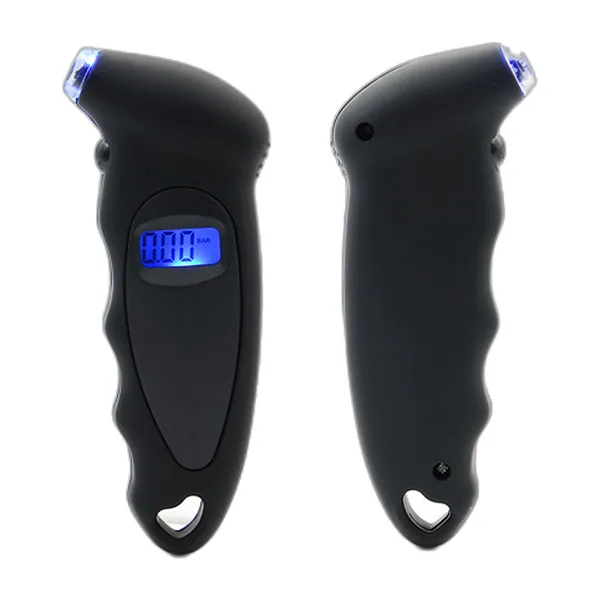
Pocket gauge with backlit display, 0 to 10 bar, reads bar, PSI, kPa or kg/cm², 0.05 bar resolution, runs on button cells.

Headlamp with a wide COB light strip and central LED, built-in 1,500 mAh battery rechargeable over USB-C, switched on with a wave of the hand.
Before you go
Right after payment you receive a download link: the full guide in HTML, readable on any device and printable to PDF in one click (Cmd/Ctrl+P), plus the chapters in Markdown to read wherever you like. No proprietary app, no subscription.
Yes. The English edition — all 10 chapters, fully translated, with its own printable HTML version — ships in the same download as the French original. Buy once, get both editions.
Yes: the price ranges (rental, fuel, parks, accommodation), park rules and advice reflect the 2026 situation. The fundamentals — gravel driving, the Etosha strategy, Sossusvlei logistics — change very little from year to year.
A simple guarantee: 14 days, money back, no questions asked. One email to our support is enough — full refund within 48 hours. We'd far rather refund you than leave a disappointed reader.
Our free pages (stops, itineraries, articles) give you the panorama. The guide gives you the complete, ordered method: the 4x4 insurance comparison line by line, the three day-by-day itineraries with the hours that matter, the detailed waterhole strategy, the three-profile budget and every checklist. It's the digest we wish we'd had before our first trip.