Namibia · Route no. 15
Namibia in 15 days: the great classic
Fifteen days is THE ideal length for a first Namibia trip: every major landscape of the centre and north, a human rhythm, and three full nights in Etosha.
This is the itinerary we recommend with our eyes closed: a ~2,850 km loop through the Kalahari, two nights at Sesriem for the dunes, two nights on the coast, Spitzkoppe, Damaraland and the Twyfelfontein engravings, three nights in Etosha from west to east, then the final breather of the Waterberg plateau before Windhoek.
Compared with the 10-day version, the five extra days change the nature of the trip: Damaraland adds the wild dimension (desert elephants, red immensities), the Waterberg ends the journey on foot rather than at a run, and every major stop gains the second night that makes the difference between seeing and living. The guide details each day, the variants (clockwise, the Cape Cross option) and accommodation by category and budget.
The route, day by day
Arrival in Windhoek → Kalahari
270 km · 3 h
Collect the 4x4, briefing, full grocery run then the tarred B1 south. First night among the red dunes, with the lodge's sundowner drive to ease in effortlessly.
Kalahari → Sesriem
320 km · 4 h 30
Gravel apprenticeship on the C19 via Maltahöhe. Arrive mid-afternoon: park permit, Sesriem Canyon, sunset on Elim Dune. House rule: tomorrow you rise before the sun.
Sossusvlei and Deadvlei
130 km · 2 h (inside the park)
Gates at dawn, Dune 45 or Big Daddy in the raking light, Deadvlei before the heat, siesta at camp in the afternoon. The trip's symbol day — never overload it.
Sesriem → Swakopmund
350 km · 5 h
Across the Namib: Solitaire and its apple pie, the Gaub and Kuiseb passes, the Tropic of Capricorn, then the Atlantic. A real room, seafood, 18 °C air: the perfect contrast.
A day in Swakopmund
Sandwich Harbour by guided 4x4 or a Walvis Bay cruise in the morning; the German town, laundry and resupply in the afternoon. The logistics pause that relaunches the trip.
Swakopmund → Spitzkoppe
150 km · 2 h
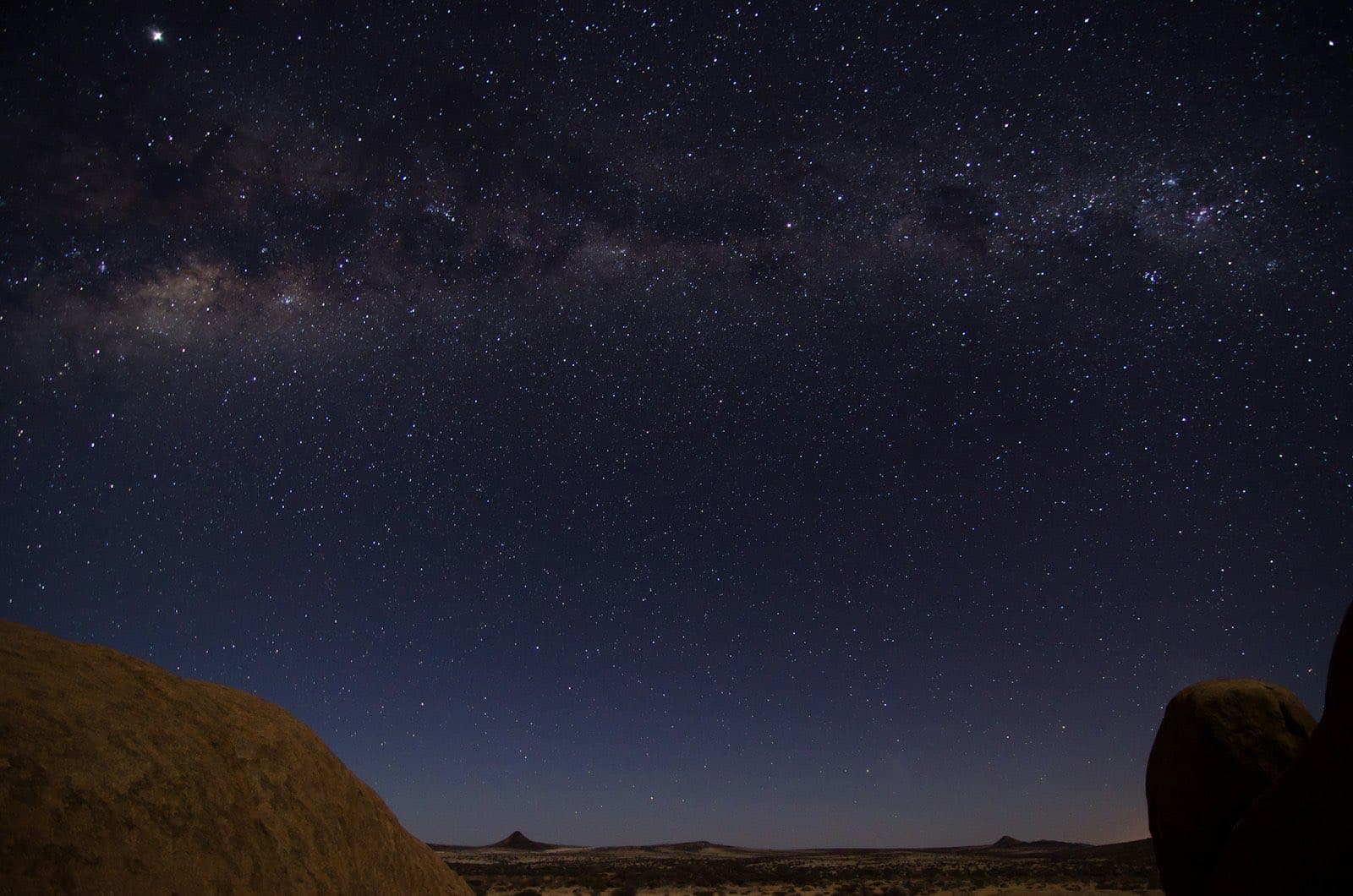
Two short hours of road for one of the finest nights of the circuit: camping (or tented camp) beneath the granite domes, the rock arch at sundown, the Milky Way as a nightlight.
Spitzkoppe → Damaraland (Twyfelfontein)
200 km · 3 h
North via Uis under the gaze of the Brandberg. Settle in, then the UNESCO rock engravings of Twyfelfontein in the late afternoon, when the light gilds the valley.
Damaraland: desert elephants
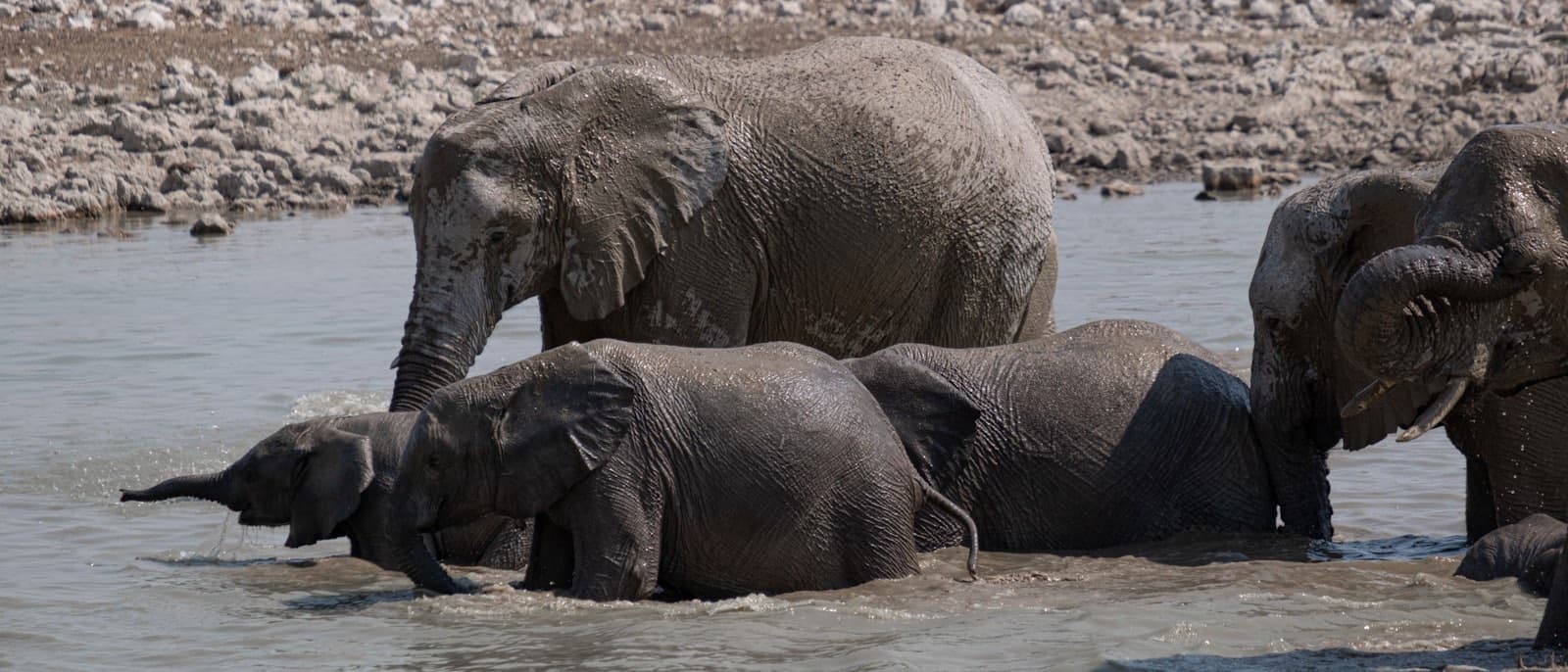
A guided morning searching for desert-adapted elephants in the Huab riverbed, then the basalt Organ Pipes and Burnt Mountain. A slow afternoon in one of the country's greatest landscapes.
Damaraland → Etosha (Okaukuejo)
330 km · 4 h 30
Via Khorixas and Outjo, entering Anderson Gate in the early afternoon, first waterholes before setting up. In the evening, the vigil at Okaukuejo's floodlit waterhole — black rhinos near-guaranteed in the dry season.
Etosha: Okaukuejo to Halali
80 km · day in the park
A day of waterhole sits working eastward (Nebrownii, Rietfontein, the pan viewpoint). Night at Halali and its amphitheatre waterhole, famed for leopards at dusk.
Etosha: eastern sector → Namutoni
70 km · day in the park
Goas and Klein Namutoni waterholes, giraffes among the mopane, the white fort of Namutoni for the last night. Three camps in three nights: the full crossing, no repeats.
Etosha → Waterberg plateau
320 km · 4 h
Out via Von Lindequist Gate, tar south via Otjiwarongo. Arrive for the base trails and the climb to the plateau rim at sunset — after days in the car, walking feels wonderful.
Waterberg: plateau and savanna
A guided morning drive on the plateau (white rhinos, buffalo, sable), free trails in the afternoon, a last evening around the braai. The breather that closes the journey.
Waterberg → Windhoek
290 km · 3 h 30
A gentle return via Okahandja (craft market for souvenirs). Afternoon in town: Christuskirche, Independence Museum, fuel and a quick clean of the 4x4, a game-meat dinner at a local institution.
Drop-off and flight home
45 km · 45 min
A stress-free vehicle inspection (allow 1 h), transfer to Hosea Kutako airport (45 min) and take-off. You'll leave already knowing your next destination: the deep south or the Caprivi Strip.
What budget for this 15-day road trip?
The costing below matches this exact circuit, for two people, across three travel styles. The 4x4 line includes zero-excess insurance — the one extra we consider non-negotiable.
| Item | Camping | Mixed | Comfort |
|---|---|---|---|
| Return flights Europe–Windhoek × 2 | €1,700 | €1,700 | €1,900 |
| Equipped 4x4, 15 days (insurance included) | €1,500 | €1,700 | €2,200 |
| Fuel (~2,850 km, 12 l/100) | €380 | €380 | €380 |
| Accommodation, 14 nights | €520 | €1,250 | €2,800 |
| Park fees and permits | €160 | €160 | €160 |
| Food and drinks | €450 | €650 | €900 |
| Activities (Sandwich Harbour, guided outings) | €250 | €350 | €550 |
| SIM, tips, sundries | €120 | €150 | €200 |
| TOTAL with flights | €5,080 | €6,340 | €9,090 |
| Per person per day (excl. flights) | €113 | €155 | €240 |
2026 figures for two people, rounded. The line-by-line detail and five saving levers are in our budget field note; the Budget Kit recalculates everything for your dates and crew.
Our advice for this length
- Book in this order as soon as flights are ticketed: Etosha camps, Sesriem, then the rest — those are the two bottlenecks of high season (July–October).
- The anticlockwise direction puts the sun at your back at driving hours and saves the wildlife for the second half, once you're gravel-hardened.
- Alternate camping and solid walls: the mixed formula (camping + 3-4 lodge/guesthouse nights at key stops) is the best pleasure-per-euro ratio — full detail in the guide.
- Keep day 5 genuinely free: it's your relief valve. Delay, fatigue, a crush on a place or a puncture to manage — that day absorbs everything.
Free excerpt
The 7 mistakes to avoid on a first Namibia road trip
A real excerpt from our Namibia expertise: 4x4 insurance, gravel speed, NWR bookings, season, fuel, Etosha… The 7 costly mistakes, and the right reflex for each. Instant access, with the current promo code.
Our flagship guide — €44
The detailed 15-day version is in the guide
Here, the skeleton; in the guide, the flesh: departure times, accommodation by category and budget, variants, and the method chapters (4x4, gravel, Etosha, budget) that make each day succeed. Now available in English.
Instant download · 14-day money-back guarantee
No time to do it yourself?
A professional can take care of it: tailor-made trip, equipped 4x4 rental or a local guide. Describe your plans and, with your consent, we pass them on to partner professionals.
1. What you need
Before you go
Readers' questions
Why is 15 days the ideal length?
Because it allows the complete centre-north loop with no day over 5 hours of driving, two nights at the major stops and three in Etosha. Below that, you choose between Damaraland and the rhythm; above it, you add the deep south (see our 21-day itinerary) rather than stretching this one.
What budget for this circuit as a couple?
As a 2026 order of magnitude, excluding international flights: from €2,600-3,200 for two camping most nights to €5,500-7,500 in mid-range lodges, fuel, parks and food included. The guide's budget chapter and our Budget Kit break the calculation down line by line for your formula.
Should I add Cape Cross or the Fish River Canyon?
Cape Cross slots in as an option on day 6 (via Henties Bay, +150 km) if the seals tempt you. The Fish River Canyon is incompatible with 15 days without sacrificing Damaraland or Etosha: it belongs to the 21-day itinerary, which dives into the deep south.
Can this circuit be done camping all the way?
Yes, many do it in a rooftop tent from first day to last: every stop mentioned has a campsite. Just plan two or three solid-wall nights at strategic moments (Swakopmund for laundry and a long shower, the last night in Windhoek) — your back and your coolbox will thank you.