South-eastern Namibia · Stop 09
Kalahari Desert
Waves of red sand studded with blond grass, oryx in backlight, a first African sunset two and a half hours from the airport: the Kalahari is the perfect warm-up of a self-drive.
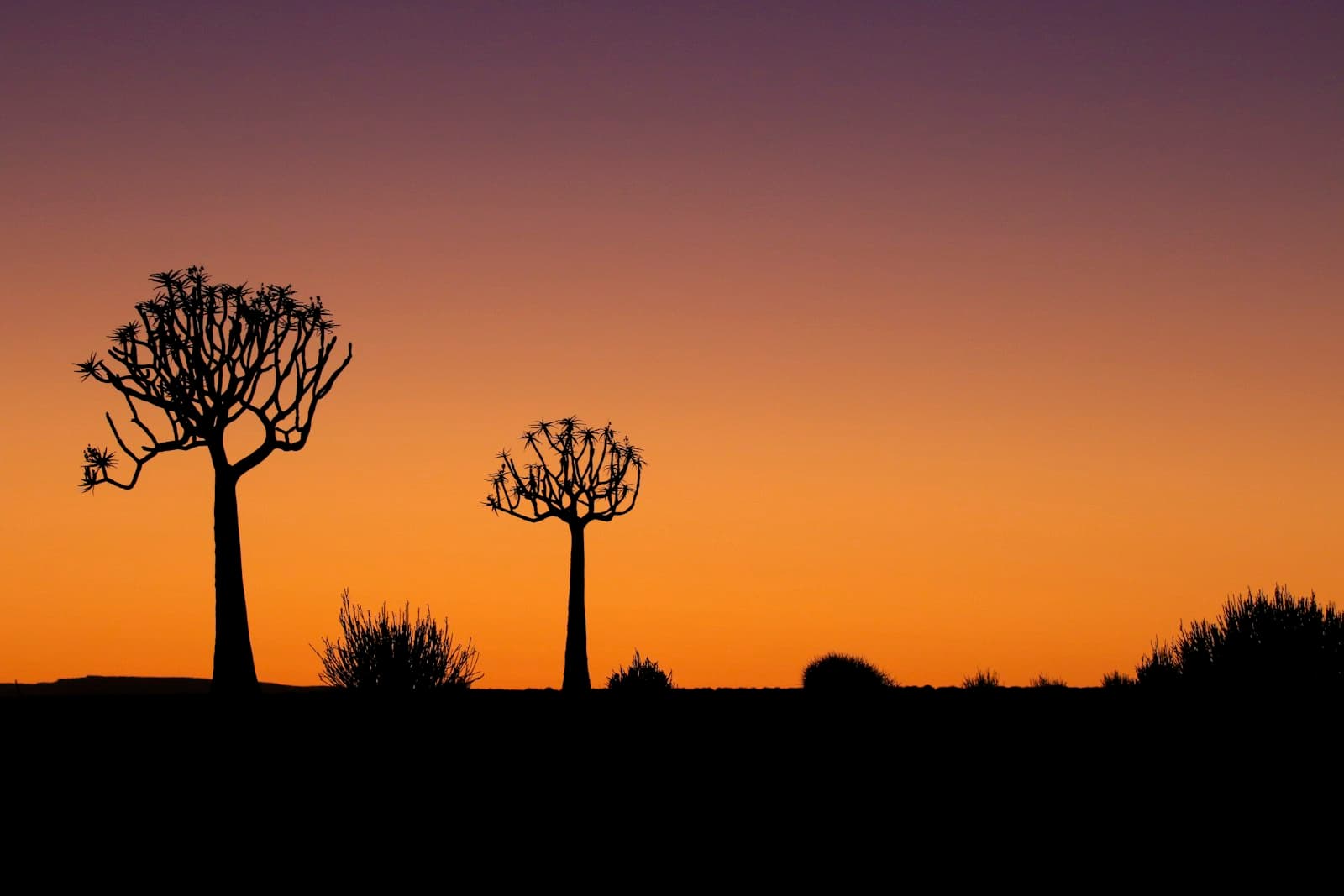
The Kalahari is not a desert of bare dunes like the Namib: it is an immense semi-arid expanse of red sand fixed by grasses, spilling into Botswana and South Africa. On the Namibian side, around Mariental and Stampriet, farms and private reserves have made it a land of intimate safaris.
Its role in an itinerary is crystal clear: first night. After landing, collecting the 4x4 and shopping in Windhoek, 2 h 30 to 3 h of mostly tarred road suffice to sleep among red dunes rather than in town — and to find your bearings (left-hand driving, first gravel) gently.
You don't come for the Big Five: the wildlife is that of the drylands — oryx, springboks, black wildebeest, ostriches, meerkats with luck — watched on the sundowner drives that almost every lodge offers.
What to see and do
1.Sunset safari in the dunes
The stop's great classic: an open-vehicle drive in your lodge's reserve, a stop on a red dune crest, a cold drink as the sun drops over the savanna. Touristy? Yes. Ever a failure? Never.
2.Morning walk and animal tracks
At first light the red sand tells the night's story: tracks of jackals, aardvarks, gerbils. Several lodges offer guided walks, sometimes around San culture — check the approach is respectful and local.
3.Sociable weaver nests
On poles and camelthorns, enormous communal nests housing hundreds of sociable weavers, sometimes squatted by pygmy falcons. The Kalahari's discreet emblem, to watch through binoculars without approaching.
4.Stampriet and the Auob valley
A small market-garden region irrigated by artesian springs, gateway to the Kgalagadi transfrontier park (for another trip: the Namibian entry at Mata Mata requires exiting via South Africa or long formalities). A pretty farm road.
Where to stay
By category — the guide covers how to choose and when to book.
Farm-lodges with private reserves
The dominant offering: converted farms, rooms or chalets facing the dunes (€90-200), dinner under the stars and safari drives included or as extras. Family welcome, perfect for a first night.
Bush campsites
Most lodges keep a few pitches with private ablutions and a braai, often set alone at a dune's foot (€15-25 per person). An ideal first rooftop-tent night: you set up before dark, no pressure.
Driving advice
- From Windhoek the B1 is tarred to Kalkrand or Mariental; the final lodge approaches run 10-40 km on rolling gravel or sand: a gentle first lesson.
- Leave Windhoek before 3 pm: arriving in the dark for your first stop is the worst possible start (animals on the road, hard to find your way).
- Fill up at Rehoboth, Kalkrand or Mariental — and do your full shop in Windhoek; the local minimarkets are limited.
- On the red sand of lodge approaches, keep momentum on the dune climbs and follow existing tracks.
Distances to neighbouring stops
| To | Distance | Driving time | Road |
|---|---|---|---|
| Windhoek | 270 km | 2 h 30 – 3 h | Tarred B1 via Rehoboth, final approaches on gravel |
| Sossusvlei (Sesriem) | 320 km | 4 h – 4 h 30 | C19/C14 via Maltahöhe, mostly gravel |
| Fish River Canyon | 400 km | 4 h 30 – 5 h | B1 via Keetmanshoop then C37, tar then gravel |
This stop in our itineraries
These stops link together in our three day-by-day circuits:
Our flagship guide — €44
Plan this trip without leaving anything to chance
The “Namibia on your own” guide covers this stop and everything else: renting the 4x4 without the insurance traps, 10/15/21-day itineraries day by day, the Etosha strategy, a full budget and checklists. Now available in English.
Instant download · 14-day money-back guarantee
No time to do it yourself?
A professional can take care of it: tailor-made trip, equipped 4x4 rental or a local guide. Describe your plans and, with your consent, we pass them on to partner professionals.
1. What you need
Before you go
Readers' questions about Kalahari Desert
Is the Kalahari worth a stop when time is short?
Yes, precisely because it costs almost nothing in detour: sitting on the southern route, it turns a lost arrival evening into a first true safari moment. If your circuit heads straight to Sesriem you can skip it — but the first night should still be somewhere other than Windhoek if possible.
Kalahari or Namib: what's the difference?
The Namib is a hyper-arid coastal desert of bare, shifting dunes; the Kalahari, wetter, is a savanna on red sand fixed by vegetation, home to real resident wildlife. The two complement each other perfectly in one circuit — grassy red on the first evening, mineral orange at Sossusvlei.
Will you see meerkats?
Possible but never guaranteed: colonies thrive in the region, active in the morning as the sand warms. Some private reserves know their burrows and steer the morning walks accordingly. Treat them as a bonus, not a promise.
Can you reach Kgalagadi park from Namibia?
Technically yes, through the Mata Mata post near Stampriet, but the transfrontier park imposes minimum-stay rules and formalities that reserve it for a dedicated trip. On a classic Namibian self-drive, the Kalahari is enjoyed in the private reserves on the Namibian side.