Namibia on your own
Giant dunes, self-drive safaris in Etosha, endless gravel: Africa's easiest country for a first independent trip — and our house speciality.
When to go
Dry season May to October: the best for wildlife (concentrated at the waterholes), limpid skies, cold nights June to August. Green season November to April: landscapes reborn, heat, storms, dispersed wildlife — and malaria active in the north.
What it costs
For two people and 15 days, excluding flights: from €3,400 (mostly camping) to €7,200 (lodges). Key items: the well-insured equipped 4x4 (€100-160/day) and accommodation. Cheap parks (150 NAD per foreign adult per day on MEFT's latest official schedule, 2021; increase announced for 2026, awaiting official publication), fuel predictable to the kilometre.
Driving & transport
Left-hand driving, tarred B roads, C and D in gravel — 80 km/h maximum, never drive at night (animals). A 4x4 is strongly recommended, two spare wheels, the half-tank rule. It is the ideal road trip school: simple, but demanding on discipline.
Namibia is our reference country, the one we wrote everything for: 13 detailed stop pages, three day-by-day itineraries, method articles and a complete guide of over 10,000 words. If you're discovering independent travel, start here.
Our guide for this country: See what's inside — €44 →
Legible roads, parks designed for self-driving, remarkable campsites, safety rare at continental scale: everything is aligned for learning to travel free — provided you respect the gravel and prepare the 4x4 rental seriously.
The destinations that matter
13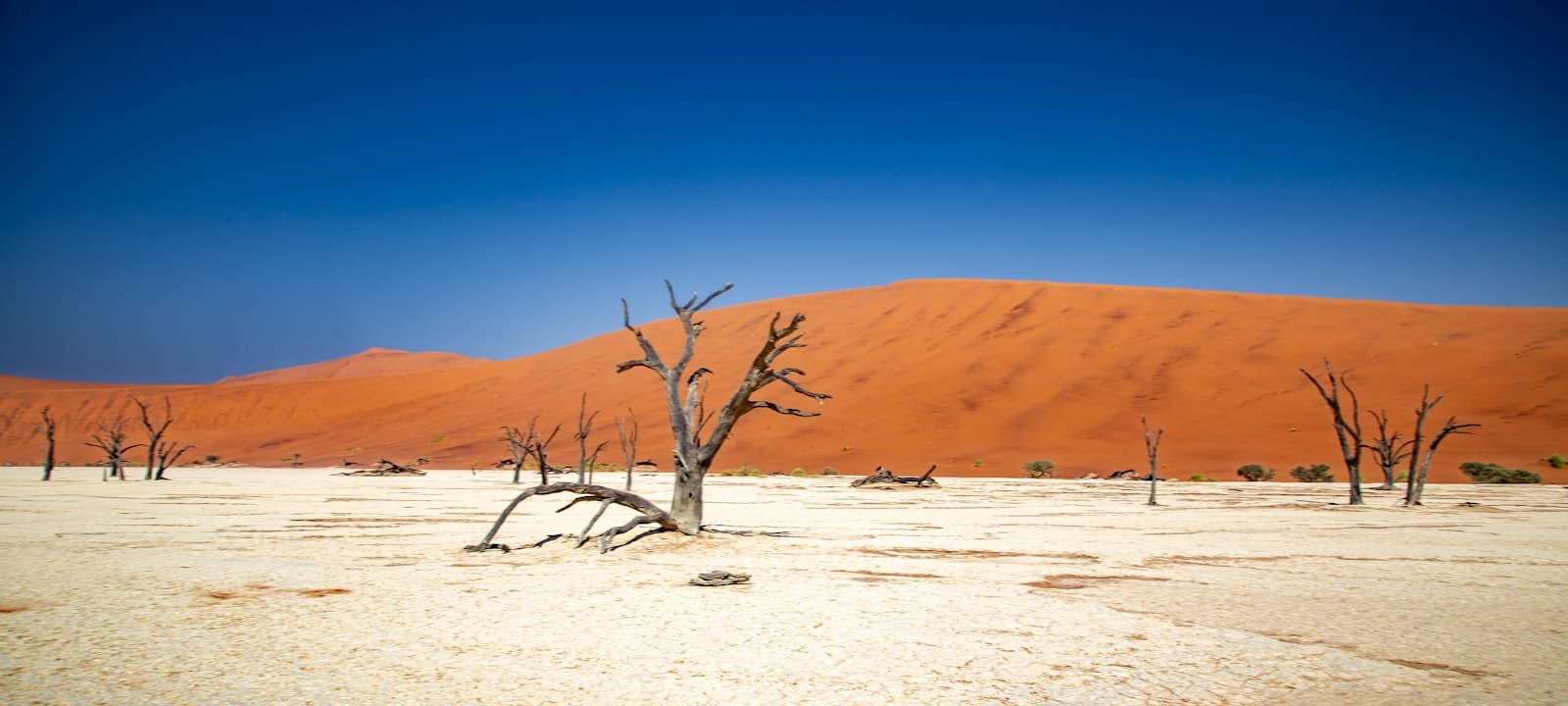 No. 012 nightsSossusvleiThe world's tallest star dunes, a white clay pan ringed with orange: Sossusvlei is the image of Namibia — and a stop that needs planning, because everything is decided at dawn.
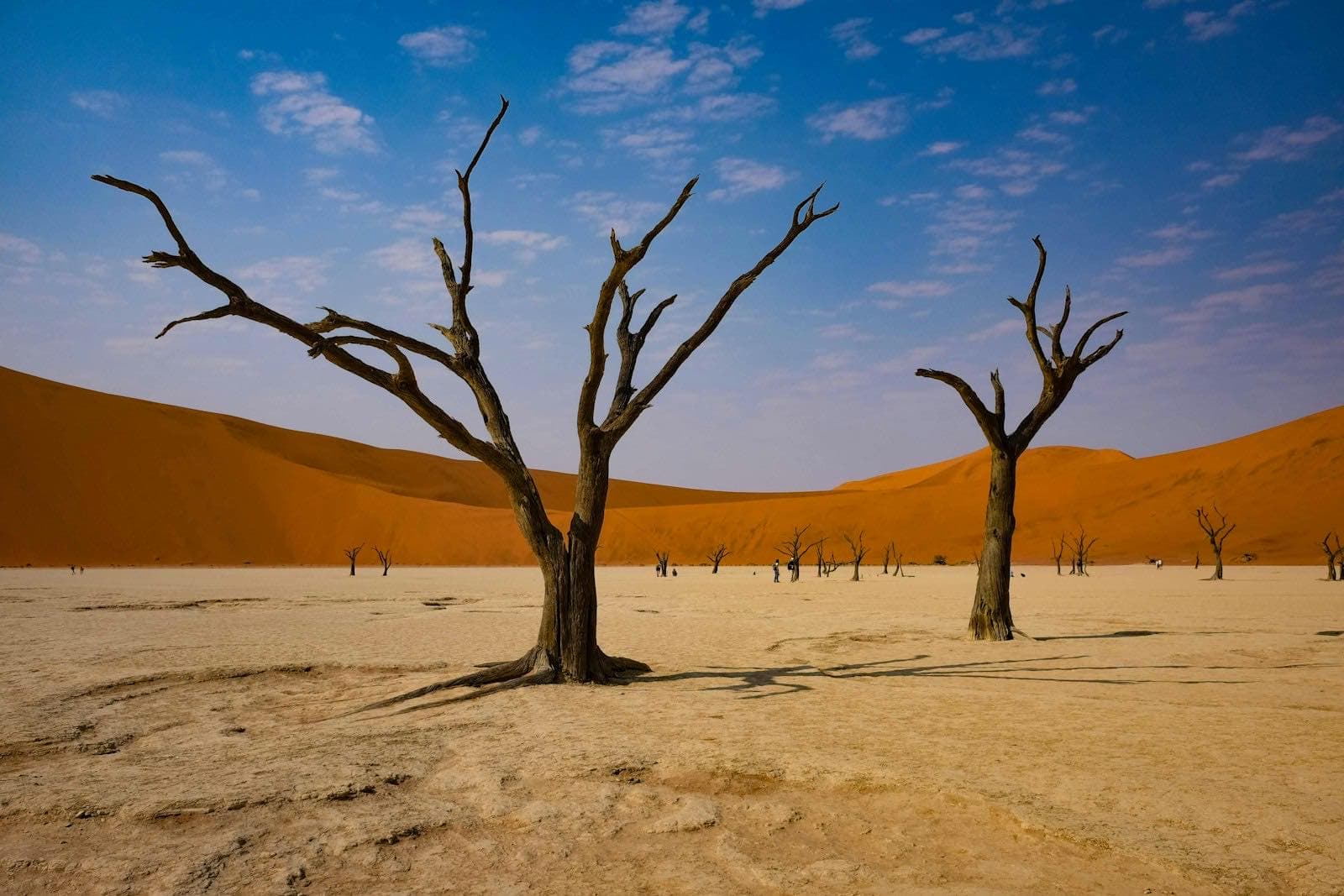 No. 02Half a day (combined with Sossusvlei)DeadvleiA floor of cracked white clay, acacias dead for centuries, a wall of orange dunes: Deadvlei is one of the most surreal landscapes on the planet — and it is earned on foot, early in the morning.No. 032 nightsSwakopmundBetween the icy Atlantic and the Namib dunes, a small seaside town of German architecture where you regain strength mid-trip: cafés, breweries, and the coast's most spectacular excursions.No. 041 to 2 nightsDamaraland & TwyfelfonteinRed mountains to the horizon, valleys where desert-adapted elephants survive, and southern Africa's greatest rock-engraving site: Damaraland is wild Namibia at its purest.
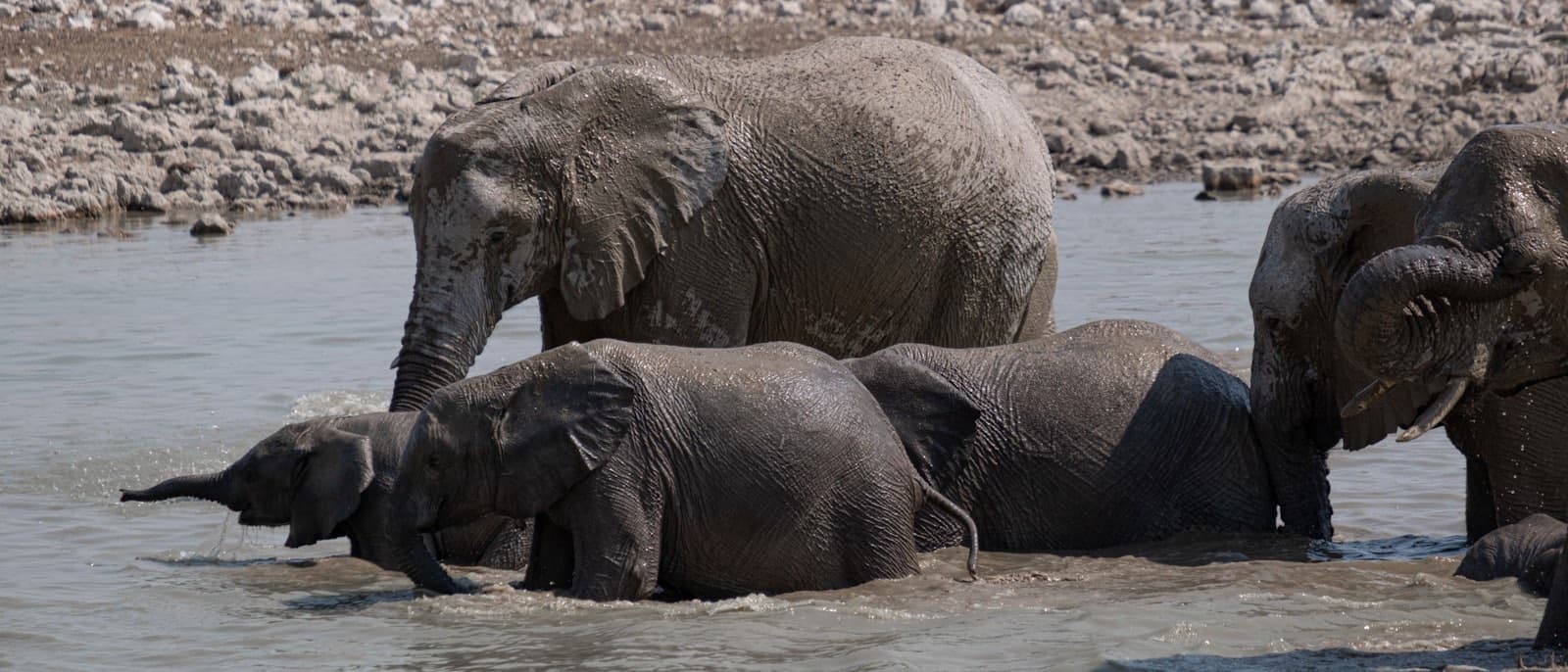 No. 052 to 3 nightsEtosha National ParkAn immense white salt pan, dozens of waterholes and one of Africa's highest densities of large mammals: Etosha is the continent's only great park truly designed for self-drive safari.
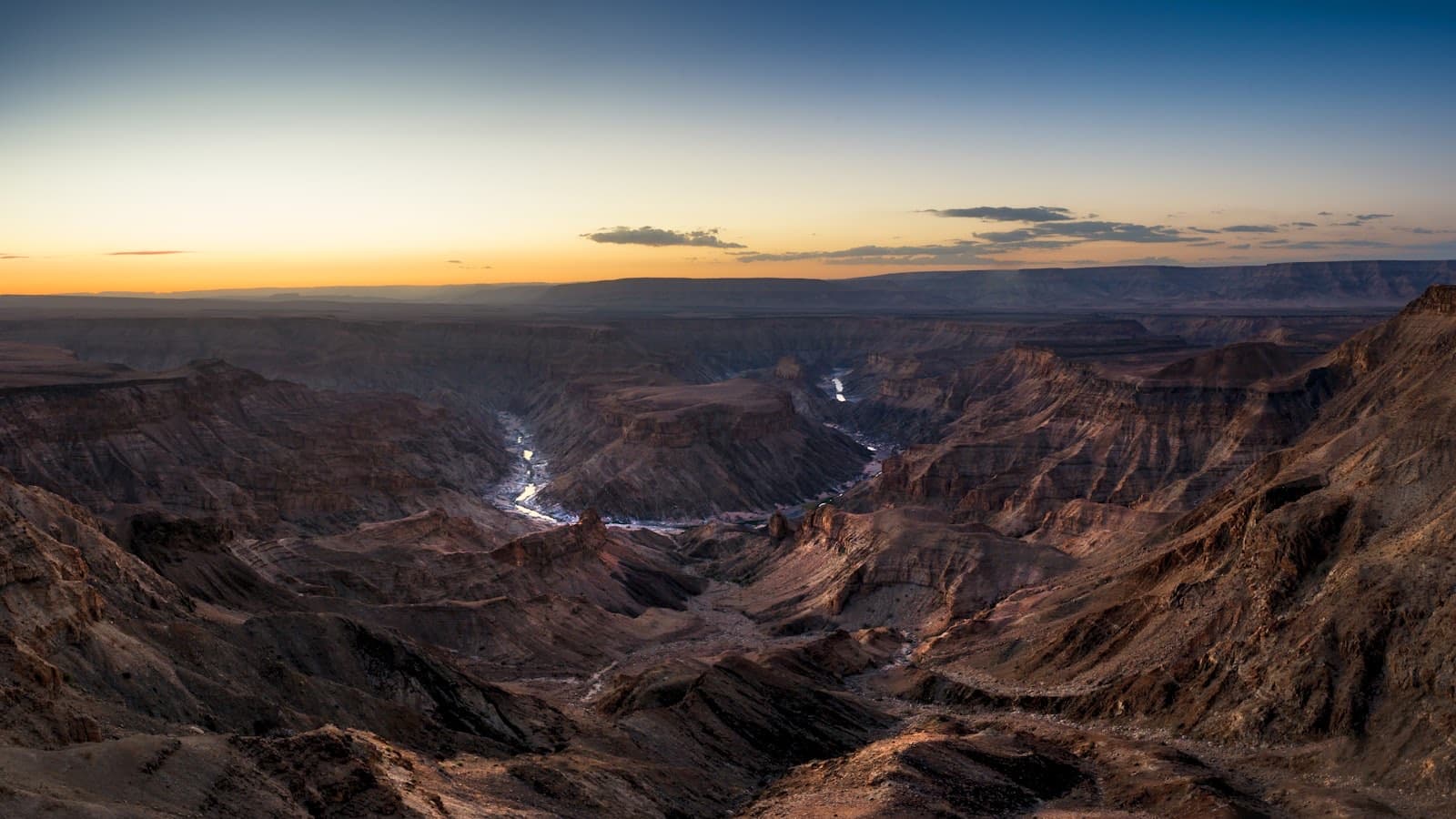 No. 061 nightFish River CanyonA canyon 160 km long, up to 27 km wide and 550 m deep — one of Africa's largest. The Namibian south in its raw state: mineral, silent, crushed by light.
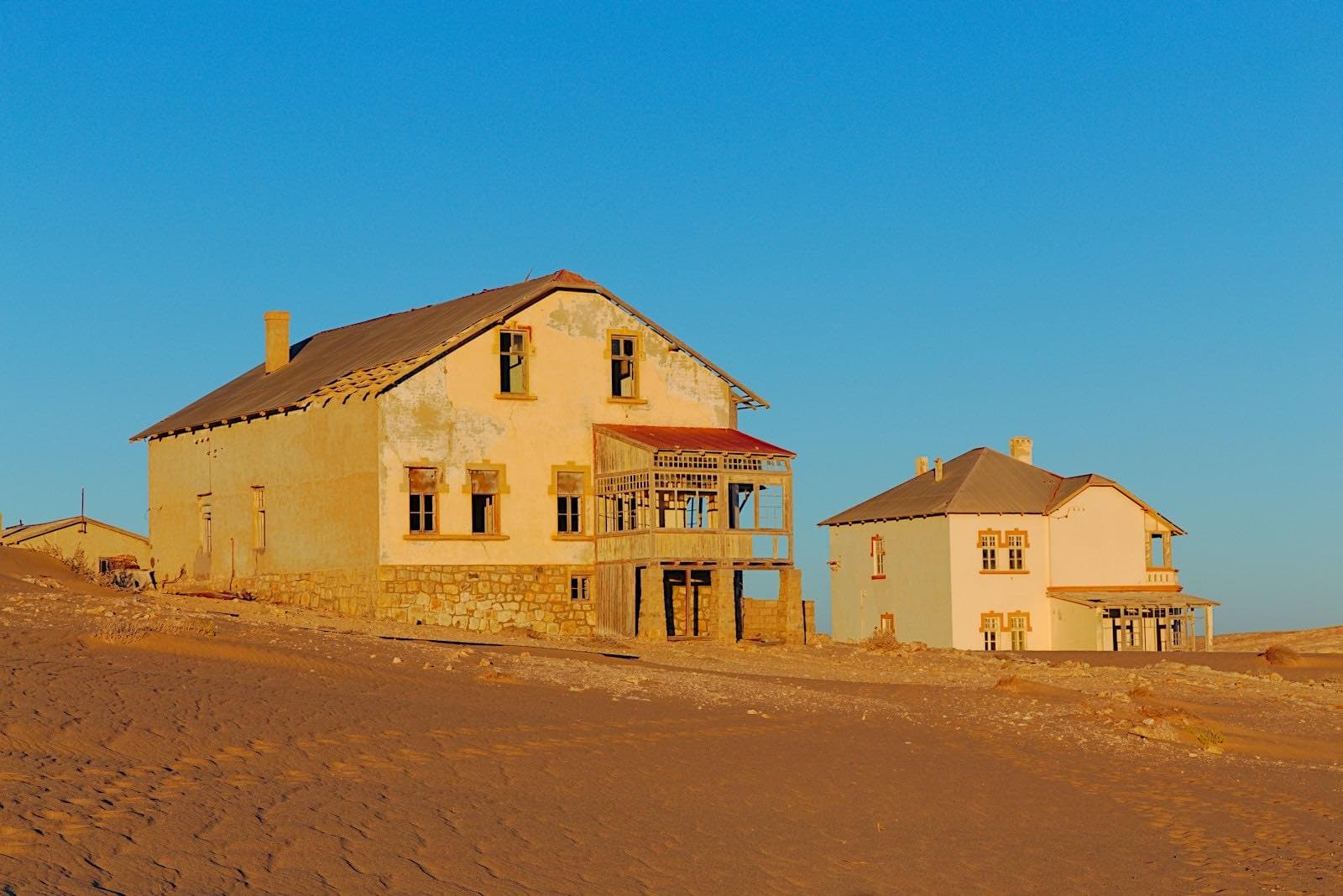 No. 071 to 2 nightsKolmanskop & LüderitzDiamond magnates' houses swallowed by the dunes, a wind-battered colonial town between desert and Atlantic: the Kolmanskop–Lüderitz pair is the south's strangest, most photogenic stop.No. 081 nightWaterberg PlateauA 50 km fortress of red sandstone rising from the savanna, refuge of rare reintroduced species: the Waterberg is the green, walkable breather that ideally closes a circuit before Windhoek.
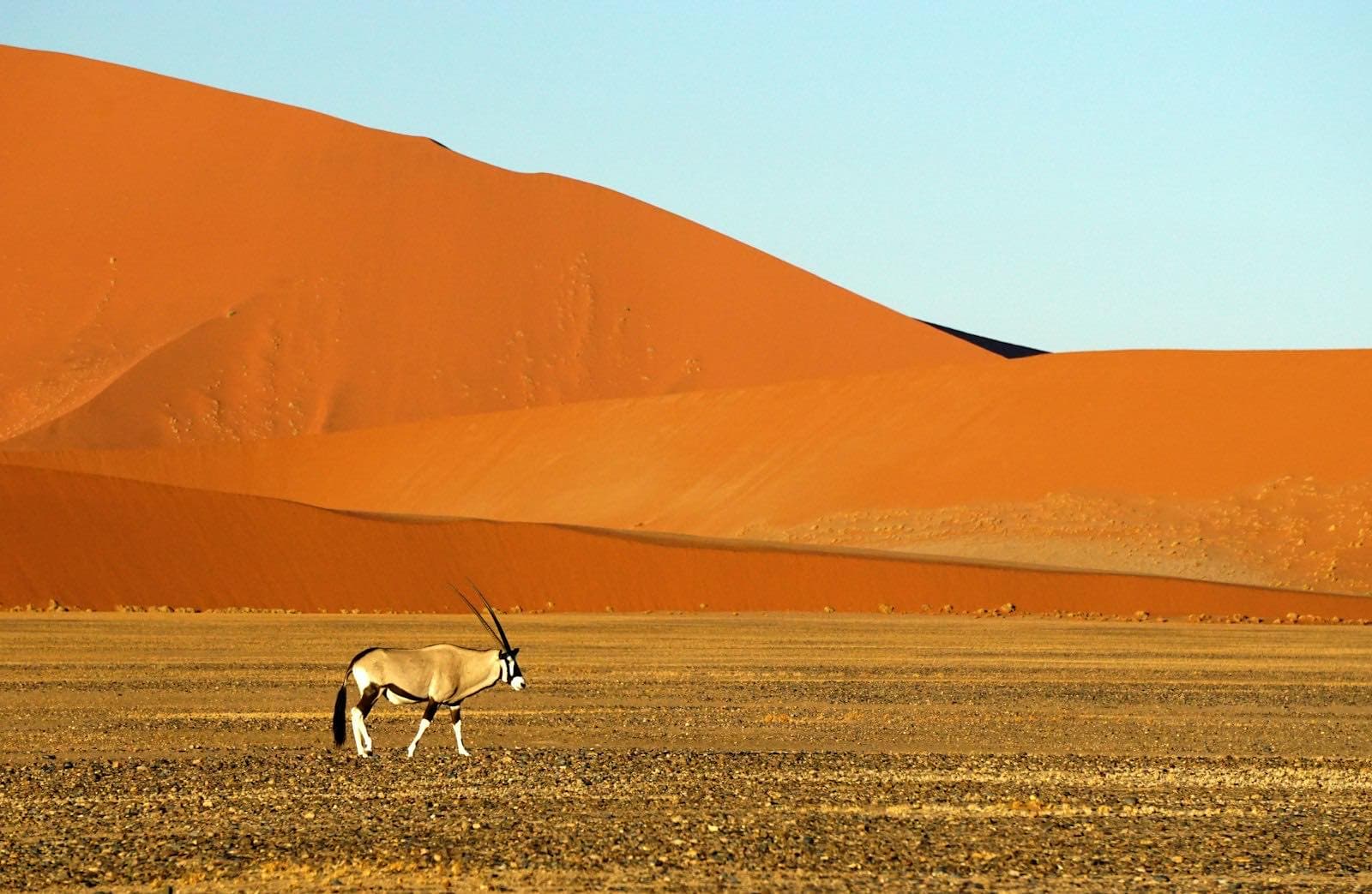
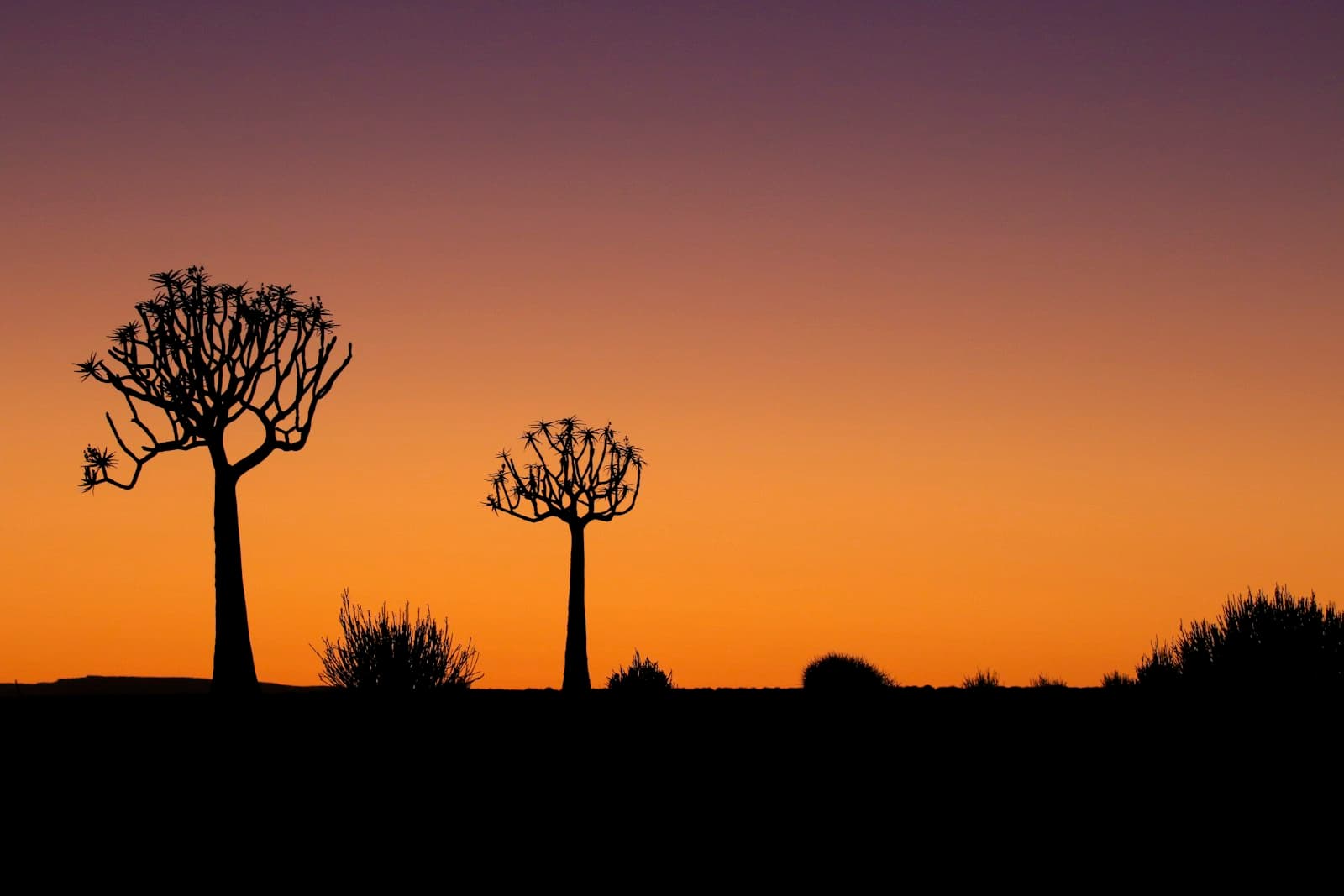 No. 091 nightKalahari DesertWaves of red sand studded with blond grass, oryx in backlight, a first African sunset two and a half hours from the airport: the Kalahari is the perfect warm-up of a self-drive.No. 101 night (on arrival)WindhoekA small capital perched at 1,650 m, Windhoek is not the trip's destination — it is its launch pad: 4x4, groceries, cash, SIM card, and away.
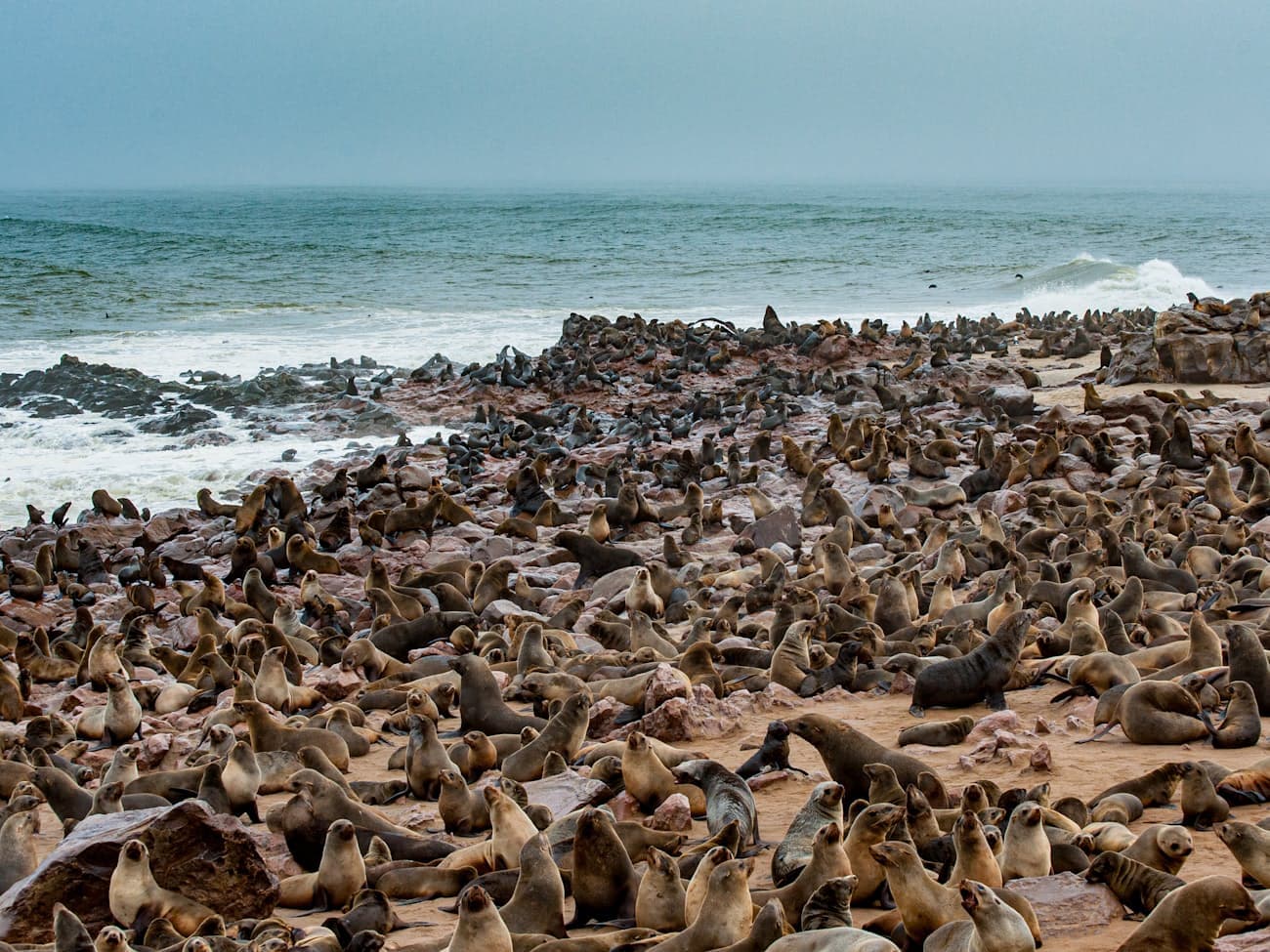 No. 11Half a day (excursion from Swakopmund or en route to Damaraland)Cape CrossTens of thousands of seals sprawled over the rocks, a din of bleating in the spray, and a smell you'll still be talking about in ten years: Cape Cross is a sensory slap.No. 123 to 4 nights (extension)Caprivi Strip (Zambezi)A 450 km tongue of land between Angola, Zambia and Botswana, where Namibia turns green: hippo rivers, forests, villages — another Africa, for long-haul travellers.
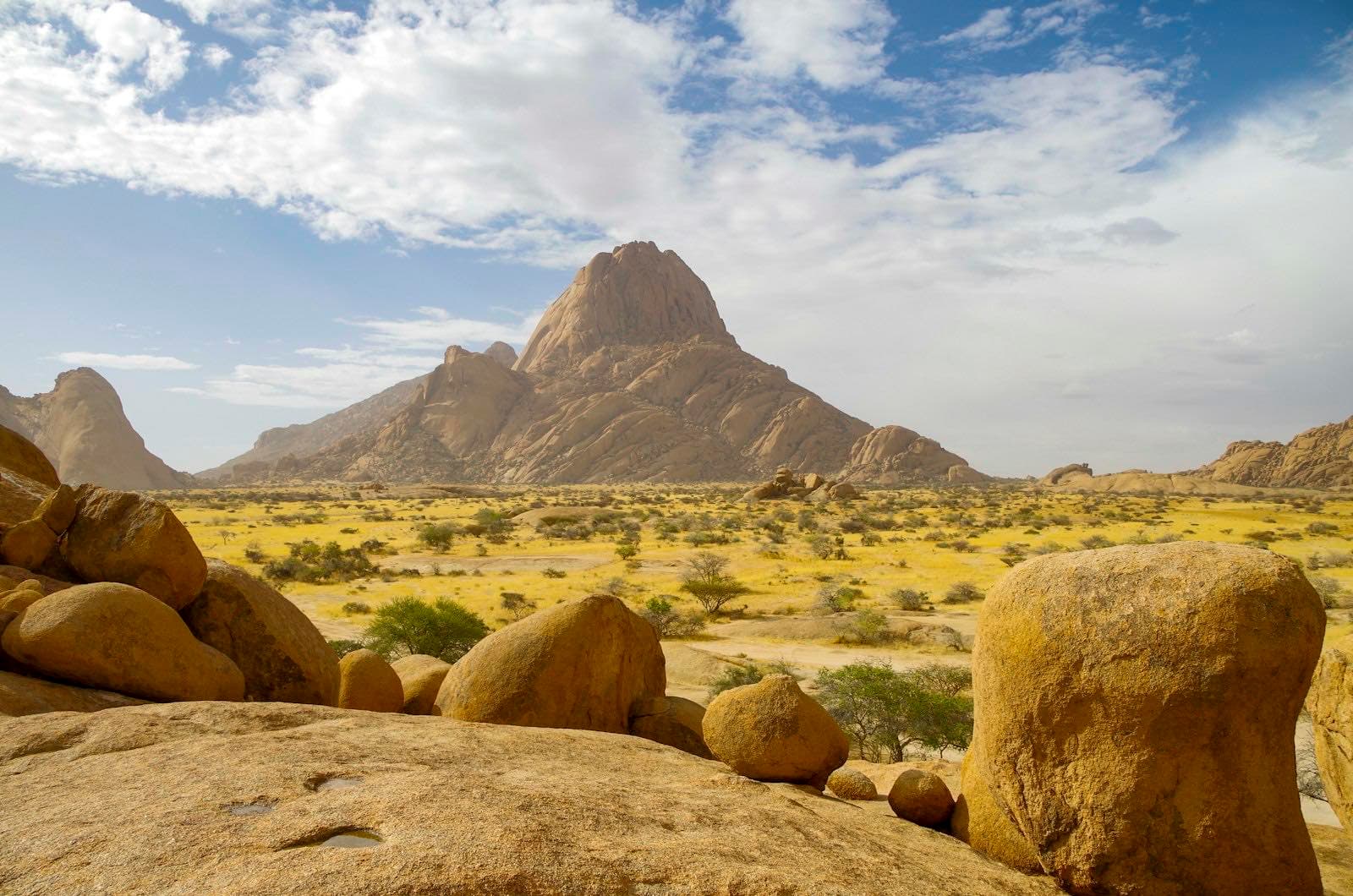 No. 131 nightSpitzkoppeGranite domes 700 m high set on a bare plain, a famous stone arch, and one of Africa's finest campsites: the Spitzkoppe is the self-drive night everyone remembers.
See also our Namibia 10, 15 and 21-day itineraries and our field notes.
Free excerpt
The 7 mistakes to avoid on a first Namibia road trip
A real excerpt from our Namibia expertise: 4x4 insurance, gravel speed, NWR bookings, season, fuel, Etosha… The 7 costly mistakes, and the right reflex for each. Instant access, with the current promo code.
Namibia: practical notes
Tolls, fines, money, seasons, budget, rental: the essentials, gathered on this page.
Namibia Road Trip Daily Budget: What Does a Day on the Road Really Cost?
On travel forums, the same question keeps coming up: "what does a day in Namibia actually cost?" The country has a reputation as one of the priciest self-drive destinations in southern Africa, and it's not a myth: fuel around €1.30 a litre in mid-2026, an equipped 4x4 all but mandatory on gravel roads, national park entry fees set to rise in 2026 (new fees awaiting official publication by MEFT). But the gap between a lean trip and a comfortable one can double depending on three choices: rooftop tent or lodge, camp cooking or restaurants, a bare 4x4 or a fully kitted-out one. Here's what to actually budget for a day between the Kalahari, Sossusvlei, Swakopmund, Damaraland and Etosha.
- Travel in May-June or November rather than high season (July-October): noticeably cheaper rental and accommodation, with wildlife still very visible around waterholes.
- Camp most nights and keep one or two "treat" nights in a lodge at strategic stops (Damaraland, Sossusvlei): the daily budget gap widens fast as soon as you stack up nights indoors.
- Book the 4x4 several months ahead: the good rental fleets fill up early and rates climb as high season approaches.
- Cook at the braai in the evening rather than defaulting to the lodge restaurant: Namibian supermarkets are excellent and cheap for meat.
- Prioritise two parks rather than stacking up every possible entry: each park day is paid separately, and new entrance fees have been announced for 2026 (awaiting official publication by MEFT).
| Accommodation type | Price for two, per night |
|---|---|
| NWR campsite (inside a park) | ≈ €32-64 |
| Private or community campsite | ≈ €16-32 |
| Guesthouse or B&B | ≈ €65-110 |
| Mid-range lodge | ≈ €130-200 |
| Premium lodge (desert, Damaraland) | ≈ €220-400 |
Our flagship guide — €44
Guide availableOur complete Namibia guide is out
10 chapters, 10,000+ words: rent the 4x4 without the traps, drive gravel with confidence, 10/15/21-day itineraries day by day, the Etosha waterhole strategy, a full budget and checklists.
Available in English and French — both editions in every download.
The shop
Gear for the road
A few items we take on our own self-drive trips, shipped from the supplier's warehouse within 8 to 15 working days — free delivery from €49.
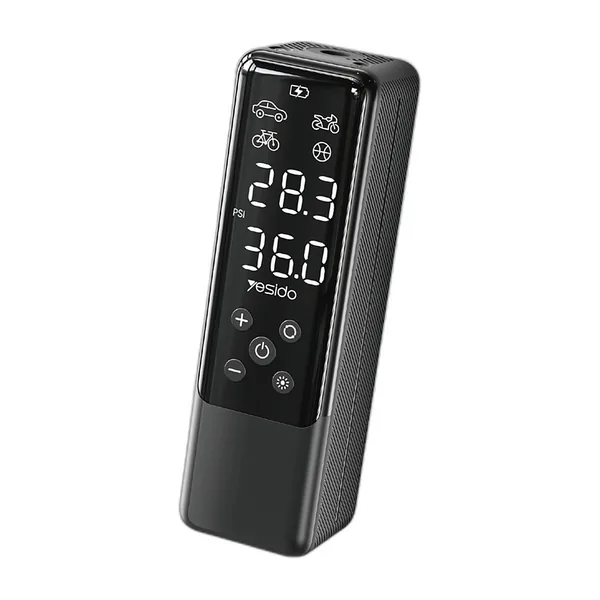
Compact 12 V tyre inflator with display and auto stop
Mini inflator for a 12 V socket with digital display, adjustable target pressure and automatic stop, built-in light: reinflate after the track without finding a station.
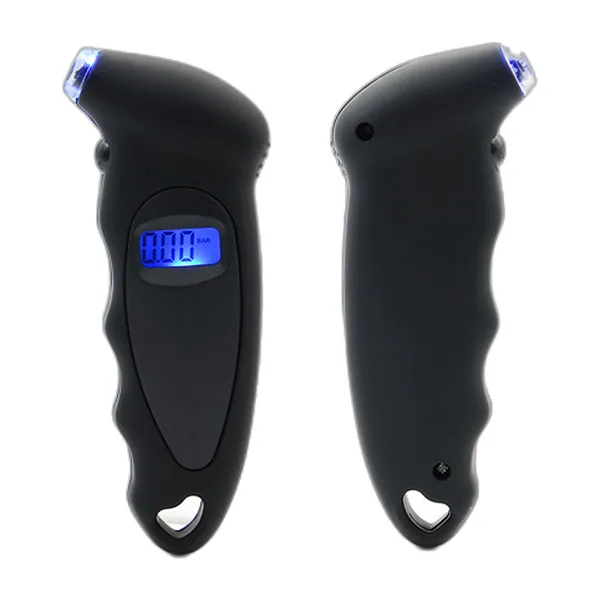
Digital tyre pressure gauge 0-10 bar
Pocket gauge with backlit display, 0 to 10 bar, reads bar, PSI, kPa or kg/cm², 0.05 bar resolution, runs on button cells.
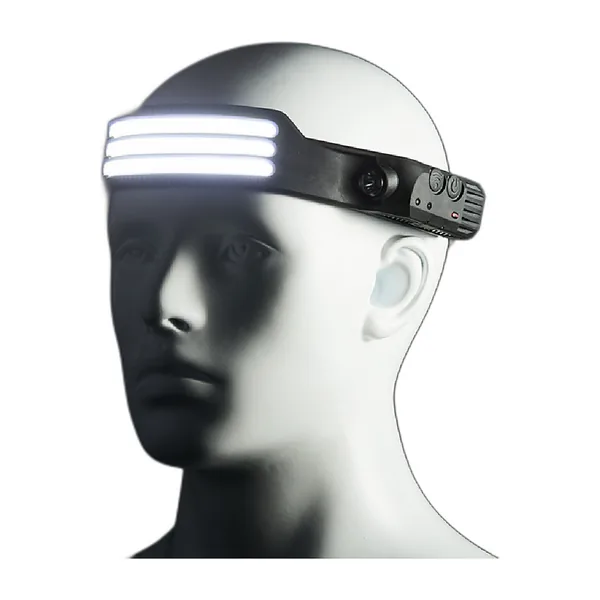
Rechargeable USB-C COB headlamp with motion sensor
Headlamp with a wide COB light strip and central LED, built-in 1,500 mAh battery rechargeable over USB-C, switched on with a wave of the hand.
No time to do it yourself?
A professional can take care of it: tailor-made trip, equipped 4x4 rental or a local guide. Describe your plans and, with your consent, we pass them on to partner professionals.
1. What you need
Explore other countries