Greece on your own
Monasteries perched on sandstone pillars, stone towers facing the sea, gorges to make the Alps blush and a taverna at the end of every road: Greece by car is three thousand years of history at off-season pace.
When to go
April-June and September-October are the golden window: uncrowded sites, swimmable sea from May in Crete and until late October, perfect hiking temperatures for Vikos and Samaria (the gorge, however, only opens from May to mid-October). July-August stacks heatwaves (38-42 °C inland), crowds and peak prices — book the mountains then (Zagori, Pelion) rather than the islands. In winter the mainland stays open and superb (Meteora under snow), but half the island addresses close from November to March.
What it costs
One of Europe's best value-for-money deals outside July-August: a city car or compact €15-30/day in low season (€35-55 in summer, more on the islands), though fuel is expensive — €1.80-2.00/L on the mainland, up to €2.20 on the small islands. Rooms and small hotels €45-80, more inside the walls of Monemvasia or on Santorini; a full taverna meal €15-25/person, jug wine included. Factor in motorway tolls (Athens-Kalambaka ~€25) and the ferry if you ship the car: Piraeus-Naxos runs €90-130 for the vehicle, passengers extra. Two people over 15 days: €2,000-3,000 excluding flights in the off-season.
Driving & transport
Right-hand driving, but with one local convention you absolutely must know: on single-carriageway national roads, you straddle the hard shoulder to let others overtake — refusing this code annoys everyone. Alcohol limit 0.5 g/L (0.2 for new drivers), real speed cameras on motorways, very theoretical elsewhere. The classic traps: goats and gravel in the mountain switchbacks, island villages with lanes narrower than the car (spot the car park BEFORE driving in), anarchic parking in Athens best avoided by leaving the car on the outskirts, and rental companies that forbid taking their vehicle onto ferries without written permission — check the contract before planning island hops.
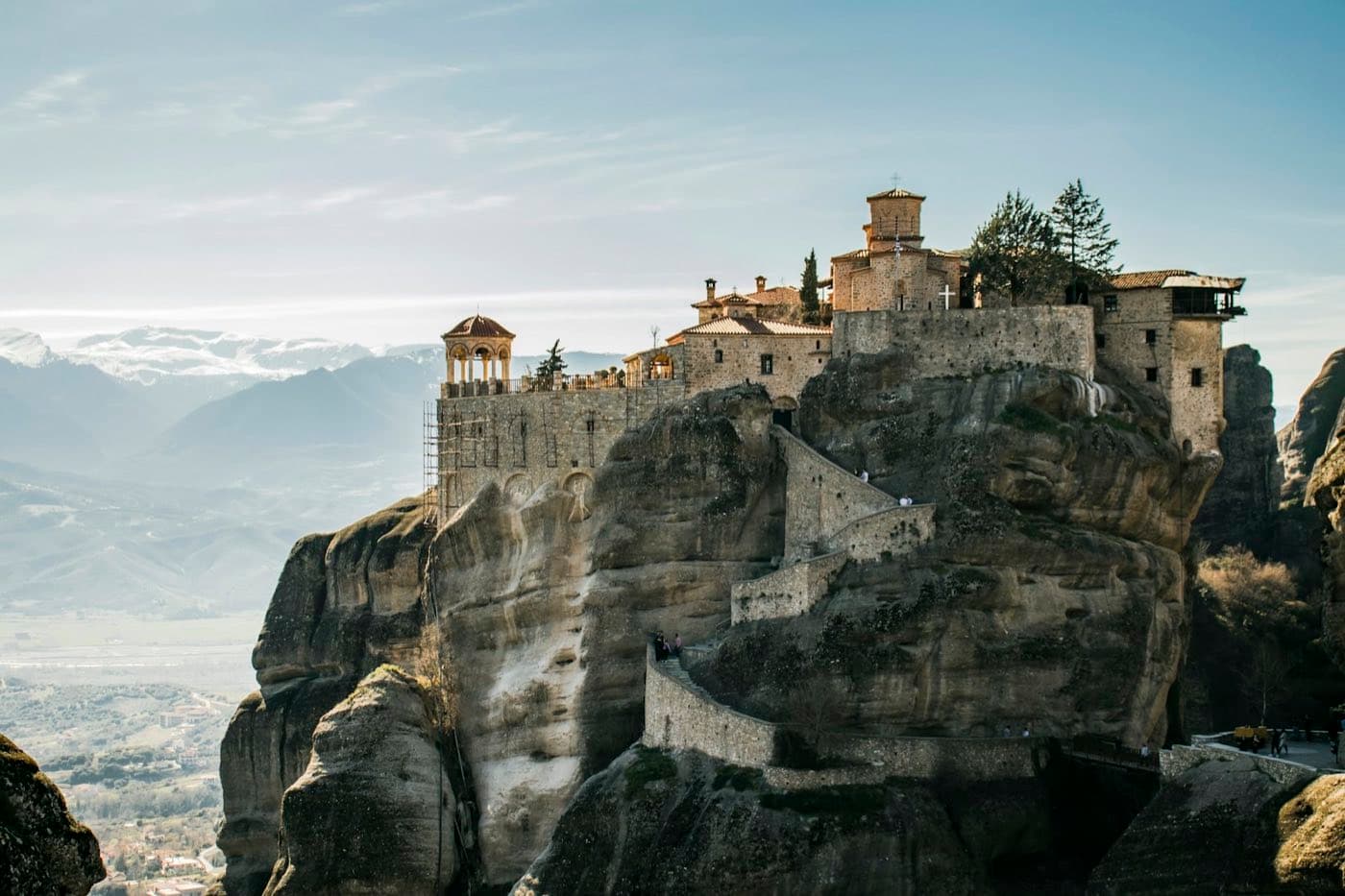
Greece gets reduced too often to white islands and the Acropolis; by car, it becomes a miniature continent. The Peloponnese lines up the warrior towers of the Mani, the fortified town of Monemvasia and deserted coastal roads; Epirus hides the stone villages of Zagori above the world's deepest gorge for its width; Meteora hoists its monasteries onto sandstone pinnacles; and Crete alone deserves its own road trip, between gorges, high plateaus and southern coves reached by vertiginous switchbacks.
Our guide for this country: See what's inside — €44 →
The country lends itself beautifully to independent travel: reasonable distances, a road network far better than its reputation, ferries that carry cars out to the Cyclades, and a density of tavernas that turns every stage into a reward. The real secret is the calendar: from April to June and September to October, you have the major sites almost to yourself, the sea still (or already) warm, and prices half what they are in summer.
The destinations that matter
5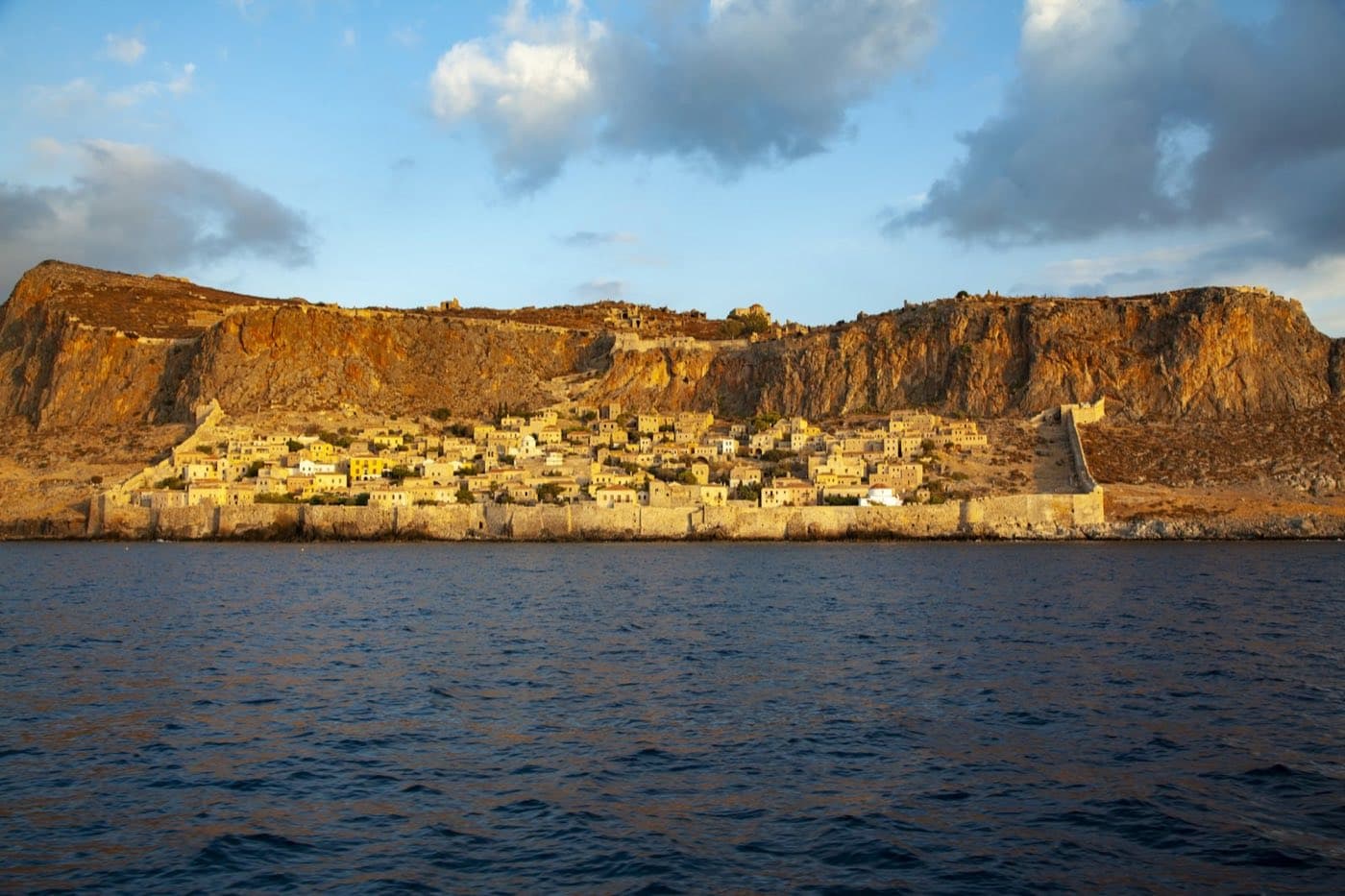 No. 013 to 4 nightsThe Mani and MonemvasiaA peninsula bristling with warrior towers plunging towards mainland Greece's southernmost point, then a fortified rock entered on foot through a single gate: the deep Peloponnese does nothing like anywhere else.No. 024 to 5 nightsCrete: Samaria and the south coastSixteen kilometres of descent between 500-metre walls, then a village reachable only by sea and beaches where the water shades into lagoon: southern Crete is an island within the island.No. 032 nightsMeteoraByzantine monasteries balanced for six centuries atop 300-metre sandstone pillars: Meteora is Europe's most improbable landscape — and it tours beautifully by car.No. 043 nightsEpirus: Zagori and the Vikos gorgeForty-six stone villages linked by humpbacked Ottoman bridges, on the rim of a gorge ranked the world's deepest for its width: Zagori is the Greece nobody imagines.No. 055 to 7 nights (2 islands)The Cyclades by ferry and carDrive your car onto the deck of a ferry at Piraeus and roll off among the white lanes: the Cyclades by car means the whole island instead of the port-beach-hotel triangle.
More stops worth adding to the trip
The Pelion
A mountain cloaked in chestnut forest plunging into the wild Aegean on one side and a gulf of oil-calm water on the other: the Pelion, mythical home of the centaurs, is the Greeks' favourite weekend — and the foreigners' blind spot.
What to see
- Tsagarada: the thousand-year-old plane tree on the Agia Paraskevi square and the Fakistra stone bridge
- Mylopotamos beach and its rock arch, early morning
- Milies and the Moutzouris steam train ride (weekends and summer)
Suggested time: 2 to 3 nights
Greece: practical notes
Tolls, fines, money, seasons, budget, rental: the essentials, gathered on this page.
Road Trip in Mainland Greece: The Peloponnese Itinerary by Car
The Peloponnese packs into a single peninsula the best of mainland Greece: ancient cities, Venetian fortresses, stone villages perched above the sea, and mountain roads that wind between olive groves and peaks still snow-capped in spring. From Athens, a seven- to ten-day driving loop is enough to link the major stops, from the Corinth Canal to Nafplio, from Mycenae to Epidaurus, then south to Monemvasia and the Mani, before climbing back via Mystras and Olympia. This guide details the day-by-day itinerary, real distances and driving times, driving in Greece between fast tolled motorways and winding mountain roads, parking in the towns, the best season to take the wheel, and car rental.
| Day | Stops | Road | Distance | Driving time |
|---|---|---|---|---|
| Day 1 | Athens → Corinth Canal → Nafplio | A7 (toll) then main road | ≈ 150 km | ≈ 2 h |
| Day 2 | Nafplio → Mycenae → Epidaurus → Nafplio | Secondary roads | ≈ 80 km | ≈ 1 h 45 |
| Day 3 | Nafplio → Monemvasia | Coastal main road and mountain | ≈ 200 km | ≈ 3 h |
| Day 4 | Monemvasia → the Mani (Areopoli, Gerolimenas) | Winding mountain roads | ≈ 130 km | ≈ 2 h 30 |
| Day 5 | The Mani → Mystras → Sparta | Passes and mountain roads | ≈ 110 km | ≈ 2 h 15 |
| Day 6 | Sparta → Arcadia → Olympia | Mountain then main road | ≈ 200 km | ≈ 3 h 15 |
| Day 7 | Olympia → Nafpaktos → Delphi | Motorway and Rio bridge (toll) | ≈ 220 km | ≈ 3 h |
| Day 8 | Delphi → Athens (or Meteora extension) | Main road then motorway | ≈ 180 km | ≈ 2 h 45 |
Our flagship guide — €44
Guide available“Greece on Your Own”, the complete edition, is out
10 chapters: day-by-day itineraries, driving and transport, a costed budget and checklists — the same method as our Namibia guide.
The guide is currently written in French — an English edition is in the works.
No time to do it yourself?
A professional can take care of it: tailor-made trip, equipped 4x4 rental or a local guide. Describe your plans and, with your consent, we pass them on to partner professionals.
1. What you need
Explore other countries