Chile on your own
A 4,300 km ribbon between the world's driest desert and the glaciers of Patagonia: Chile is the vertical road trip par excellence — one country, five planets.
When to go
Seasons are inverted: the austral summer (November-March) is THE window for Patagonia and the Carretera Austral. The Atacama works year-round — beware the "altiplanic winter" (January-February rains that sometimes close the high tracks) and the freezing nights of June-August. The centre (Valparaíso, the vineyards) is superb in spring (October-November) and at harvest (March-April). Avoid Patagonia from May to September: short days, reduced ferries, closed refugios.
What it costs
City car rental €35-55/day, SUV or 4x4 for ripio €60-100/day, with one-way drop-off fees that can top €300 — the loop is king. Fuel around €1.30/L (bencina 93/95/97), decent doubles €50-110, a bunk in a Patagonian refugio €25-40. Budget €3,000-4,500 for two over 15 days excluding international flights, domestic flights included (Santiago-Calama or Santiago-Punta Arenas: €60-150 one way depending on how early you book).
Driving & transport
Right-hand driving, dipped headlights compulsory by day on highways. In Santiago, the urban expressways require a TAG (electronic toll transponder): check it is included with the rental or bypass the capital. On ripio: 40-60 km/h max, tyres checked, spare wheel inspected before setting off, and slow down BEFORE oncoming traffic (starred windscreens guaranteed otherwise). In Patagonia, hold the doors with both hands — the wind rips them off — and fill up at every station: the next one can be 400 km away. Book the Carretera Austral ferries (Hornopirén-Caleta Gonzalo) several weeks ahead in summer.
You don't drive across Chile, you slice it up: 4,300 km from the tropics to Cape Horn, pinned between the Pacific and the Andes. Nobody drives from San Pedro de Atacama to Punta Arenas — you combine domestic flights and regional rentals: the Atacama desert and its high-altitude lagoons in the north, Valparaíso and the vineyards in the centre, then the deep south — volcanoes, Chiloé island, the Carretera Austral and Torres del Paine. Each block deserves its own trip; two blocks already fill three solid weeks.
Our guide for this country: See what's inside — €44 →
It is also South America's easiest country to drive: immaculate COPEC stations, a paved network in the centre, low road crime. The real apprenticeship is ripio — the gravel roads that guard the Carretera Austral and the way to the finest corners — and distance management: 400 km without a fuel station is planned the night before, not at the orange warning light.
The destinations that matter
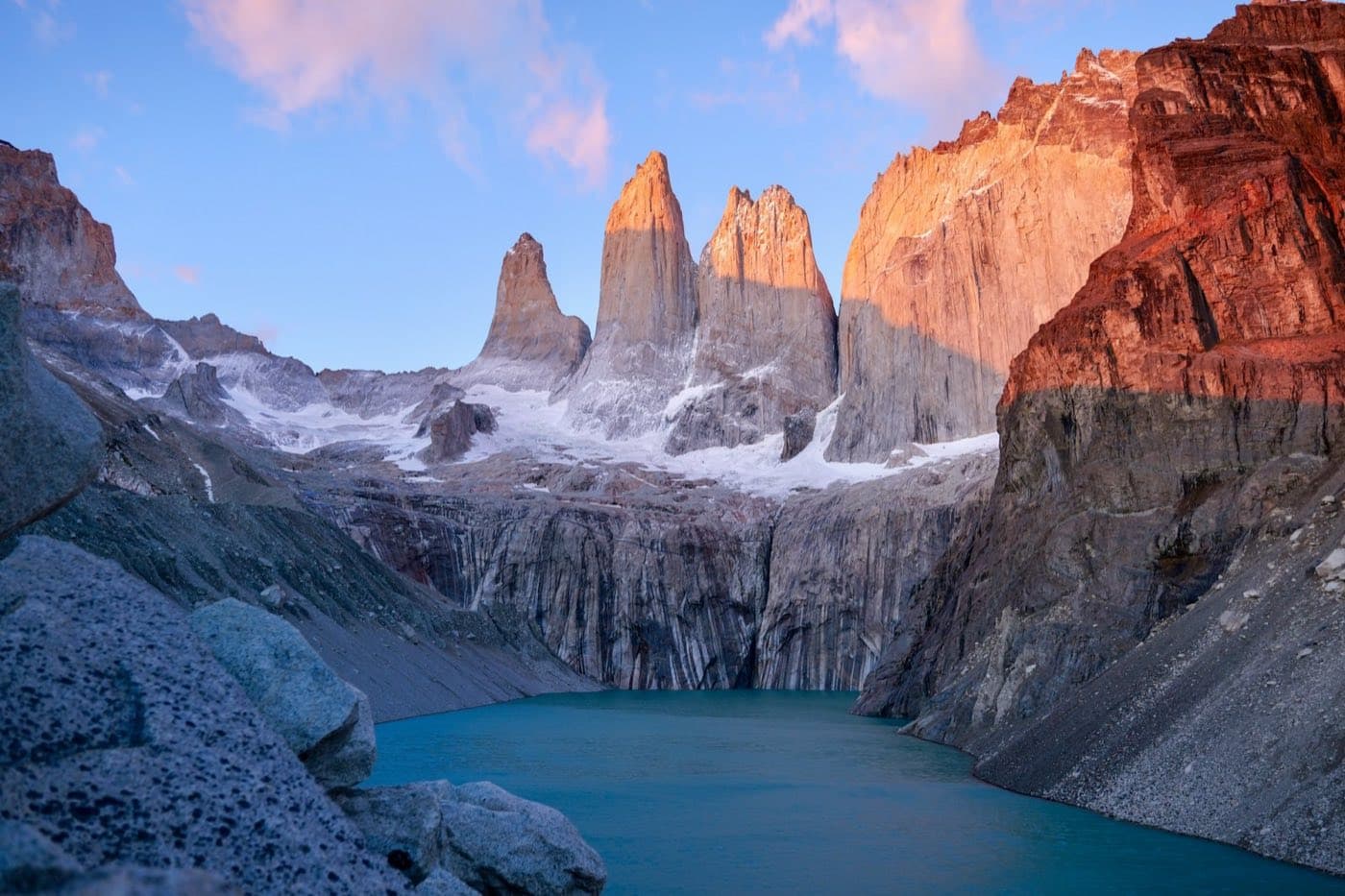
5No. 053 to 4 nightsTorres del PaineThree granite towers rearing above turquoise lakes, guanacos by the hundreds and a wind that sculpts everything: Patagonia's absolute sanctuary, earned step by step.More stops worth adding to the trip
San Pedro de Atacama
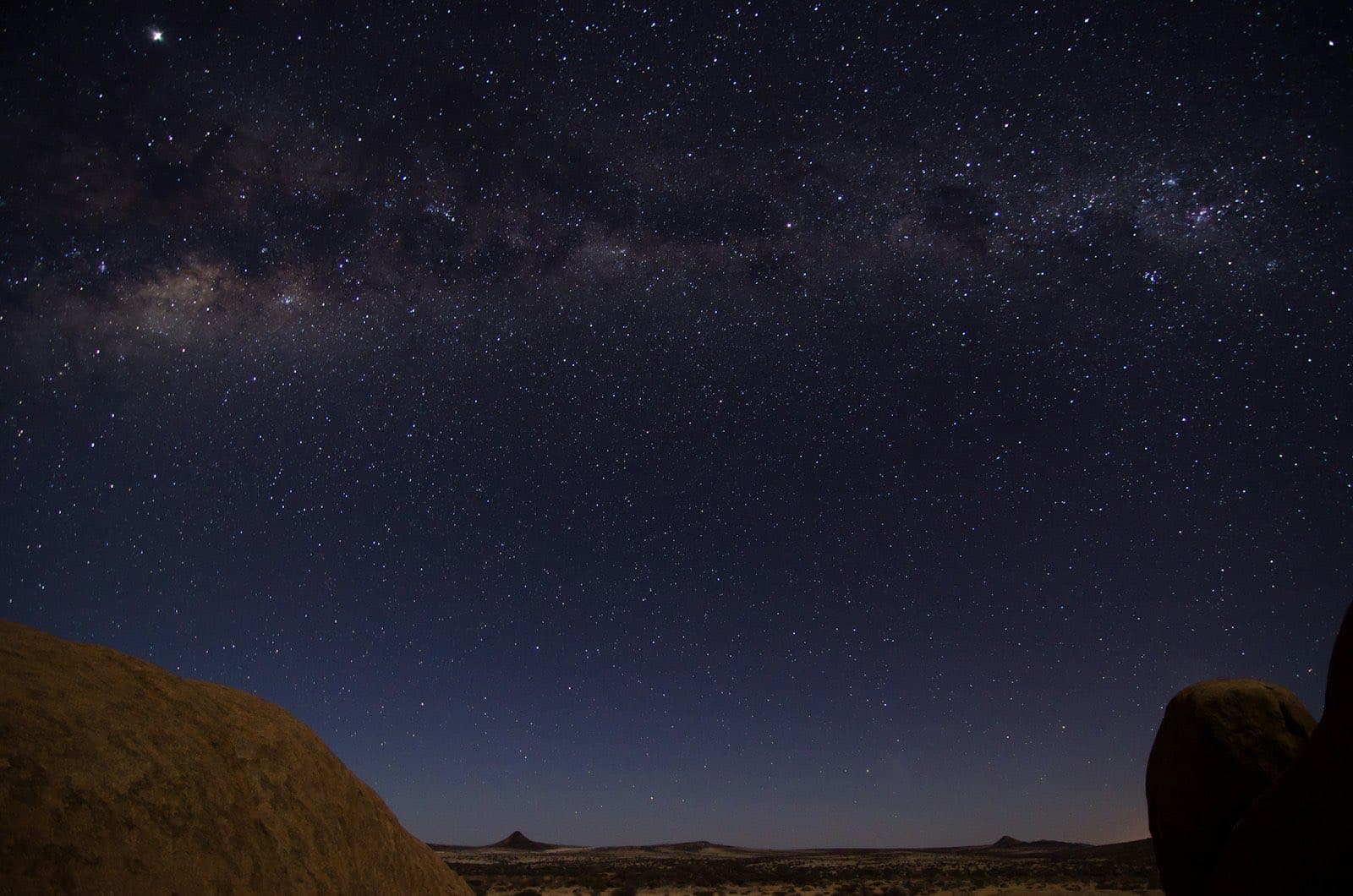
The world's driest desert hides its treasures between 2,400 and 4,300 m: geysers steaming at dawn, royal-blue lagoons ringed by volcanoes, and the purest starry sky on the planet.
What to see
- The Tatio geysers at dawn (4,320 m), at maximum steam before 8 am
- The Miscanti and Miñiques lagoons and route 23 towards the Sico pass
- Moon Valley at sunset, booked online
Suggested time: 3 to 4 nights
Chile: practical notes
Tolls, fines, money, seasons, budget, rental: the essentials, gathered on this page.
Chile Road Trip: The Lake District and Chiloé Island, from Puerto Varas to the Chacao Ferry
In southern Chile, the Lake District lines up cone-shaped volcanoes, vast lakes and villages with German heritage, while Chiloé Island nurtures a world of its own, built around UNESCO-listed wooden churches and houses on stilts. The two combine beautifully into a single road trip, with Puerto Varas as your base camp and a simple thirty-minute ferry to reach the island with your rental car. Here we break down the itinerary, the logistics of the Pargua–Chacao ferry, and how many days to allow for each leg. Enough to build a coherent five-to-six-day loop — or carry straight on to the Carretera Austral.
- Fill up before leaving Route 5: petrol stations thin out in the west and south of the island.
- Drive with headlights on at all times, rain or shine — it is the rule on Chilean roads anyway.
- On wet gravel, slow right down: braking distances stretch considerably.
- Download offline maps: mobile coverage is patchy on Chiloé's Pacific coast.
- Check that your rental contract mentions Chiloé and keep it handy when boarding the ferry.
- Build in a time buffer on ferry days: departures are frequent, but don't cut a connection to within ten minutes.
| Stage | Suggested time | Highlights |
|---|---|---|
| Puerto Varas and Lake Llanquihue | 1 day | Lakefront, Frutillar and its German heritage |
| Osorno volcano – Petrohué loop | 1 day | Ski-lift road, Petrohué falls, Todos los Santos lake |
| Crossing and Castro | 1 day | Pargua–Chacao ferry, palafitos, Castro church |
| Churches and the inland sea | 1 day | Dalcahue, Achao, curanto at the market |
| Pacific coast | 1 day | Chiloé National Park at Cucao, Muelle de las Almas |
| Carretera Austral option | depends on route | Ferry from Quellón or back via Puerto Montt |
Money in Chile: Chilean pesos, bank cards and cash on the Carretera Austral
At a petrol pump in Santiago or the checkout of a supermarket in Puerto Montt, a bank card is almost always enough in Chile. But head down the Carretera Austral toward Coyhaique or Cochrane, and card terminals vanish overnight in favour of a rougher reality: no card, no ATM, no signal, just Chilean peso notes counted out before you set off. Between local bank fees, a dynamic conversion offer worth always refusing, and a suggested tip on every bill, here's how to handle your money without surprises on Chile's roads.
| Payment method | What to know for a road trip |
|---|---|
| Bank card (RedCompra, Visa, Mastercard) | Accepted everywhere in town, absent over much of the Carretera Austral |
| Contactless / phone | Standard since the pandemic, mainly in the big cities |
| ATM | Chilean bank fee up to 6,000 CLP per withdrawal, on top of your own bank's fees |
| Cash (Chilean peso) | Essential on the Carretera Austral, in Chiloé and deep in the Atacama |
| Propina (tip) | 10% suggested on the bill, never mandatory |
Police checks and fines in Chile with a rental car: speed, alcohol and the Carabineros
On the Pan-American Highway (Route 5) running the length of the country, on the gravel stretches of the Carretera Austral, or near San Pedro de Atacama, running into a Carabineros de Chile checkpoint is part of everyday driving on a self-drive road trip. A militarised police force unique in Latin America, the Carabineros have a reputation for being strict but fair with foreign travellers — provided you know the rules. Chile has tightened its road legislation in recent years, lowering the urban speed limit, setting a very low blood alcohol threshold, and indexing fines to a unit of account that rises with inflation. Here are the rules in force in mid-2026, how a check unfolds with a rental car, and one point travellers often overlook: the SAG checkpoints, which have nothing to do with the police.
| Road type | Speed limit |
|---|---|
| Urban area | 50 km/h (30 km/h near schools) |
| Rural road, single lane per direction | 100 km/h |
| Road or motorway with 2+ lanes per direction | 120 km/h |
SIM Cards and Internet in Chile: Staying Connected on the Carretera Austral and in the Atacama Desert
On the Carretera Austral, between stretches of gravel road lined with temperate forest, it's not unusual to drive for an hour or two without a single bar of signal — and in the Atacama desert, on the road to the Tatio geysers above 4,000 m, no carrier reaches at all. Chile stretches over more than 4,300 km from north to south, a vertical country where mobile coverage varies as much as the climate: fairly good in the cities and along the Pan-American Highway, unpredictable the moment you leave it. Here's how to get set up before you go between Atacama, Patagonia and the Carretera Austral, and where the connection really fails.
- Check what your French plan actually covers in Chile (data included, cap, duration) before relying on it for the whole trip.
- Activate an eSIM before departure (Airalo, Holafly) to secure your arrival and guard against a possible refusal in-store.
- For a route that strays from the Pan-American Highway, an Entel SIM bought in Santiago remains the best rural coverage.
- A passport is essential for any SIM card; since 2025, be prepared to push back or fall back on an eSIM if a counter mentions the RUT.
- Download your offline maps before the Carretera Austral and the Atacama desert: the network disappears there over long stretches.
- In Patagonia and on remote tracks, keep in mind a satellite device remains the only reliable option far from villages.
- Mount your phone on the dashboard and favour voice guidance: holding it while driving is fined up to 3 UTM.
| Carrier | Chile offer | Indicative price |
|---|---|---|
| Free | 35 GB included (350 Go plan) or unlimited Free Max | €19.99 or €29.99/month |
| RED by SFR | 35 GB (350 Go 5G) or Latin America Pack (20 GB, 30 days) | included or ≈ €35 |
| Orange | Pass Évasion 2 (5 GB) or Voyage plan (40 GB/month) | ≈ €29 for the pass |
| Bouygues Telecom | Internet Travel Pass (5 GB) or B&YOU Special Voyage (40 GB) | depends on duration, check the customer portal |
Tolls in Chile: TAG, Autopista Central and the “pasaste sin TAG” trap with a rental car
Drive out of Santiago's Arturo Merino Benítez airport in a rental car and there's a good chance you'll cross a toll gantry without even noticing: no booth, no barrier, just a camera reading the plate and an electronic TAG installed — or not — in the vehicle. Chile runs this system, inherited from its early-2000s urban concessions, on almost every freeway in Santiago, while the Pan-American Highway and the main intercity routes still use classic staffed booths that take cash. Since 1 July 2025, the way you settle an unpaid TAG crossing has also changed, with a consequence that matters for travellers: an unpaid toll can be chased down at the border when you leave the country. Here's how it all fits together, 2026 rates included.
| Network | How you pay | What to watch for |
|---|---|---|
| Santiago's urban freeways (Central, Costanera Norte, Vespucio…) | TAG or plate photo only, no booth at all | Check at the rental counter whether a TAG is fitted and how it's billed |
| Ruta 5 / Pan-American Highway and intercity routes | Classic booths: cash (pesos), card, or a Stop&Go lane for TAG holders | Carry cash in pesos — some rural booths don't take cards |
| Carretera Austral (Lake District to Villa O'Higgins) | No tolls at all | Mostly unpaved (ripio) — see our dedicated guide |
| Crossing without a TAG in Santiago | Settled after the fact on pasastesintag.cl | Payment window: usually day 11 to day 30 after the trip |
Travel Insurance for Chile: Private Hospitals, Rural Roads, and the Agreement That Doesn't Cover Tourists
Steaming geysers at 4,320 m in the pre-dawn cold, Carretera Austral ripio that eats tires over 400 km without a gas station, 120 km/h gusts that tear car doors off their hinges at Torres del Paine: Chile alone spans the gap between the world's driest desert and the far reaches of Patagonia. Many French travelers set off reassured by something they half-remember — "France has a social security agreement with Chile" — without knowing that this very real agreement almost never covers a tourist on vacation. Between overcrowded public hospitals, upscale but expensive private clinics, and hundreds of kilometers of track where the nearest rescue is measured in hours, understanding what actually protects a road tripper in Chile matters as much as checking the spare tire before setting off on Route 7.
- Aim for a medical expense cap of at least €50,000, ideally €100,000 to €150,000.
- Check that repatriation is covered on an actual-cost basis, with no low cap.
- Make sure "driving a rental vehicle" is not excluded from the policy.
- Check for the absence of an exclusion on high-altitude hiking (Atacama, Villarrica, Torres del Paine).
- Expect nothing from your carte Vitale in Chile: the Franco-Chilean agreement doesn't cover tourists.
- Budget extra time for rescue delays on the Carretera Austral and in the Atacama's desert south.
- Keep the 24/7 assistance number in the glovebox, next to the rental vehicle's paperwork.
| Type of cost | Approximate amount |
|---|---|
| Consultation, private clinic (Santiago) | €80 to €250 |
| Inpatient day, private clinic | up to €3,500 |
| Emergency surgery | several thousand euros |
| Medical helicopter transfer from Patagonia or the Atacama | high cost, billed to the uninsured traveler |
| Consultation, public sector (FONASA) | partial coverage, long waits for a non-resident |
Our flagship guide — €44
Guide available“Chile on Your Own”, the complete edition, is out
10 chapters: day-by-day itineraries, driving and transport, a costed budget and checklists — the same method as our Namibia guide.
The guide is currently written in French — an English edition is in the works.
No time to do it yourself?
A professional can take care of it: tailor-made trip, equipped 4x4 rental or a local guide. Describe your plans and, with your consent, we pass them on to partner professionals.
1. What you need
Explore other countries