Argentina on your own
A country five times the size of France, one legendary road running its full length, calving glaciers and deserts at 4,000 m: Argentina is the road trip in its purest form.
When to go
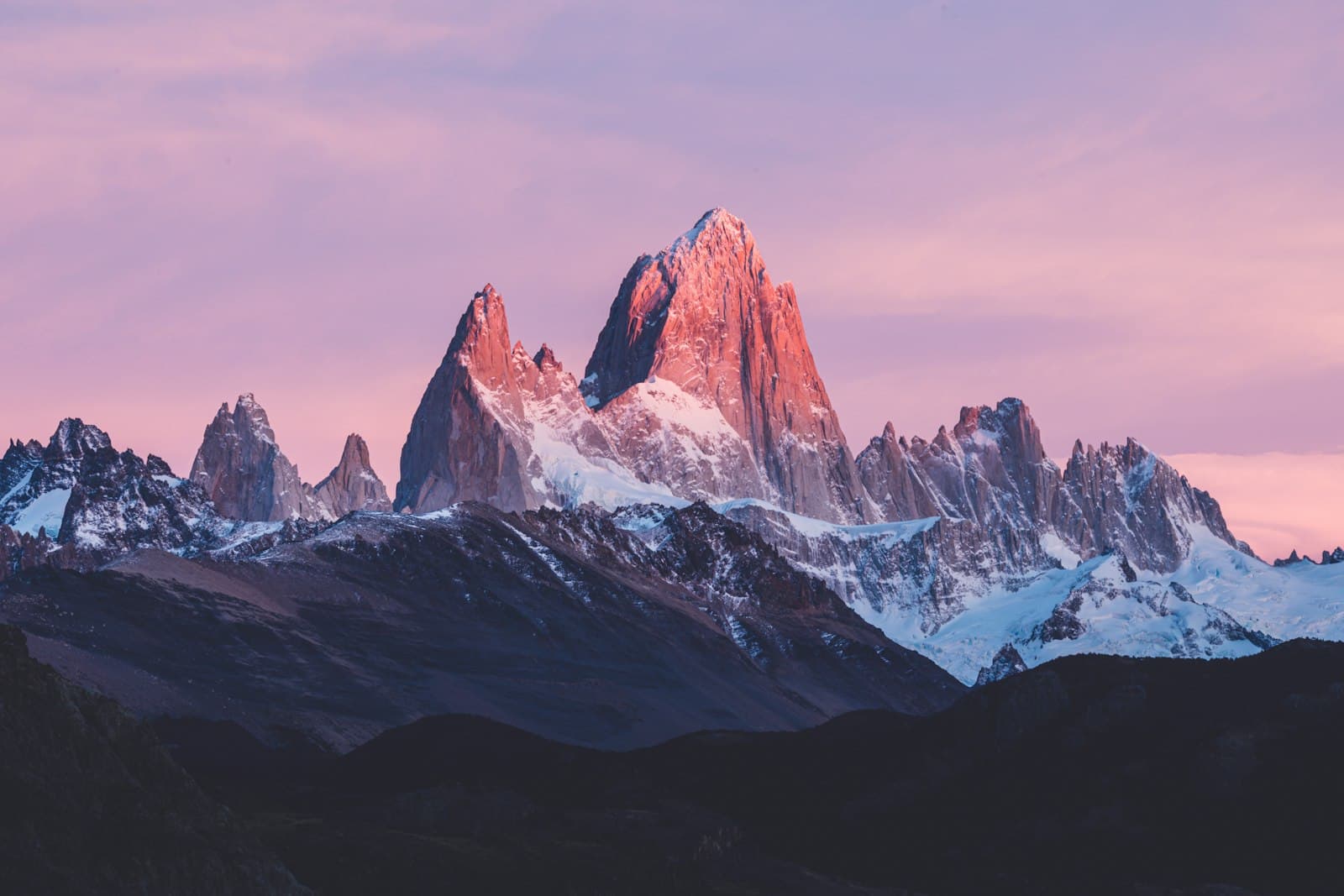
Austral summer from November to March for Patagonia and Ushuaia (endless days, maximum wind, bookings essential in January-February); the Northwest works the other way round, best April to November, outside the summer rains that occasionally cut the tracks. Valdés whales are around from June to early December, peaking in September-October. April in Patagonia means the colour of the lengas and half the crowds — a secret you earn in thermal layers.
What it costs
Argentina is no longer the bargain it was in the early 2020s: expect €45-75/day for a compact (a 4x4 only earns its keep on the southern ripio and the Northwest's high tracks), fuel around €1.10-1.30/L depending on the peso's convulsions, and €50-130 for a double in decent hosterías. For two over 15 days with two domestic flights, aim for €4,000-5,500 excluding international flights. Pay in pesos by card at the unified official rate, but keep cash for isolated stations along the 40.
Driving & transport
Right-hand driving, dipped headlights compulsory by day on highways. The real local rules: on ripio (gravel), slow to 60-70 km/h, never brake sharply and hug the right when a truck passes — a starred windscreen is the Patagonian passport stamp. The wind lays down the law in the south: hold the door with both hands when opening it (rental firms often refuse to cover that exact damage) and correct constantly at the wheel. Fill up at EVERY YPF station in Patagonia: between Tres Lagos and Gobernador Gregores, the 40 runs 340 km without a single pump. Guanacos and rheas cross at dusk; frequent gendarmerie checkpoints at provincial borders — keep the vehicle papers within reach.
You drive Argentina the way you read an atlas: 3,700 km between the cacti of the Quebrada de Humahuaca and the glowing lenga forests of Ushuaia, with Ruta 40 as the spine — 5,200 km along the Andes, now paved almost end to end yet as empty as ever. Here the car isn't a comfort, it's the very condition of the journey: distances are oceanic, night buses an institution, but nothing replaces stopping freely for a herd of guanacos or a blinding salt flat.
Our guide for this country: See what's inside — €44 →
The country plays out in two theatres you connect by domestic flight more than by road: southern Patagonia (El Chaltén, the Perito Moreno, Ushuaia), kingdom of wind and glaciers, and the Andean Northwest around Salta, its multicoloured quebradas and high-altitude vineyards. In between: Península Valdés and its whales, Bariloche and its lakes. You rent locally and return locally — one-way drop fees between cities are punishing — and you quickly learn the two local rules: hold your door against the wind, and never pass a fuel station without filling up.
The destinations that matter
5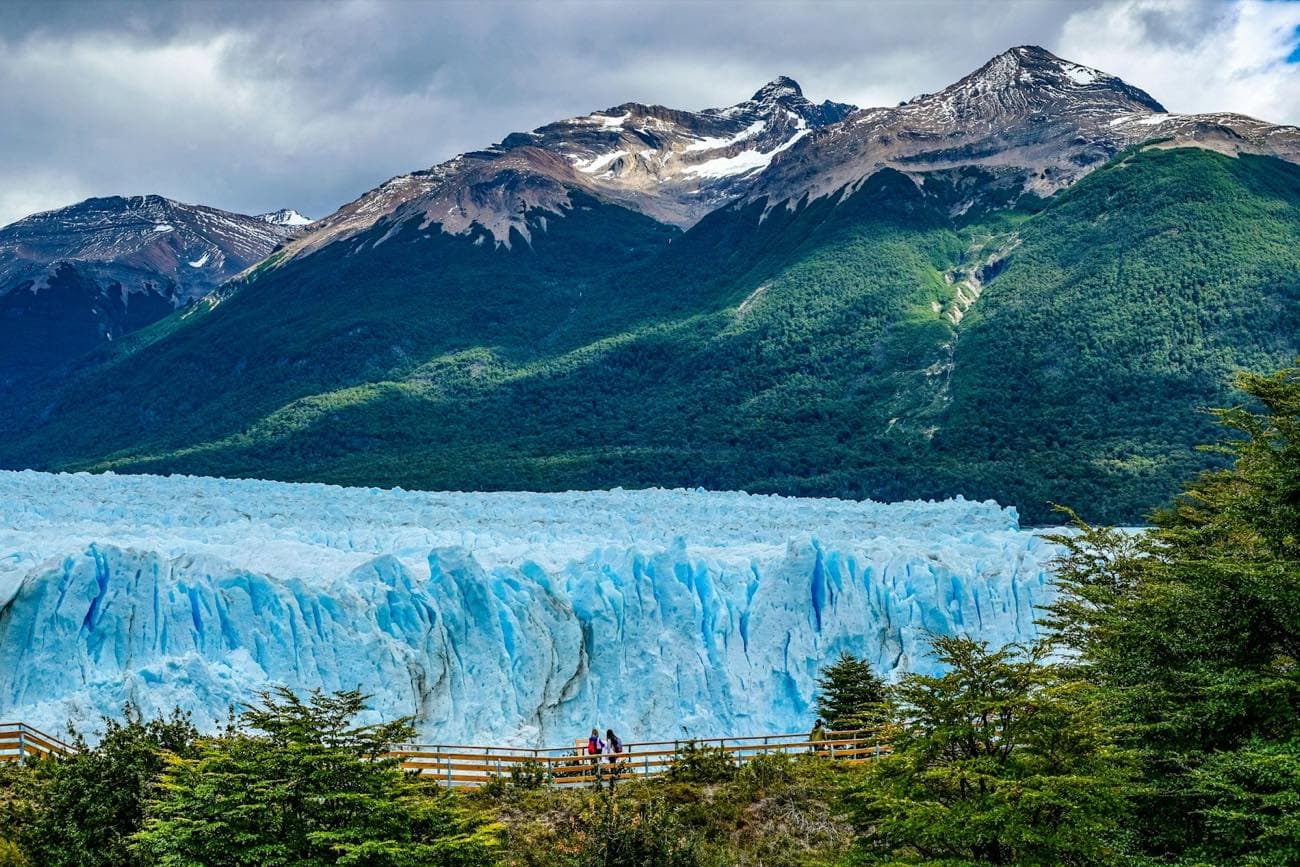 No. 014 to 5 nights (2 Calafate, 2-3 Chaltén)El Chaltén and El CalafateOn one side the vertical granite of Fitz Roy, on the other a 60-metre glacier cracking and calving before your eyes: the 215 km between the two villages concentrate the best of Patagonia.No. 023 to 4 days on the road (Bariloche–El Calafate)Ruta 405,194 km along the Andes, hours without meeting a soul, fuel stations you tick off like rally checkpoints: the 40 isn't a route, it's the destination.No. 032 to 3 nightsPenínsula ValdésRight whales breaching within sight of the beach, elephant seals sprawled on the sand and the only orcas on Earth that beach themselves on purpose to hunt: Valdés is a marine sanctuary you explore from behind the wheel.No. 043 to 4 nightsBariloche and the Lake DistrictTurquoise lakes nested in forests of arrayanes and coihues, corniche roads and chocolate in every window: northern Patagonia plays the alpine card, at outsized scale.No. 053 nightsUshuaiaThe southernmost city in the world, wedged between the last peaks of the Andes and the Beagle Channel: at the end of route 3, the 'fin del mundo' sign isn't a marketing line, it's geography.
More stops worth adding to the trip
Salta and the Northwest
Mountains striped in seven, then fourteen colours, a blinding salt flat at 3,450 m and some of the highest vineyards on Earth: the Northwest is Andean Argentina, mineral and mestizo.
What to see
- Purmamarca's Cerro de los Siete Colores in the raking morning light
- The Hornocal viewpoint at 4,350 m, mid-afternoon when the colours switch on
- The Salinas Grandes, an immaculate salt flat at the top of the Cuesta de Lipán
Suggested time: 5 to 6 nights
Argentina: practical notes
Tolls, fines, money, seasons, budget, rental: the essentials, gathered on this page.
Argentina Road Trip Budget: What Does a Day on the Road Really Cost?
“What does a day of road-tripping in Argentina actually cost?” The question plays out differently here than elsewhere: the country is no longer the bargain destination it was in the early 2010s, the peso keeps losing value, and Patagonia’s oceanic distances impose their own budget logic. Petrol around €1.30-1.50 a litre, Los Glaciares National Park entry at 50,000 pesos for foreign visitors (about €30), accommodation from €50 a night for two: here, line by line, is what you really need to plan for a self-drive trip in Argentina, from southern Patagonia to the Andean Northwest.
| Accommodation | Price for two, per night |
|---|---|
| Dorm (two hostel beds) | around ARS 25,000-35,000 (≈ €15-22) |
| Double room, decent hostería | around €50-80 |
| Andean Northwest (Salta, Cafayate) | from €40-60 |
| Comfort hotel, private bathroom | around €90-130 |
| El Calafate / El Chaltén / Ushuaïa, high season | often 30-50% more |
Money in Argentina: cash, cards and exchange rates for a road trip
For years, planning a trip to Argentina meant learning a whole vocabulary of its own: "cepo cambiario", "dollar blue", informal casas de cambio where travellers quietly swapped cash. Since currency controls were lifted in spring 2025, most of that complexity is gone, and the country now runs on a nearly unified exchange rate. What's left is a very practical question for anyone hitting the road in Argentina: how much cash in pesos to carry, where a card is simply useless, and why ATMs still don't fully replace cash on Ruta 40 or in the Andean north-west.
- Withdraw a comfortable reserve of pesos in a provincial capital before each isolated stretch (Ruta 40, Andean north-west).
- Try several different banks' ATMs if one network's limit seems too low.
- Keep a few clean, small-denomination US dollar bills as a safety net rather than an exchange strategy.
- Check what payment method is accepted before committing to national routes 12 and 14, which are entirely cashless.
- Set aside cash specifically for isolated petrol stations, where debit cards aren't always honoured in practice.
| Route | ATMs along the way | Cash recommended (2 people, a few days) |
|---|---|---|
| Buenos Aires, Mendoza, major cities | Plentiful and reliable | 20,000-30,000 ARS as a top-up |
| Ruta 40, Patagonia (El Calafate-Bariloche) | Scarce, concentrated in stopover towns | 80,000-120,000 ARS before setting off |
| Andean north-west (Salta, Jujuy, puna) | Few outside provincial capitals | 60,000-100,000 ARS before setting off |
| Peninsula Valdés | Concentrated in Puerto Madryn | 40,000-60,000 ARS before setting off |
Police checks and fines in Argentina with a rental car: speed, alcohol and the provincial trap
On Ruta 40 between Salta and Patagonia as much as on the avenues of Buenos Aires, running into a provincial police or Gendarmería Nacional checkpoint is part of everyday driving in Argentina. The country applies fairly standard speed limits, but hides a real trap for anyone crossing several provinces in a rental car: the legal alcohol limit isn't the same everywhere, and fines themselves aren't calculated in fixed pesos but in litres of petrol. Here are the rules in force in mid-2026, what changed with the new points system, and how to avoid the classic pitfalls set for foreign travellers.
| Road type | Speed limit |
|---|---|
| Urban area | 40 km/h (60 km/h on signposted avenue) |
| Paved rural road | 110 km/h |
| Motorway (autopista) | 130 km/h |
SIM Cards and Internet in Argentina: Staying Connected on the Ruta 40 and in Patagonia
On the Ruta 40, between two estancias lost in the Patagonian steppe, it is not unusual to drive for two or three hours without a single bar of signal — a downloaded GPS map becomes the only reliable reference until the next fuel stop. Argentina is a special case among self-drive destinations: a territory five times the size of France, one of the lowest population densities on the continent, and towns linked by hundreds of kilometres of ripio where mobile signal fades with the terrain and the wind. Here is how to get set up before hitting the road between glaciers, salt flats and high-altitude vineyards, and where the connection still drops between Bariloche, El Chaltén and the Andean Northwest.
- Check what your French plan actually covers in Argentina (data included, cap, duration) before relying on it for the whole Ruta 40.
- Activate an eSIM before departure (Airalo, Holafly) to secure the Ezeiza-to-rental-counter leg.
- For a Patagonian route, a Claro or Movistar SIM bought in town offers the best coverage off the main roads.
- A passport is required to register any SIM card in Argentina.
- Download offline maps before leaving Bariloche, El Calafate or Salta: the Ruta 40 has stretches of 200 to 300 km without signal.
- Mount your phone on a dashboard holder and favour voice guidance: holding it while driving remains a serious offence in every Argentine jurisdiction.
| Carrier | Argentina offer | Indicative price |
|---|---|---|
| Free | 35 Go included (350 Go plan) or unlimited Free Max | €19.99 or €29.99/month |
| Orange | Pass Évasion 2 (5 Go) or Voyage plan (40 Go/month) | ≈ €29 for the pass |
| RED by SFR | 35 Go included (350 Go 5G plan) | included in the plan |
| Bouygues Telecom | Internet Travel Pass, 5 Go | depends on duration, check the account page |
Tolls in Argentina: 2026 rates, TelePASE and how to pay with a rental car
Argentina has neither neighbouring Chile's single electronic tag nor Namibia's total freedom from tolls: it runs a hybrid system, where national routes charge a fixed rate revised by decree while the expressways around Buenos Aires bill by time of day. For anyone taking the wheel of a rental car, the good news for 2026 is that the TelePASE electronic pass, long reserved for residents, has finally opened up to foreign visitors. Here is how Argentina's tolls actually work, with the rates and dates that matter before you hit the road.
| Stretch | Operator | Light-vehicle rate (category 1) |
|---|---|---|
| National routes (Corredores Viales, RN 3, 5, 7, 8, 9, 12…) | Vialidad Nacional | 1,500 pesos, fixed, since 26 February 2026 |
| Buenos Aires-La Plata highway, Hudson station (La Plata → CABA direction) | AUBASA | Up to 5,400 pesos in cash / 5,307 with TelePASE at peak hours |
| Buenos Aires-La Plata highway (CABA → La Plata direction) | AUBASA | Up to 2,700 pesos in cash / 2,653 with TelePASE |
| 25 de Mayo and Perito Moreno urban expressways (Buenos Aires) | AUSA | 3,192.73 to 4,524.62 pesos depending on time of day |
| Ruta 40, Patagonian stretch | Vialidad Nacional / provinces | No toll |
Our flagship guide — €44
Guide available“Argentina Self-Drive”, the complete edition, is out
10 chapters: day-by-day itineraries, driving and transport, a costed budget and checklists — the same method as our Namibia guide.
The guide is currently written in French — an English edition is in the works.
No time to do it yourself?
A professional can take care of it: tailor-made trip, equipped 4x4 rental or a local guide. Describe your plans and, with your consent, we pass them on to partner professionals.
1. What you need
Explore other countries