Canada on your own
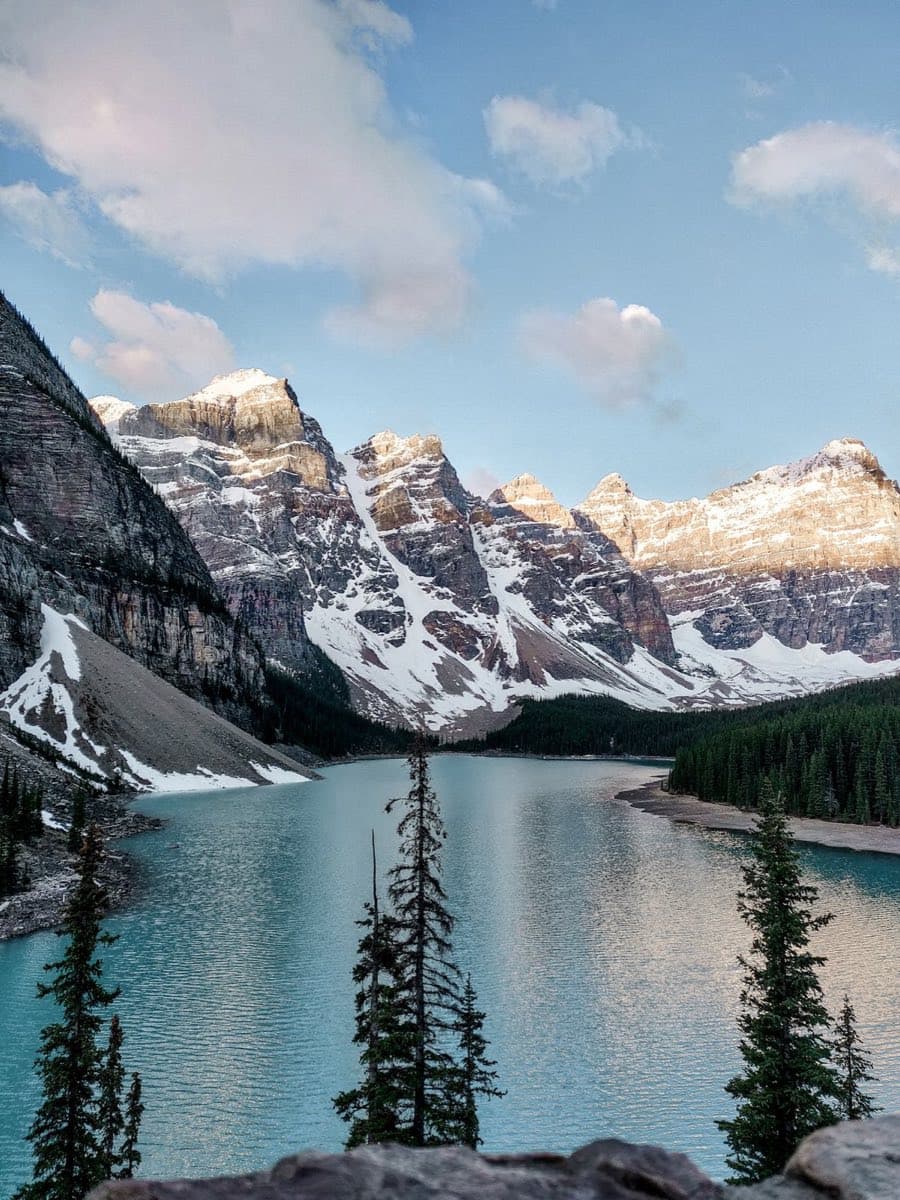
Turquoise lakes beneath glaciers, roads running towards the Arctic and whales off the headlands: Canada is the country where the campervan makes total sense — provided you respect the distances.
When to go
Core season mid-June to mid-September: passes clear of snow, campgrounds open, endless days (18 hours of light in the Yukon in June). July-August concentrate the crowds at Banff and Tofino; September is the golden month — larches turning gold in the Rockies, crowds gone, bears in hyperphagia and highly visible. May and October remain workable in the south (Vancouver Island, the Maritimes), but snow still closes high trails into June and Yukon services fold from Labour Day.
What it costs
Campervan €90-160/day in summer (family RV €130-220), to book 6-9 months ahead for July-August; hefty one-way fees if you don't loop. Fuel consoles you: roughly €1.10-1.25/L. Campgrounds €20-35 (national and provincial parks), motels €90-160, the annual Parks Canada Discovery Pass ~€100 per vehicle, quickly paying for itself. Budget €4,000-5,500 for two over 3 weeks excluding flights, mostly van and campgrounds.
Driving & transport
Right-hand driving, sensible limits (90-110 km/h on highways) and frequent photo radar. The local traps: moose and elk at dusk (collisions kill — slow down from the first yellow sign), fuel stations sometimes 200 km apart up north (half-tank rule), zero cell coverage on entire stretches (download offline maps). Right turn on red is allowed everywhere... except on the island of Montreal. In a van: never leave food, a cooler or even toothpaste outside overnight in bear country — everything goes in the vehicle or the campgrounds' metal lockers.
Canada is measured in days of driving rather than kilometres: you don't "do" the world's second-largest country, you choose from it. In the west, the Rockies line up Banff, the Icefields Parkway and Jasper along North America's finest driving corridor; at the Pacific's edge, Vancouver Island mixes rainforest with the surf of Tofino; up north, the Yukon offers the last true frontier you can reach on wheels; in the east, Gaspésie and the Maritimes unroll their fishing villages between gannet colonies and giant tides.
Our guide for this country: See what's inside — €44 →
The campervan or RV is a national way of life here: organised campgrounds even in the wildest parks, dump stations everywhere, cheap fuel. The real constraints lie elsewhere — a short season (mid-June to mid-September for most of it), national park campgrounds that book out from January, and coexistence with bears, which demands absolute food discipline at camp.
The destinations that matter
5No. 013 nightsBanff and the Rockies' lakesLakes of an unreal turquoise beneath limestone walls, elk grazing in town: Banff is the dazzling — and most contested — gateway to the Rockies.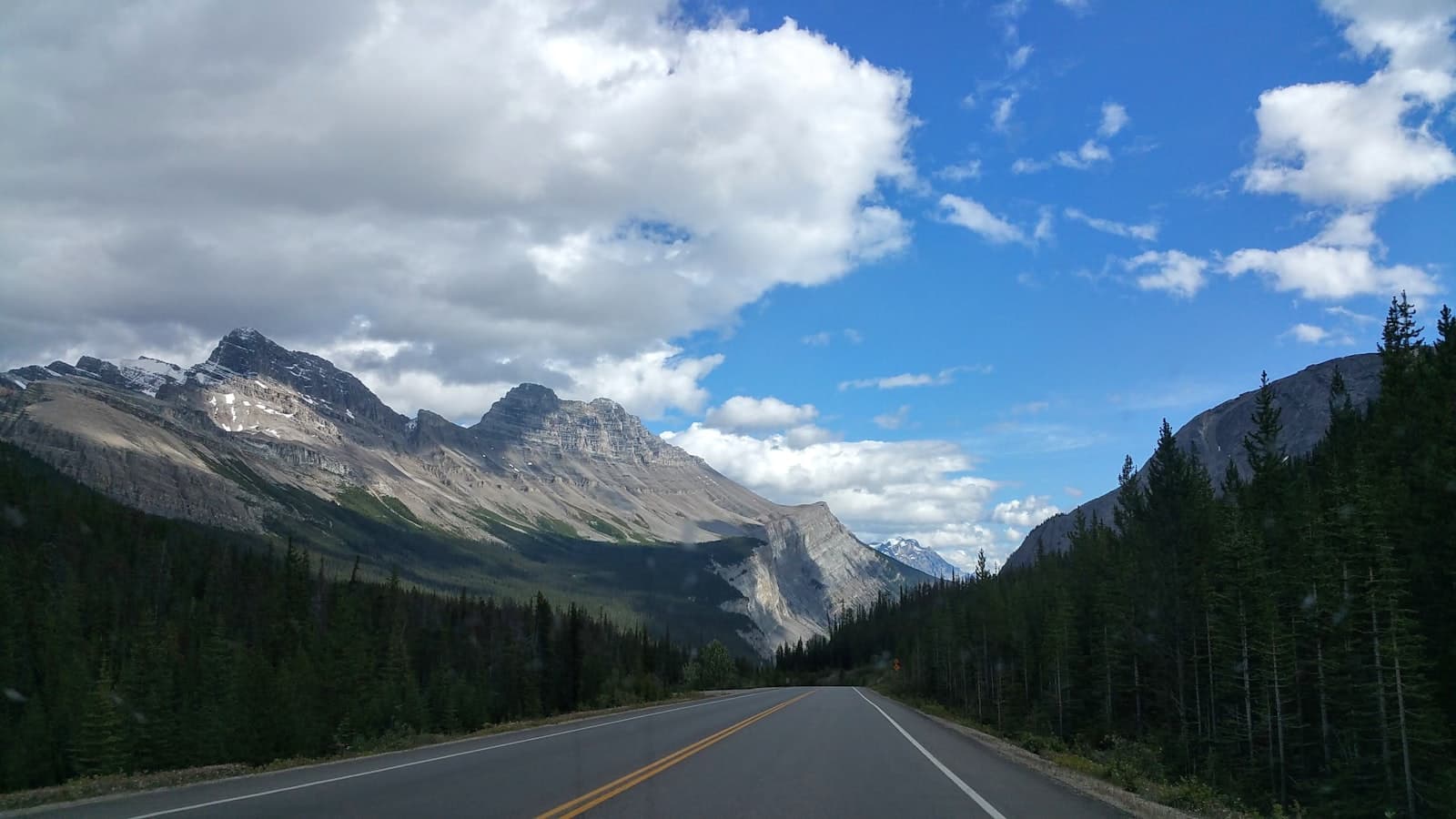 No. 021 night on the road + 2 nights in JasperIcefields Parkway and JasperA road that threads glaciers, milky lakes and walls of ice over 232 km: the Icefields Parkway is North America's finest day of driving — and deserves to last two.No. 033 to 4 nightsVancouver Island and TofinoEight-century-old cedars, mist-wrapped beaches pounded by the Pacific and grey whales on migration: Vancouver Island is the west coast in its raw state, a 90-minute ferry from the mainland.No. 045 to 6 nightsGaspésieA road hugging the St. Lawrence until it becomes the sea, a pierced rock set on the horizon and 110,000 clamouring gannets: Gaspésie is the finest driving loop in the East.No. 056 to 7 nightsCabot Trail and the MaritimesA corniche road above the gulf, 16-metre tides you cross on foot then paddle over in a kayak, and lobster on every wharf: the Maritimes are the warm, ocean-going finale of a Canadian journey.
More stops worth adding to the trip
Yukon and the Alaska Highway
Empty roads to the horizon, a sun that never sets and Canada's highest peaks as a backdrop: the Yukon is the road trip in its purest state — the one where you fill up at every pump.
What to see
- The Kluane glacier flight by small plane from Haines Junction
- Dawson City: Dredge No. 4, Bonanza Creek and an evening of cabaret at Diamond Tooth Gerties
- Tombstone Park via the first kilometres of the Dempster Highway
Suggested time: 7 to 10 nights
Canada: practical notes
Tolls, fines, money, seasons, budget, rental: the essentials, gathered on this page.
Canada eTA: what do you need to enter Canada for a road trip?
For a road trip through the Rockies, Gaspésie or the Yukon, Canada's paperwork fits in three letters: the eTA, electronic travel authorization (AVE in French). It costs CAD $7, takes ten minutes online, stays valid five years — and is only required if you arrive by air. Simple? Yes, provided you dodge the middleman websites charging ten times the price and know the handful of special cases. Here's the full manual.
| Situation | Requirement | Cost |
|---|---|---|
| Arriving by air (visa-exempt nationals) | eTA on canada.ca | CAD $7 |
| Arriving by road from the US | Valid passport only | $0 |
| Airport transit through Canada | eTA | CAD $7 |
| French-Canadian dual national | Valid Canadian passport | — |
| Loop passing through the US | ESTA (air) or I-94 (land) on the US side | US $40 / US $6 |
Money in Canada: Canadian dollars, bank cards and tipping on a road trip
At a gas station counter in the Yukon or the checkout of a convenience store in the Gaspé Peninsula, the question almost never comes up: in Canada, contactless card payment has replaced cash for nearly every everyday transaction. Two traps still await a traveller from Europe: foreign transaction fees that nibble away at every card payment, and tipping, a practice far more systematic and costly than back home. Here's how to handle your money without surprises, from the Canadian dollar to the tip on your last night.
| Type of service | Usual tip |
|---|---|
| Sit-down restaurant | 18-20% of the pre-tax amount |
| Coffee shop, counter, food truck | Optional, CA$0-2 |
| Taxi, rideshare | 10-15% |
| Housekeeping (hotel, motel) | CA$2-5 per night, in cash |
| Guide, activity (rafting, dog sledding...) | 10-15% if not included |
| Gas station, grocery store, campground | No tip expected |
Police Checks and Fines in Canada for Self-Drivers: Provinces, Cameras and the Ontario Speeding Trap
On the Trans-Canada Highway as much as on the road between Banff and Jasper, a self-drive road trip in Canada will sooner or later cross a police check — usually a routine verification, sometimes a speed camera or a roadblock. Canada remains one of the easiest countries in the world for a foreign driver, but three details change from province to province and are worth knowing before setting off: which police force has jurisdiction, speed limits that have just been raised across much of Ontario's highway network at the start of September 2026, and one very specific offence — Ontario's "stunt driving" law — that turns an ordinary speeding ticket into an immediate vehicle impoundment.
| Province | Highway limit | 2026 note |
|---|---|---|
| Ontario | 110 km/h (on ~89% of the network) | Broad increase from September 2026 |
| British Columbia | up to 120 km/h | On designated stretches only |
| Alberta | 110 km/h | 50 km/h in urban areas |
| Quebec | 100 km/h | Stable across most of the network |
Renting a Car in Canada: Licence, Insurance and Winter Tyres — What to Check Before You Go
Canada has everything to reassure a European driver: driving on the right, clear signage, an excellent road network. That's exactly what leads many travellers to book their car without reading the contract closely — a habit that gets expensive once you're on the ground, because Canadian rental rules differ sharply from European norms. Contrary to what most European travellers assume, damage insurance is almost never included in the quoted price, the deductible can run into several hundred or even thousand dollars, and one entire province enforces its own tyre rules under penalty of a fine — even on a rental car. Here is what to check before signing, from your licence to the US border, so you can drive from the Rockies to the Gaspé Peninsula without a nasty surprise when you return the car.
| Province | Winter tyre requirement | Period | Fine |
|---|---|---|---|
| Quebec | Mandatory, rentals included | December 1 – March 15 | CAD 200-300 (CAD 400-600 for repeat offences) |
| British Columbia | Mandatory on designated highways (mountain passes) | Roughly October 1 – April 30 | up to CAD 121 |
| Ontario, Alberta, Maritimes | Not a legal requirement, strongly recommended | November to April depending on weather | — |
When to Go to Canada for a Road Trip? Rockies, Fall Colours and Wildlife, Season by Season
"Is Canada doable year-round?" Not really, not for a self-drive road trip: the country runs on a short window, squeezed between the mountain passes thawing and the first snowfalls, and stepping outside it radically changes what you can do, see and drive. Here, season by season, is what's at stake between the Western Rockies and Québec's maritime East, to pick your dates without a bad surprise.
| Month | Rockies (West) | Québec / Maritimes (East) |
|---|---|---|
| May | Thaw, high passes still closed, bears active | Whale season starting at Tadoussac |
| June | Full opening, very long days (18h in the Yukon) | Great season, clear roads |
| July-August | Peak season: crowds, heat, campgrounds fully booked | Peak season: active whales, Cabot Trail busy |
| September | Golden larches, crowds gone, rut and wildlife caution | Whales still present, peak mid-September to October |
| October | Progressive closures at altitude, rut continues | Last whale-watching trips, fall colours |
| Nov.-April | Icefields open but reduced services, winter tires mandatory | Winter, quieter roads but noticeably cold |
Our flagship guide — €44
Guide available“Canada on Your Own”, the complete edition, is out
10 chapters: day-by-day itineraries, driving and transport, a costed budget and checklists — the same method as our Namibia guide.
The guide is currently written in French — an English edition is in the works.
No time to do it yourself?
A professional can take care of it: tailor-made trip, equipped 4x4 rental or a local guide. Describe your plans and, with your consent, we pass them on to partner professionals.
1. What you need
Explore other countries