Peru on your own
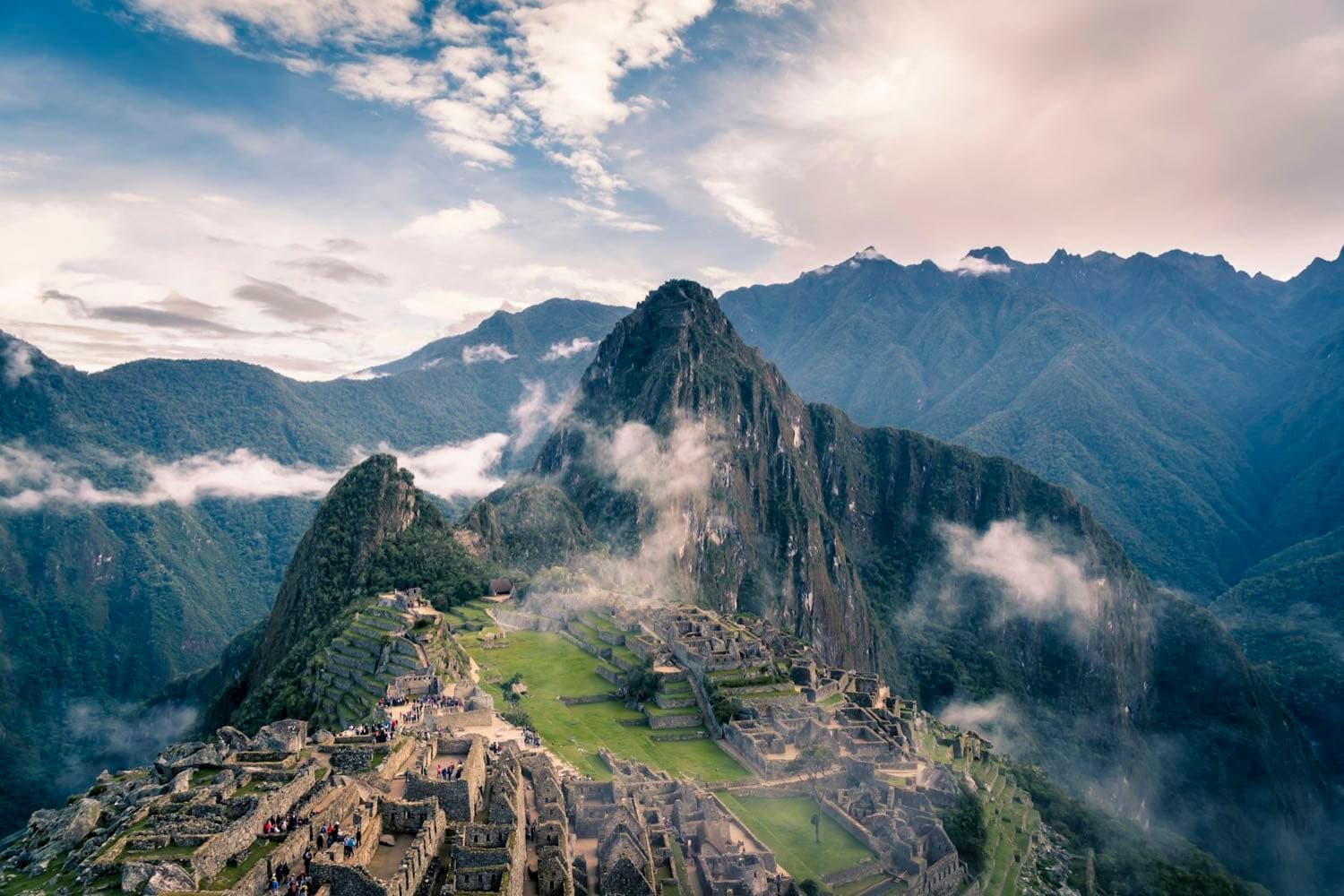
Inca citadels perched in the clouds, canyons twice as deep as the Grand Canyon, a lake at 3,812 m and a desert that plunges into the Pacific: the country where every bend changes altitude and world.
When to go
Andean dry season May to September: crystal skies, freezing nights at altitude, high season at Machu Picchu (book ahead!). Rainy season December to March: muddy trails, the Inca Trail closed in February, but green mountains and near-empty sites. On the coast, the calendar flips: the garúa (sea mist) drowns Lima from May to November, while the austral summer (December-March) is radiant there. April and October-November are the golden months everywhere.
What it costs
Still gentle by European standards: car rental €40-70/day (SUV advised in the sierra), fuel around €1.15-1.30/L (sold by the gallon, ~16-18 soles), decent hotels €30-70, premium night buses €20-35 per leg. Tickets are the real budget line: Machu Picchu ~€40/person, the Ollantaytambo-Aguas Calientes train €60-150 return, Cusco's boleto turístico ~€32. Budget €2,000-3,200 for two over 15 days excluding flights.
Driving & transport
Right-hand driving, SOAT (local insurance) compulsory, an international permit recommended at checkpoints. The traps: anarchic urban driving in Lima and Cusco (avoid it — collect the car on the way out of town), horn as language, unmarked speed bumps at every village entrance, cash tolls on the Panamericana, garúa fog on the coast and night falling at 6 pm year-round. Never drive at night in the mountains: unguarded cliff edges, trucks without lights, livestock on the road. Fill up before every pass — stations are scarce above 4,000 m.
Peru stacks three countries into one: the desert coast where the Panamericana runs between dunes and ocean, the Andean sierra where passes top 4,800 m among llamas and Inca cities, and the first breath of Amazonia behind every eastern ridge. Travelling independently, you compose your own altiplano: Cusco and the Sacred Valley as base camp, the Colca canyon and its condors, Titicaca and its islands, the Cordillera Blanca for turquoise glacial lakes — and the seaside-desert interlude from Paracas to Nazca.
Our guide for this country: See what's inside — €44 →
Here, independence doesn't necessarily mean a steering wheel: a rental car shines on the south coast and in the Sacred Valley, but the long Andean legs (Cusco-Puno, Arequipa-Colca, Lima-Huaraz) are also brilliantly served by premium night buses — 160° lie-flat seats, cheaper than a hotel night. The trip's real co-pilot is altitude: you plan your stages like a mountaineer, climbing progressively.
The destinations that matter
4No. 013 to 4 nightsSacred Valley and Machu PicchuA sacred river between two walls of peaks, Inca terraces clinging to the mountainsides and, at the end of the rails, the continent's most famous citadel: the beating heart of the trip.No. 022 nightsLake TiticacaAn inland sea at 3,812 m, reed islands that have floated for centuries and communities who weave their lives like their textiles: the world's highest navigable lake is a journey within the journey.No. 033 to 4 nightsCordillera Blanca and HuarazTwenty peaks above 6,000 m lined up over a green valley, turquoise lagoons at the foot of glaciers: the world's highest tropical range is a walker's paradise — and a driver's vertigo.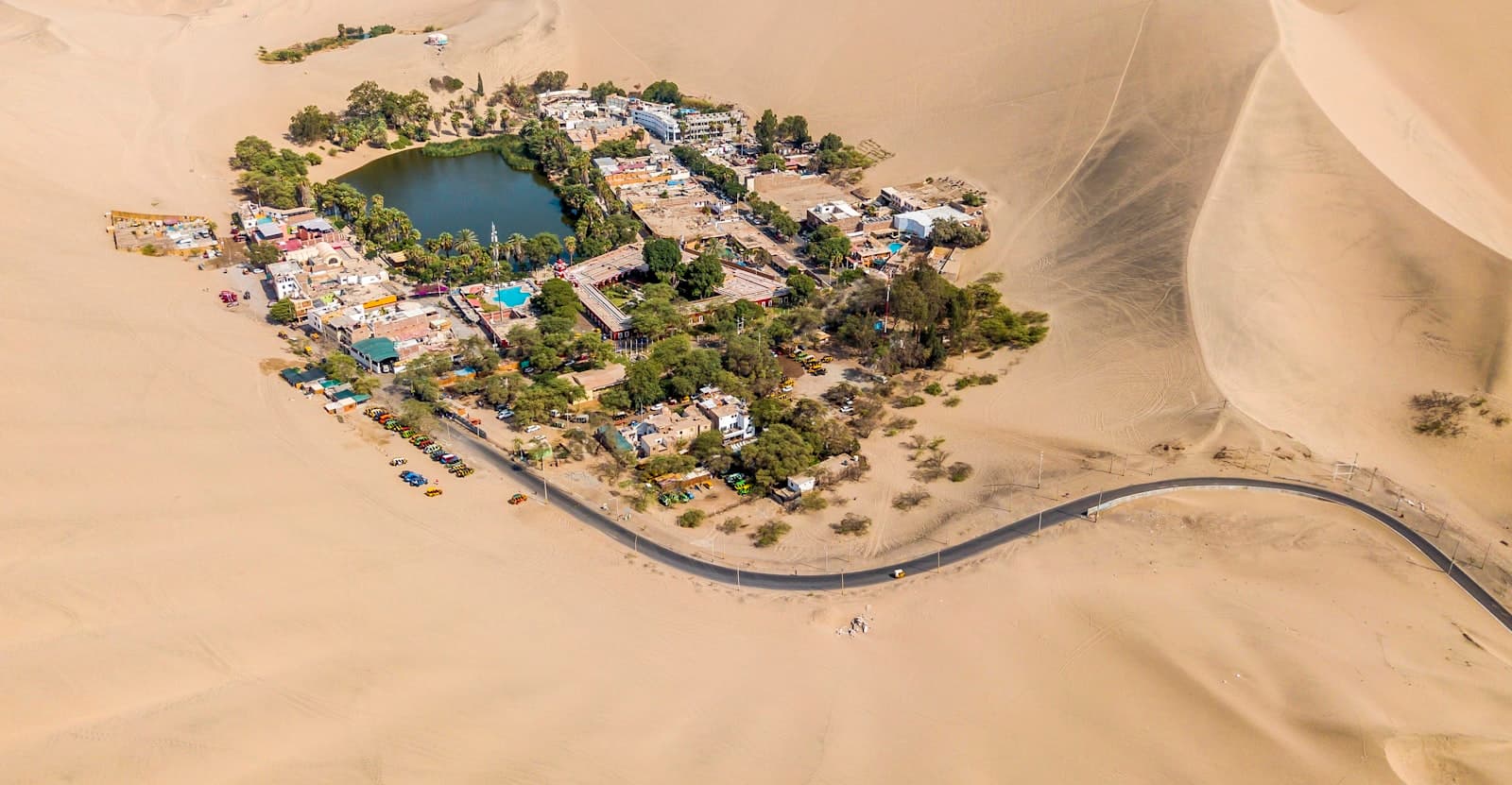 No. 042 to 3 nightsSouth coast: Paracas, Huacachina and NazcaAn absolute desert falling into a cold, fish-rich ocean, a palm oasis ringed by giant dunes and undeciphered geoglyphs: the southern Panamericana is the country's easiest — and strangest — road trip.
More stops worth adding to the trip
Cusco
Perfect Inca walls beneath colonial balconies, cobbled lanes climbing towards the ruins: the empire's former capital is the world's most beautiful altitude waiting room.
What to see
- The Qorikancha, Temple of the Sun with Inca foundations beneath the colonial church
- Sacsayhuamán at sunset, when the giant blocks catch fire
- The San Blas quarter, its artisan workshops and rooftop viewpoints
Suggested time: 2 to 3 nights
Colca Canyon and Arequipa
A canyon twice as deep as the Grand Canyon, condors skimming the terraces at head height and villages where time stood still: the south's most spectacular high-altitude drive.
What to see
- Cruz del Cóndor early morning: the condors ride the thermals between 8 and 10 am
- The Patapampa pass (4,910 m) and its apachetas facing the Ampato and Sabancaya volcanoes
- The La Calera hot springs in Chivay, 38 °C water after the day's drive
Suggested time: 2 to 3 nights (including 1 in Arequipa)
Peru: practical notes
Tolls, fines, money, seasons, budget, rental: the essentials, gathered on this page.
How many days for a Peru road trip?
In Peru, the variable that sizes the trip can't be read on the road map: it's altitude. Cusco sits at 3,400 m, the Patapampa pass on the Colca road exceeds 4,900 m, and the Abra La Raya between Puno and Cusco tops out at 4,335 m — figures that demand 48 hours of acclimatisation before any effort, and that forbid compressing the Andean itinerary the way you would elsewhere. Short answer: 7 days for Cusco, the Sacred Valley and Machu Picchu from a fixed base, 10 to 12 days to add Arequipa and the Colca Canyon or Lake Titicaca, 15 to 18 days for the great southern loop from Lima — coast, condors and Andes —, 3 weeks to push on to the Amazon or the Cordillera Blanca. Here's the detail, passes and acclimatisation included.
| Duration | Itinerary | Distance | What you give up |
|---|---|---|---|
| 7 days | Cusco + Sacred Valley + Machu Picchu from a fixed base | 200-300 km | The coast, Arequipa, Titicaca |
| 10-12 days | Cusco-Sacred Valley + Arequipa-Colca OR Titicaca | 600-900 km + 1 flight | The Pacific coast |
| 15-18 days | Full southern loop Lima-Cusco | 2,000-2,200 km | The Amazon, the North |
| 3 weeks | Southern loop + Amazon or Cordillera Blanca | 2,200 km and up + flights | Almost nothing |
Money in Peru: soles, cards and ATMs for a road trip
Between ATMs that rarely allow more than 400 to 700 soles per withdrawal, shops that flatly refuse a 200-sol note for lack of change, and an official technique for spotting fake bills in seconds, handling cash in Peru takes a bit more planning than in a European destination. From Cusco to the Sacred Valley, Colca Canyon and the Cordillera Blanca, here's how to juggle Peruvian soles, cards and cash without a nasty surprise on the road — figures and sources included.
- Plan several spaced-out withdrawals rather than one: caps sit around 400 to 700 soles depending on the bank.
- Always decline the euro or dollar conversion offered at an ATM or card terminal, and choose to be billed in soles.
- Change currency at a licensed casa de cambio or bank branch, never with a street cambista.
- Break 100 and 200-sol notes at a supermarket or bank, not at a small shop or in a taxi.
- Always carry 100 to 200 soles in small notes for markets, taxis and card-free rural areas.
- Set aside cash in soles for Inca Trail or any guided trek tipping, paid directly to porters, cook and guide.
| Bank | Typical cap per withdrawal | Typical fee |
|---|---|---|
| BCP | ~700 soles | 15-20 soles |
| Scotiabank | ~400 soles | 18-20 soles |
| Interbank | ~400 soles | 20-25 soles |
| Banco de la Nación (MultiRed) | ~400 soles | often free |
Peru Road Trip Budget: What Does a Day on the Road Really Cost?
“What does a day of road-tripping in Peru actually cost?” The answer plays out in soles as much as in metres of altitude: since 1 May 2026, Machu Picchu entry has risen to 163 soles (about €42), petrol sells by the gallon at 17-22 soles depending on the region, and altitude sickness can cost you a lost, non-refundable booking if acclimatisation isn't planned for. Here, line by line, is what you really need to budget for a self-drive trip in Peru, across the Andean south, the Cordillera Blanca and the desert coast — rental car and overnight buses included.
| Accommodation | Price for two, per night |
|---|---|
| Dorm (two beds, Cusco/Arequipa) | around 70-90 soles (≈ €18-23) |
| Double room, decent hostería | around €35-55 |
| Huaraz / Puno | from €30-45 |
| Comfort hotel, private bathroom and heating | around €70-110 |
| Aguas Calientes, high season | often 20-40% more |
Police checks and fines in Peru: PNP, Andean checkpoints and drink-driving in a rental car
On the Pan-American Highway as much as on the Andean passes, a road trip in Peru will sooner or later run into a checkpoint staffed by the Policía Nacional (PNP), traffic division. Most of the time the stop lasts thirty seconds; sometimes it ends with a "papeleta", the official ticket. Peru has just raised the reference value its fines are calculated from for 2026, and the fine schedule holds an exception that surprises many travellers: unlike an unbuckled seatbelt or missing paperwork, speeding and drink-driving carry no discount at all. Here's what changed this year, what a violation really costs, and how to react in front of an officer with a rental car.
| Violation | Amount (% UIT) | 2026 equivalent |
|---|---|---|
| Speeding ≤ 10 km/h over the limit | 18% UIT | S/ 990 (≈ €254) |
| Speeding 10-30 km/h over the limit | 24% UIT | S/ 1,320 (≈ €338) |
| Speeding > 30 km/h over the limit | 50% UIT | S/ 2,750 (≈ €705) |
| Driving with alcohol present (no accident) | 50% UIT | S/ 2,750 (≈ €705) + 3-year licence suspension |
| Alcohol above the criminal-code threshold, with accident | 100% UIT | S/ 5,500 (≈ €1,410) |
| Seatbelt not worn | 8% UIT | S/ 440 (≈ €113) |
| SOAT not physically presented (policy held but not on hand) | 8% UIT | S/ 440 (≈ €113) |
| Driving without a SOAT policy at all | 20% UIT | S/ 1,070 (≈ €274) + impoundment |
SIM Cards and Internet in Peru: Staying Connected Between the Andes and the Amazon
On the road climbing toward Patapampa Pass, nearly 4,900 m up between Arequipa and Colca Canyon, the signal bar on a phone can vanish in an instant — right when the air thins out and being able to call for help with altitude sickness matters most. Peru stacks three worlds that don't connect the same way: a well-covered urban coast, an Andean sierra where signal follows the valleys before fading out on the passes, and an Amazon where it simply doesn't exist outside a handful of towns. Here's how to get set up before you go, and where the connection really fails on a road trip between Lima, Cusco, the Sacred Valley, Colca and the Amazon.
- Check what your French plan actually covers in Peru (data included, cap, duration) before relying on it for the whole trip.
- Activate an eSIM before departure (Airalo, Holafly) to cover the airport-to-rental-office leg.
- For an extended route between Cusco, Colca and the Amazon, a Claro SIM bought in town remains the widest rural coverage.
- A passport with the entry stamp is what airport tourist kiosks ask for to register a SIM.
- Download offline maps before entering the Cordillera Blanca, Colca Canyon or the Amazon: the network often drops there without warning.
- Mount your phone on a dashboard holder and favour voice guidance, especially on Andean passes where altitude already slows reflexes.
| Carrier | Peru offer | Approximate price |
|---|---|---|
| Free | 35 Go included (350 Go plan) or unlimited Free Max | €19.99 or €29.99/month |
| Orange | Pass Voyage, Americas zone (1 to 5 Go, 31 days) | from €5 |
| RED by SFR | Pack Séjour Amérique latine (20 Go, 30 days) | ≈ €35 |
| Bouygues Telecom | Pass Monde (3 Go) or Pass Confort (10 Go) | ≈ €30 to €35 |
The Sacred Valley of the Incas by Car: From Cusco to Ollantaytambo
Pisac's terraces clinging to the mountainside, the concentric circles of Moray, the salt pans of Maras, the fortress of Ollantaytambo: the Sacred Valley of the Incas lines up, within an hour's drive of Cusco, a density of archaeological sites unmatched in South America. Most travellers see it on an organised tour, rushing between two bus stops. By car, the valley changes character: you reach the terraces at opening time, ahead of the groups, and you sleep down in the valley, at a kinder altitude than Cusco — a detail that makes all the difference for acclimatisation. Here is our itinerary, site by site, with the rules of the boleto turístico and the pitfalls of Andean driving.
- Slow down at the entrance to every village: the "rompemuelles" are rarely signposted.
- Watch out for dogs and tuk-tuks, especially when crossing towns.
- Use the horn like the locals: a short warning tap before a blind bend or an overtake.
- In the rainy season (roughly November-March), expect fog and slippery roads at altitude.
- Avoid night driving and keep the tank well filled between towns.
| Site | What you see | Boleto turístico | Our tip |
|---|---|---|---|
| Pisac | Monumental terraces, ruins above the village, craft market | Yes | Arrive at opening time, ahead of the groups from Cusco |
| Chinchero | Village, weaving workshops, colonial church on Inca foundations | Yes | Combine with Moray and Maras on the same day |
| Moray | Circular amphitheatre terraces | Yes | Light and crowds are kinder early in the morning |
| Maras salt pans | Salt ponds on the mountainside | Separate ticket, not on the boleto | Late afternoon, after the coaches have gone |
| Ollantaytambo | Inca fortress, living village on its original plan | Yes | Sleep on site and visit first thing |
Tolls in Peru: the suspended Panamericana, IIRSA Sur, and Via de Evitamiento with a rental car
Unlike neighbouring Chile and its single nationwide electronic tag, Peru has no unified toll system: every concessioned highway sets its own rate, its own payment method, and its own review schedule. For anyone planning a self-drive road trip between Lima, the Sacred Valley, or Colca Canyon, that means checking route by route rather than relying on one rule for the whole country — especially since a major toll south of Lima has simply been suspended since late 2025, and several Andean rates dropped in early 2026. Here is how it actually works, with the figures and dates that matter.
| Stretch | Concessionaire / status | Light vehicle rate 2026 |
|---|---|---|
| Via de Evitamiento / Línea Amarilla (Lima) | Lima Expresa | 6.30 soles since 3 February 2026 |
| Panamericana Sur, Pucusana toll point | Suspended by Lima's municipal government | No toll collected for most of 2026 (status to be reconfirmed) |
| Quilca-La Concordia / IIRSA Sur sections 3-4 (Arequipa, Matarani, Moquegua) | IIRSA Sur concession | About 3% decrease (−0.20 to −0.40 soles) since 10 January 2026 |
| Carretera Central, Chosica and Ticlio (Lima-Huancayo) | Local concession | Higher rate for heavy vehicles, unchanged for light vehicles |
Travel Insurance for Peru: Altitude Sickness and Evacuation — What to Cover Before a Road Trip
A Peru road trip is planned like an ascent: an itinerary built around acclimatization, a budget split between a rental car and overnight Andean buses, Machu Picchu tickets booked weeks in advance — yet the "travel insurance" line is often the one ticked fastest, without a close look. It deserves better: Peru is a country where nearly the entire tourist circuit sits above 3,000 meters, where many insurance policies exclude altitude and trekking outright unless you add a specific rider, and where a helicopter evacuation from the Cordillera Blanca or the Colca canyon runs into the tens of thousands of dollars. Real costs, what SOAT covers — and doesn't — what the research on altitude sickness among Cusco travelers actually shows: here's what to check before you book a flight to the Andes.
- Check the altitude ceiling covered by the policy: it should exceed 5,000 m for the full classic Peru circuit.
- Compare at least two policies on the medical expenses cap (≥ €100,000) and international evacuation on an actual-cost basis (≥ $250,000).
- Check that high-altitude trekking without a certified guide is explicitly covered, not just "not excluded."
- Don't rely on SOAT or a home health card: SOAT only covers road accidents, and a French carte vitale has no standing in Peru.
- Acclimatize gradually (two days in Cusco or the Sacred Valley) before going higher, and descend at the first worsening symptom.
- Keep the 24/7 assistance number (on paper and as a photo on your phone) in your backpack, next to your driving licence.
| Type of cost | Typical amount |
|---|---|
| Private clinic consultation (Lima or Cusco, uninsured) | $25-50 (€20-45) |
| Night in a private hospital room | $100-200 (€90-185) |
| Treatment for acute altitude sickness (case recorded in Cusco) | around $1,200 (€1,100) |
| Regional helicopter evacuation (Cordillera Blanca, remote areas) | from $15,000 (€13,800) |
| International medical evacuation (serious case) | up to $300,000 (€275,000) |
Our flagship guide — €44
Guide available“Peru on Your Own”, the complete edition, is out
10 chapters: day-by-day itineraries, driving and transport, a costed budget and checklists — the same method as our Namibia guide.
The guide is currently written in French — an English edition is in the works.
No time to do it yourself?
A professional can take care of it: tailor-made trip, equipped 4x4 rental or a local guide. Describe your plans and, with your consent, we pass them on to partner professionals.
1. What you need
Explore other countries