Oman on your own
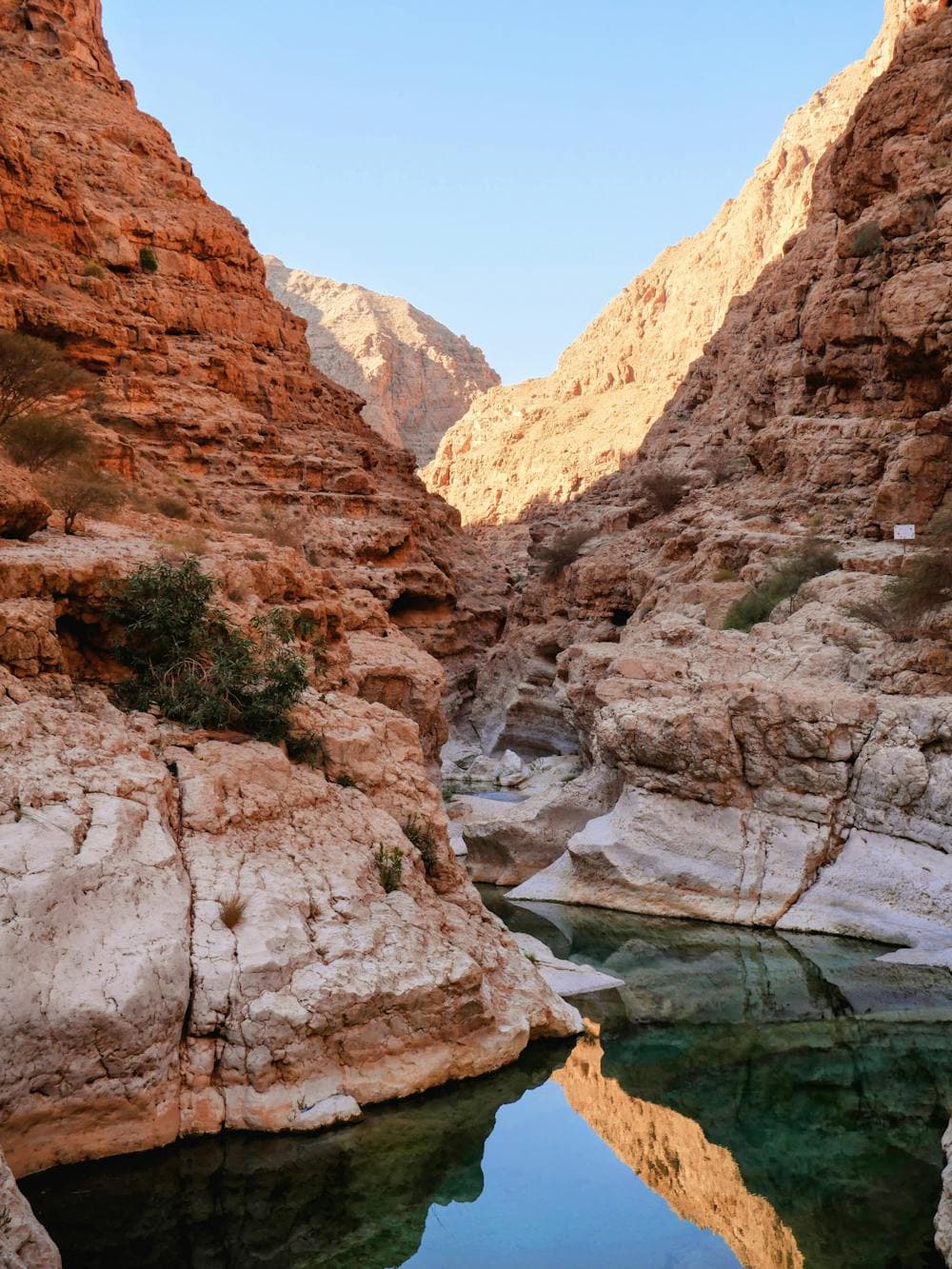
Emerald pools at the bottom of canyons, rust-red dunes to the horizon, villages clinging on at 2,000 m and the right to pitch your tent almost anywhere: Arabia for travellers, in total freedom.
When to go
From October to April the country is perfect: 25-30 °C on the coast, cool desert nights, crystal-clear mountain days. From May to September the furnace (45 °C and beyond) makes the coast and desert punishing — only the jebels, 15 °C cooler, stay pleasant. Avoid Ramadan if you want restaurants open at lunchtime, and note that December-February bivouac nights drop towards 5 °C at altitude.
What it costs
The Omani rial (1 OMR ≈ €2.40) looks scary; the reality is gentler: compact SUV €40-70/day, proper 4x4 (Fortuner, Prado) €70-110/day, petrol at €0.55-0.60/L — a full tank costs less than a European lunch. Decent hotels €60-120, desert camps €100-160 half-board, and wild camping brings accommodation down to zero. Budget €2,000-3,200 for two over 12-15 days excluding flights, mixing tent and guesthouses.
Driving & transport
Right-hand driving on an immaculate network — the danger isn't the road but its edges: free-roaming camels and goats, especially at dusk. Fixed speed cameras everywhere (all cars beep compulsorily above 120 km/h), zero-tolerance drink-driving, steep fines. NEVER cross a flowing wadi: flash floods kill every year, and closed barriers are to be respected. The Jebel Akhdar checkpoint turns away two-wheel drives — a real check, not a symbolic one. Download offline maps: 4G vanishes in the canyons.
Oman is the counterpoint to the flashy Gulf: no glass towers here, but mud-brick forts, terraced oases, wadis where turquoise water runs year-round between the walls — and a hospitality that owes nothing to marketing. The sultanate opened to tourism without selling out, and it is one of the safest countries on Earth: you drive with the windows down, camp alone in the desert, and stop thinking about the boot.
Our guide for this country: See what's inside — €44 →
Above all, it is a paradise for independent travel: wild camping is legal and culturally normal (Omanis themselves picnic and camp everywhere), fuel costs next to nothing, and a 4x4 unlocks the essentials — mountain tracks at 2,000 m, the Wahiba dunes, wadi fords. In ten to fifteen days out of Muscat, the classic loop chains coast, canyons, desert and jebels without ever repeating itself.
The destinations that matter
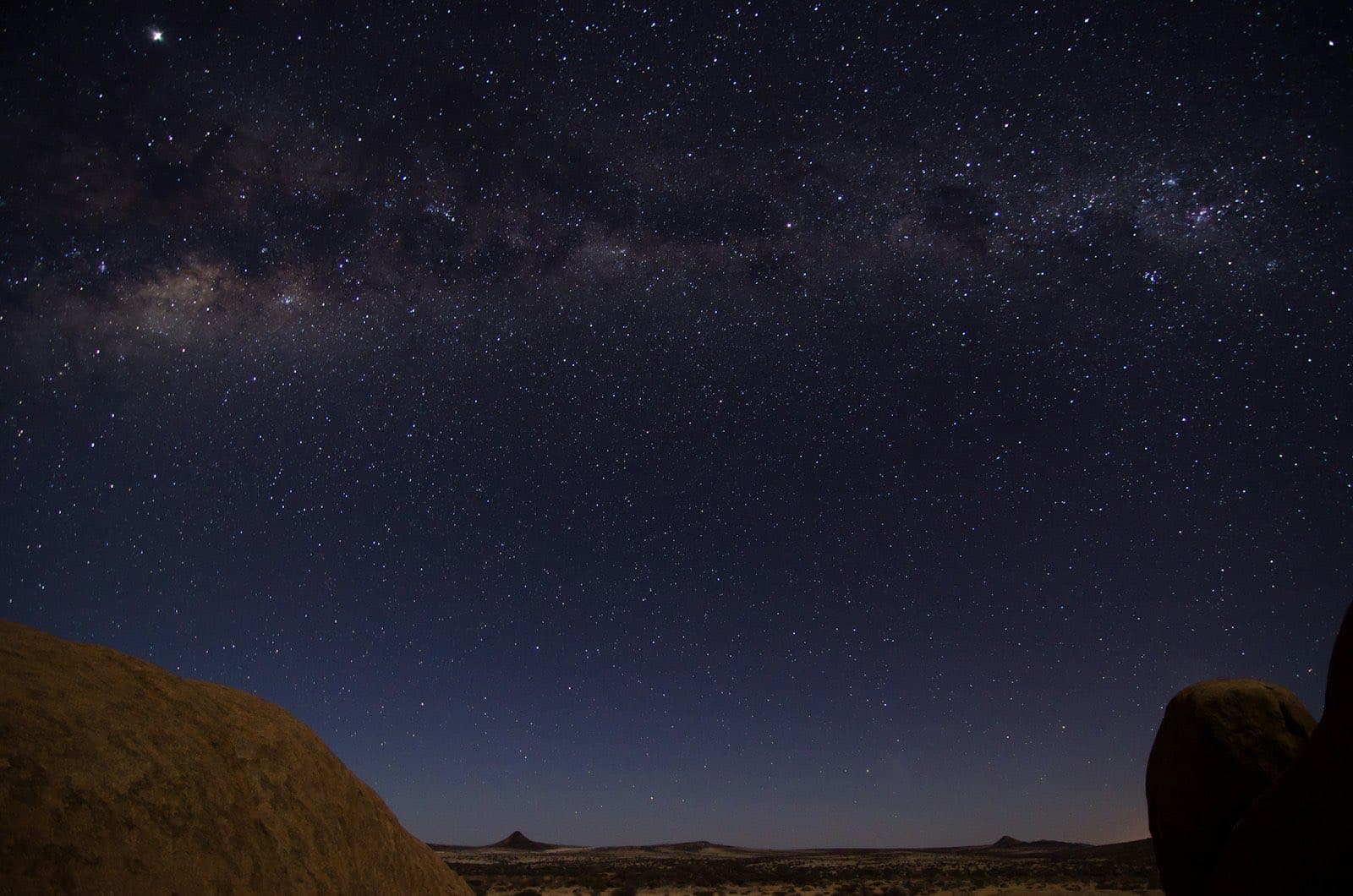
5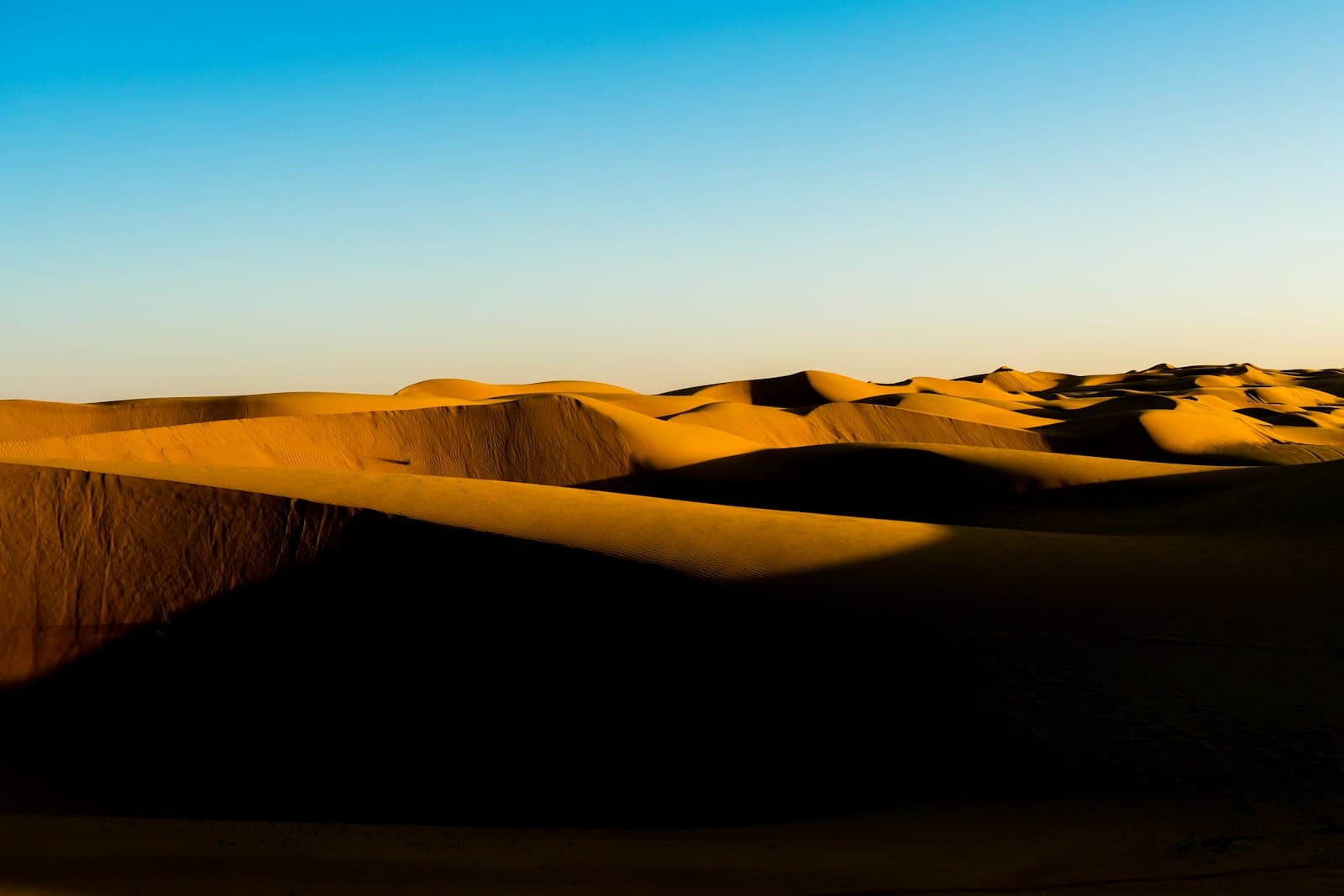 No. 021 to 2 nightsWahiba Sands desertTwo hundred kilometres of rust-red dunes that catch fire at sunset, Bedouin camps folded into the sands and the most total silence of the whole trip.No. 031 to 2 nightsJebel Shams and the grand canyonA thousand-metre chasm torn into the plateau, a balcony path to an abandoned village and freezing nights under a sky riddled with stars: the roof of Oman is earned, then savoured.No. 042 nightsJebel Akhdar and NizwaThe "green mountain" hides villages clinging to terraces, pomegranate orchards and perfume roses at 2,000 m — with Nizwa, city of forts and the goat market, waiting below.No. 052 to 3 nightsMusandam fjordsAn exclave at the far north, cut off from the rest of the country by the Emirates: bare mountains plunging into a turquoise sea, dolphins off the bow and villages reachable only by boat.
More stops worth adding to the trip
Wadi Shab and the Sur coast
Ninety minutes from Muscat and already the trip's great thrill: a canyon where you swim to a waterfall hidden inside a cave, then turtles nesting beneath the stars.
What to see
- The Wadi Shab hike-and-swim to the waterfall cave (allow 3-4 h round trip)
- The Bimmah sinkhole and its turquoise pool, free and well laid out
- Sur's dhow shipyards and the white village of Ayjah across the lagoon
Suggested time: 2 nights
Oman: practical notes
Tolls, fines, money, seasons, budget, rental: the essentials, gathered on this page.
Jebel Shams and Musandam fjords: a 4x4 road trip in Oman
Oman is the Arabian Peninsula's rising self-drive destination, and two sites crystallise the searches: Jebel Shams, the country's highest peak overlooking a vertiginous canyon nicknamed the "Grand Canyon of Arabia", and the Musandam Peninsula, where rock fjords plunge into a deep-blue Strait of Hormuz. You can link the two in one trip, but they demand different logistics: 4x4 required for one, a dhow for the other. Here's how to tackle them self-drive, safely, on tracks that don't forgive carelessness.
| Site | Access | Signature activity | Plan for |
|---|---|---|---|
| Jebel Shams | Low-range 4x4 required | Balcony Walk (3-4 h) | Water, warm clothes, full tank |
| Wadis (Hajar) | 4x4 per track | Pool swimming | Never in stormy weather |
| Musandam / Khasab | Via UAE or by air | Dhow cruise | Border formalities |
| Jebel Harim | Mountain 4x4 | Fjord panoramas, fossils | Full day |
Money in Oman: the Omani rial, bank cards and ATMs for a road trip
The Omani rial gives travellers a misleading first impression: rare notes, an exchange rate that makes it look like an oddly "expensive" currency, and tellers who sometimes wince at a large bill. None of it is actually a problem once you know the rules — but they differ from what a eurozone traveller is used to. Here's how to split cash, bank card and small notes before setting off on the tracks of Jebel Shams, the dunes of the Wahiba Sands or the wadis along the coast.
Police checks and fines in Oman: radar cameras, zero alcohol and the new tourist driving rule
On the road climbing toward Jebel Akhdar, a checkpoint stops two-wheel-drive vehicles cold: only registered 4x4s are allowed through. That's about as strict as a roadside check gets in Oman — elsewhere, the Royal Oman Police (ROP) relies less on random roadblocks than on one of the densest radar networks on the Arabian Peninsula and a zero-tolerance alcohol policy with no exceptions, tourists included. In late 2024, an ROP clarification also changed things for many self-drive travellers. Here's how a check really plays out, and what to know before taking the wheel of a rental car.
- Valid French or EU licence: sufficient for a tourist stay of up to 90 days since late 2024; an International Driving Permit is recommended but not mandatory.
- Passport, vehicle registration (mulkiya) and rental insurance certificate ready to show at any time.
- Stick strictly to speed limits, especially on stretches fitted with fixed radar cameras.
- Alcohol: zero before driving, with no exceptions and no tolerance.
- A registered 4x4 rather than an SUV for any route through Jebel Akhdar, or risk being turned back at the checkpoint.
| Zone | Limit | Note |
|---|---|---|
| Built-up area | 40 to 80 km/h | Varies with local signage |
| Single-carriageway road outside towns | 90 km/h | — |
| Dual-carriageway expressway | 120 km/h | National ceiling |
| Tracks and wadis (off paved roads) | Not numbered | No official figure reported; caution dictated by terrain |
SIM Card and Internet in Oman: Staying Connected Between Wadis, Desert and Fjords
Deep inside Wadi Shab, between two sandstone walls closing in on the last emerald pool, the signal bar has already dropped out. On the Jebel Shams plateau, 2,000 metres up at the edge of a canyon a thousand metres deep, it doesn't come back either. Oman is nonetheless an easy country to drive around independently: excellent main roads, manageable distances from Muscat, clear signage. Connectivity mostly matters for preparing each leg in advance — because once you're on a track in Wahiba Sands or deep in a Musandam gorge, you want your map already downloaded. Here's how to get equipped before hitting the road, and where the signal genuinely holds.
- Check exactly what your home plan covers in Oman — Sosh, Orange and SFR/RED usually offer a travel pass, Bouygues and Free rarely a worthwhile option — before relying on it for the whole trip.
- Activate an eSIM before departure (Airalo, Holafly) to secure arrival and the first days in Muscat.
- For an itinerary heading toward Jebel Akhdar, Jebel Shams or Wahiba Sands, an Omantel SIM bought at the airport gives the best rural coverage.
- A passport is required for any SIM card, regardless of carrier.
- Download your offline maps before entering a deep wadi, before the Jebel Shams plateau, or before boarding a dhow in Musandam.
- Set your route before you start driving: using a phone at the wheel, even for navigation, is fined in Oman — down to the dashboard mount itself.
| What to check | Why it matters | Before you fly |
|---|---|---|
| Is Oman in your travel-plan zone? | Coverage varies widely between EU carriers | Check the operator's app or account |
| Data allowance and validity | Volumes and durations vary widely between plans | Confirm the exact quota for your trip length |
| Cost of an add-on pass if not included | Paid international passes are the common fallback | Compare against a local SIM or eSIM |
Our flagship guide — €44
Guide available“Oman on Your Own”, the complete edition, is out
10 chapters: day-by-day itineraries, driving and transport, a costed budget and checklists — the same method as our Namibia guide.
The guide is currently written in French — an English edition is in the works.
No time to do it yourself?
A professional can take care of it: tailor-made trip, equipped 4x4 rental or a local guide. Describe your plans and, with your consent, we pass them on to partner professionals.
1. What you need
Explore other countries