New Zealand on your own
Fjords under seven metres of rain, Middle-earth volcanoes, turquoise lakes and a campervan parked facing all of it: New Zealand is the country that invented van travel — and the only one that keeps every one of its promises.
When to go
Austral summer from December to February: high season, everything open but everything expensive and booked out — van prices double. The shoulder seasons (November, March-April) are the real sweet spot: superb light, lupins in the Mackenzie in November, autumn colours in Wanaka, half the crowds. Winter (June-August) hands the South to skiers: the Milford road demands chains and avalanche awareness, but snowbound Alps over the lakes are worth the trade.
What it costs
A self-contained van for two: €60-90/day in shoulder season, €130-220/day at the height of austral summer — booking six months ahead changes everything. Petrol around €1.50-1.65/L (diesel is cheaper per litre but subject to Road User Charges, to factor into the maths). DOC campsites €6-12/person, holiday parks €35-50 for a powered site for two, freedom camping free where permitted. Budget €3,500-5,500 for two over 3 weeks excluding flights, inter-island ferry included (€200-350 one way with a van, depending on season).
Driving & transport
Driving on the LEFT — maximum vigilance is needed for the first three days and at every restart after a photo stop, statistically the moment tourists drift to the wrong side. Single-lane-each-way roads almost everywhere, one-lane bridges with signed priority (the red arrow gives way), relentless bends: 100 km/h on the sign, a real average of 65. Local traps: jet-lag fatigue (never drive on arrival day), gravel on secondary roads, keas stripping windscreen seals in alpine car parks, and filling up before the empty stretches — there is no petrol station on the 118 km between Te Anau and Milford Sound.
No country packs so many landscapes into so few kilometres: glaciers and fjords, subtropical beaches, steaming volcanoes, lakes of an unreal turquoise, forests of tree ferns — all without a single snake or dangerous animal. And no country has organised its geography around the van like this one: DOC campsites on lake shores, freedom-camping spots, dedicated apps (CamperMate, Rankers) and a road culture where the campervan is king. You sleep where the landscape is strongest, and move on when the light changes.
Our guide for this country: See what's inside — €44 →
The flip side of the dream takes planning: freedom camping is only legal in a certified self-contained vehicle (a fixed toilet has been compulsory since the 2025 reform, green sticker to prove it), the Cook Strait ferry books out weeks ahead in summer, and left-hand driving on narrow, winding roads halves your averages: count on a real 60-70 km/h, never more. Three weeks for both islands, two for one — anything less is a sprint.
The destinations that matter
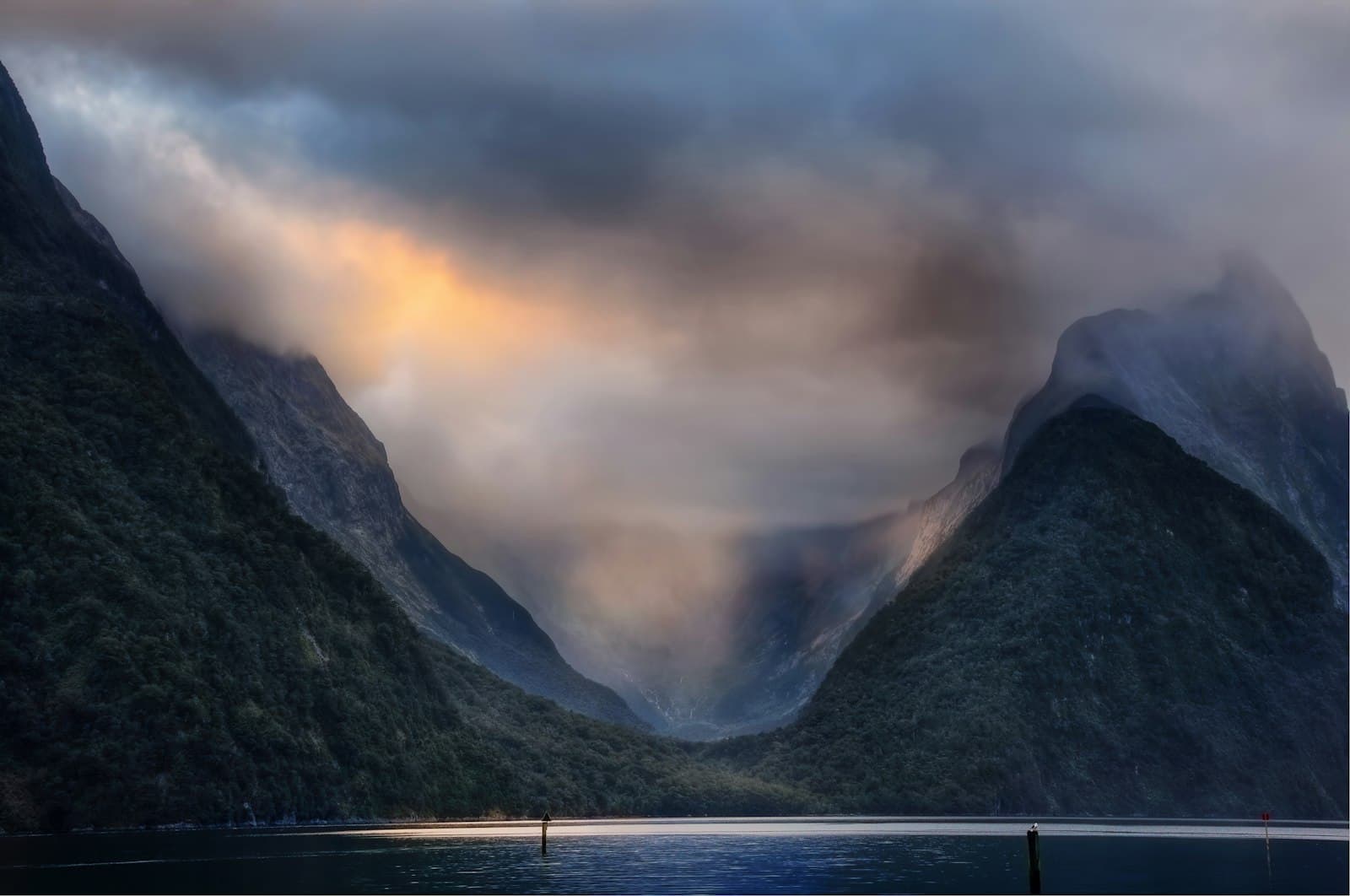
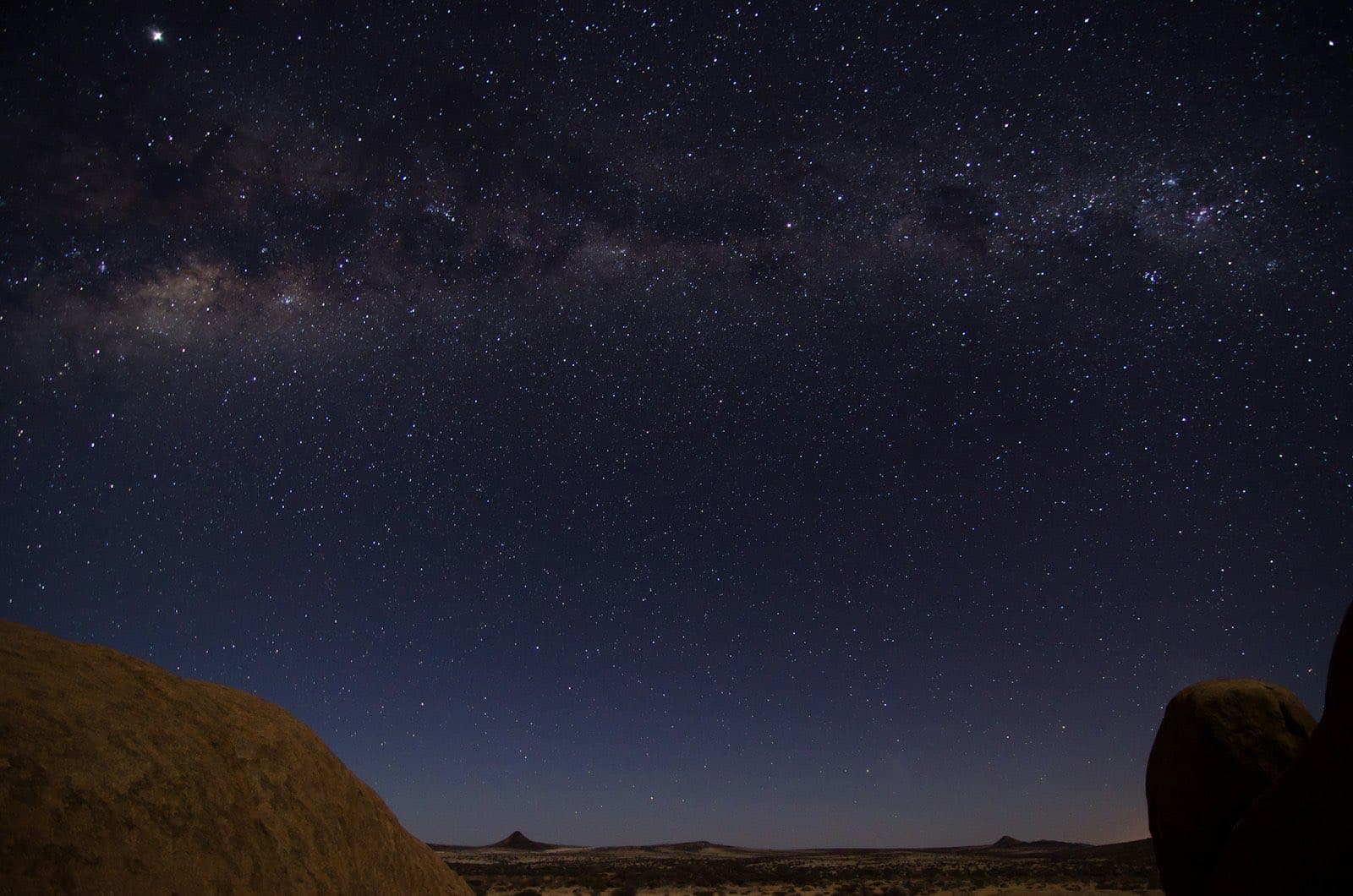
5No. 012 nights (Te Anau or the Milford Road DOC campsites)Fiordland and Milford SoundA black fjord beneath 1,200 m walls, waterfalls born with the rain and a road that rivals the destination: Milford Sound is the long-awaited climax that still exceeds expectation.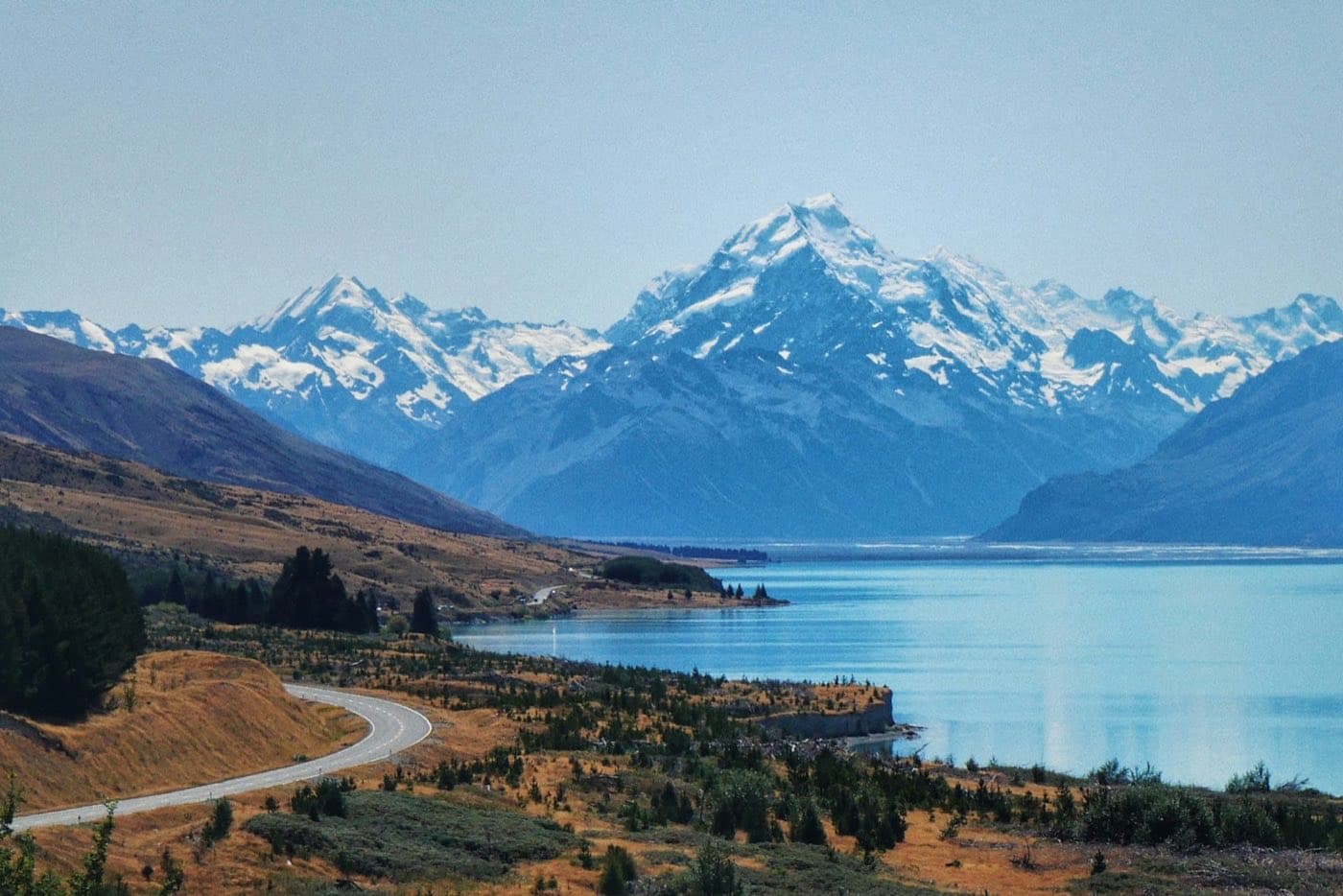 No. 022 nights (one at Mount Cook, one at Tekapo)Aoraki/Mount Cook and Lake TekapoA milky turquoise lake, the country's highest summit at the head of the valley and one of the purest starry skies in the southern hemisphere: the Mackenzie is New Zealand written in capitals.No. 032 nightsThe CatlinsA coast battered by the Southern Ocean's furies, penguins commuting home at dusk and empty gravel roads: the Catlins are the South Island's best-kept secret.No. 042 nights (to give yourself two possible weather windows)TongariroNineteen kilometres between steaming craters, emerald lakes and the perfect cone of Mount Doom: the country's finest day hike crosses a field of very-much-alive volcanoes.No. 052 nightsRotoruaA town built on a boiler: geysers, bubbling mud, fluorescent pools and the smell of sulphur as wallpaper — Rotorua is also the living heart of Māori culture.
More stops worth adding to the trip
Queenstown and Wanaka
The world's adrenaline capital and its laid-back little sister, set on two implausibly blue lakes: the beating — and busiest — heart of the South Island.
What to see
- The Glenorchy road in late afternoon, when the Wakatipu catches the low light
- Roys Peak with a pre-dawn start for sunrise (count 5-6 h return)
- The Kawarau Bridge bungy — to do or to watch, the show is free
Suggested time: 3 nights (split between the two lakes)
New Zealand: practical notes
Tolls, fines, money, seasons, budget, rental: the essentials, gathered on this page.
Daily budget for a self-drive campervan road trip in New Zealand: what a day on the road really costs
"How much does a day in a campervan really cost in New Zealand?" Unlike many other self-drive destinations, here it's neither fuel nor food that weighs heaviest on the daily bill, but the campervan rental itself — often more than half the daily budget. A self-contained campervan around NZD 35-90/day outside peak season, petrol at roughly NZD 3/L (≈ €1.54) in mid-2026, groceries NZD 20-40 per person per day: here is, cost by cost, what a day really costs between freedom camping and holiday parks, and how to plan for it before booking the vehicle.
- Book a self-contained van (green sticker): it's the only vehicle type that unlocks free freedom camping, the single biggest lever over the whole trip.
- Travel in the shoulder season (March-April or November) rather than in the height of the southern summer: campervan rental rates drop 30-40% and campsites can be booked without stress.
- Shop at Pak'nSave or another discount chain rather than touristy city-center supermarkets — the gap can reach 20-25% on the same basket.
- Alternate freedom camping and DOC campsites rather than stacking up holiday parks: the difference often tops €20-30 a night for a couple.
- Book the campervan several months ahead, especially for a December-February departure: the pool of self-contained vehicles is limited and the best rates disappear first.
| Accommodation type | Price per night |
|---|---|
| Freedom camping (certified self-contained van) | €0 |
| DOC standard campsite | ≈ €5-10/person |
| DOC serviced campsite | ≈ €13/person |
| Holiday park, unpowered site | ≈ €13-18 (per van) |
| Holiday park, powered site | ≈ €18-28 (per van) |
| Holiday park cabin (bedding not included) | ≈ €31-46 |
Money in New Zealand: bank cards, EFTPOS and the surcharge ban that's still pending
At a petrol pump on the South Island or the counter of a café in Wānaka, pulling out New Zealand dollar notes almost feels out of place: the card has taken such a lead over cash here that some businesses flatly refuse it. But this near-cashless country has a trap of its own on the card side too, the notorious "surcharge" tacked onto payments, which a bill promises to ban without yet having done so. Here's how to handle your money without surprises on a van road trip across both islands.
| Payment method | What to know for a road trip |
|---|---|
| Bank card (EFTPOS, Visa, Mastercard) | Accepted almost everywhere, including remote regions |
| Contactless / phone | Standard everywhere; PIN required above about NZ$200 |
| Merchant surcharge fee | About 0.7% (debit) to 2% (credit), still applied in 2026 |
| Cash (New Zealand dollar) | Under 5% of payments; useful for honesty boxes and laundromats |
| Tipping | Not expected, never obligatory; minimum wage at NZ$23.95/h |
Police checks and fines in New Zealand: speed, breath testing and fines charged after the rental
On the Crown Range Road between Queenstown and Wanaka, on the single-lane road to Milford Sound, or pulling up to a “booze bus” parked on State Highway 6 in Fiordland on a Friday night, running into a New Zealand Police checkpoint is part of everyday driving on a self-drive road trip in New Zealand. The country combines a dense network of automatic safety cameras, some of the most frequent random breath-testing checks in the world, and a speed-limit reform still rolling out since 2024. For a traveller in a rental car, there is also a very practical question: what happens to a fine that arrives after you have handed back the keys and flown home? Here are the rules in force in mid-2026, and what changes for a foreign driver.
| Road type | Speed limit |
|---|---|
| Built-up area (urban zone) | 50 km/h |
| Outside a school during school hours (from July 2026) | 30 km/h |
| Open road | 100 km/h |
| Signed expressway sections | 110 km/h |
Tolls in New Zealand: the 3 toll roads and how to pay them in a rental campervan
Nobody budgets for tolls on a New Zealand road trip — and almost always rightly so: the whole country has only three toll roads, all clustered around Auckland and Tauranga. The tricky part isn't the price, which is negligible, but the system: no barriers, no booths, just cameras that read your plate and a five-day window to pay online. For anyone driving a rental car or campervan, that raises one very concrete question — who pays, and how — that few rental counters explain clearly upfront.
| Toll road | Indicative rate (light vehicle) | Free alternative route |
|---|---|---|
| Northern Gateway (SH1, north of Auckland) | ≈ NZD 2.30-2.90 | Old SH1 via Ōrewa and Waiwera, a few minutes longer |
| Tauranga Eastern Link (SH2) | ≈ NZD 2.30 | Old SH2 via Te Puke, slower |
| Takitimu Drive (SH29A/SH29, Tauranga) | ≈ NZD 2.10 | Through central Tauranga |
Travel Insurance for New Zealand: What ACC Actually Covers (and Never Covers) on a Van Road Trip
New Zealand has a deceptively "easy" reputation for a road trip: well-kept roads, modern hospitals, English everywhere, and above all a scheme unlike anywhere else, ACC, supposedly covering "everyone" in the event of an accident. The reality is more nuanced: this free public scheme pays for treating an accidental injury, but leaves a visitor entirely on their own for an illness, an ambulance ride, or — above all — a medical repatriation back to Europe. On a van itinerary that mixes left-hand driving on narrow roads, committing hikes (Tongariro, the Milford Track) and remote stretches of Fiordland or Southland, knowing exactly where ACC stops is the first thing to check before signing a travel insurance policy.
| Type of cost | Approximate range (NZD) | Covered by ACC? |
|---|---|---|
| GP consultation (visitor not eligible for public healthcare) | NZD 80-150 | No for illness / Yes for accidental injury |
| Urgent care clinic consultation | NZD 300-525 | No for illness / Yes for accidental injury |
| Hospitalization (depending on treatment) | NZD 1,000-5,000 and up | No for illness / Yes for accidental injury |
| Ambulance transport (visitor not eligible for public healthcare) | around NZD 800 | Never covered by ACC |
| Rescue helicopter / domestic evacuation (e.g. hiking accident) | NZD 4,000-18,000 | Never covered by ACC |
| Medically escorted repatriation to Europe | several tens of thousands of euros | Never covered by ACC |
Our flagship guide — €44
Guide available“New Zealand on Your Own”, the complete edition, is out
10 chapters: day-by-day itineraries, driving and transport, a costed budget and checklists — the same method as our Namibia guide.
The guide is currently written in French — an English edition is in the works.
No time to do it yourself?
A professional can take care of it: tailor-made trip, equipped 4x4 rental or a local guide. Describe your plans and, with your consent, we pass them on to partner professionals.
1. What you need
Explore other countries