Spain on your own
A western-movie desert two hours from 3,000 m summits, whitewashed villages hanging off cliff edges and gloriously empty back roads: Spain is Europe's great driving playground.
When to go
Spring (April-June) and autumn (September-October) rule everywhere: a mild, flowering Andalusia, clear mountains, reasonable crowds. Summer crushes the south (45 °C is possible in Seville in July-August — flee to the green north, Picos and Galicia, then at their finest). Winter is an Andalusian gem: 18 °C in Seville in January, the Alhambra beneath the snows of the Sierra Nevada, and the Bardenas in their best light.
What it costs
One of Western Europe's cheapest road trips: a city car or compact at €25-45/day (dropping to €15-20 off season from Málaga or Alicante — watch the excess on discount rentals), petrol around €1.55-1.75/L, hostales and casas rurales at €55-90 for a double, paradors at €120-200 to sleep in a monastery or a castle. Budget €1,800-2,800 for two over 12-15 days excluding flights, with the €12-15 menú del día thrown in.
Driving & transport
Right-hand driving, a superb network. The local traps: tell autovía (A-, free) from autopista (AP-, toll — many became free from 2021, Waze knows); the ZBE low-emission zones, now compulsory in every city over 50,000 inhabitants (Madrid and Barcelona fine by camera; Spanish rental cars carry the sticker — check yours if you drive in from France); historic centres closed except to residents and watched by cameras — one 'pedestrian' street crossed in Seville costs €90-200. Default 30 km/h limit in town, plenty of speed cameras and little tolerance; zero stress, on the other hand, on the empty national roads of the interior.
You think you know Spain and you discover a continent: in the south, Andalusia unrolls its Moorish palaces, its whitewashed villages and the coastal desert of Cabo de Gata; in the north, the Picos de Europa raise limestone walls above dairy pastures, Galicia ends the world at Fisterra, and the Ordesa canyons carve into the Aragonese Pyrenees. In between, the Bardenas Reales play Arizona in Navarre. No other European country packs so many different worlds into a single driving loop.
Our guide for this country: See what's inside — €44 →
And it is a country built for driving: free, immaculate autovías, back roads that are often deserted (the interior is emptying out, the landscapes remain), and some of Western Europe's cheapest fuel. The one real discipline concerns the cities: historic centres are closed to cars (bollards, cameras, low-emission zones), and the right reflex is always the same — underground or edge-of-town car park, then everything on foot.
The destinations that matter
5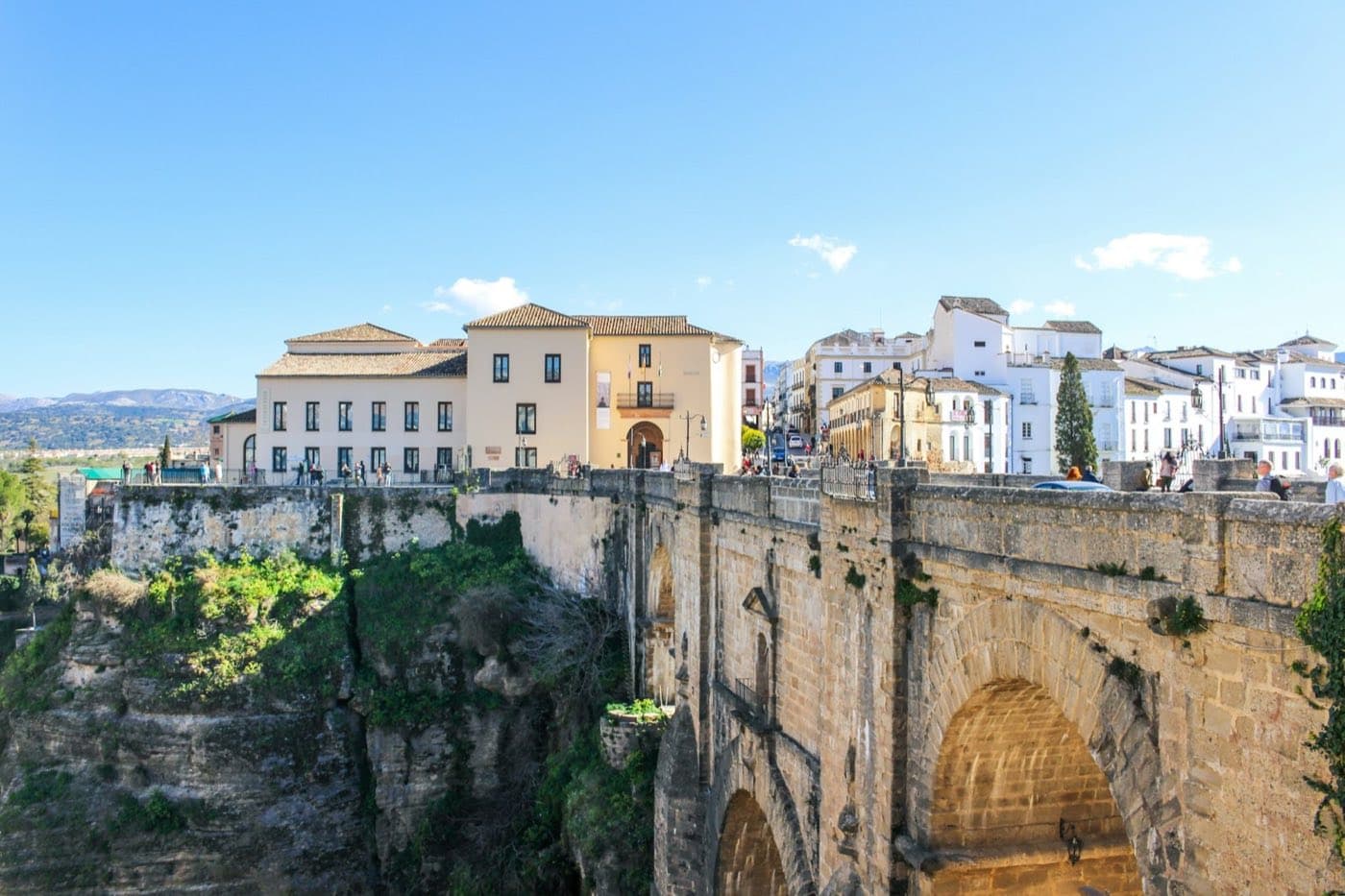 No. 013 to 4 nightsSeville and the white villagesA Moorish capital scented with orange blossom, then a ridge road where every bend reveals a whitewashed village clinging to its cliff: the south's finest city-to-country sequence.No. 024 nights (2 in Granada, 2 at Cabo de Gata)Granada and Cabo de GataThe Arab world's most beautiful palace set against the snows of the Sierra Nevada, then two hours' drive to Europe's only desert falling into a turquoise sea: eastern Andalusia deals in absolute contrasts.No. 033 nightsPicos de EuropaLimestone walls of 2,600 m planted 20 km from the sea, cows on the roads and the country's best blue cheese ripened in caves: green Spain starts here, and it looks like nothing else.No. 043 to 4 nightsGaliciaAtlantic-battered capes, coves that pilgrims took for the end of the world and Spain's best octopus served on a wooden board: Galicia is a Celtiberian Brittany that stayed secret.No. 053 nightsAragonese PyreneesA canyon with thousand-metre walls crowned by a 3,355 m summit, golden-stone villages and vultures by the hundred: the Spanish side of the Pyrenees is drier, wilder — and emptier.
More stops worth adding to the trip
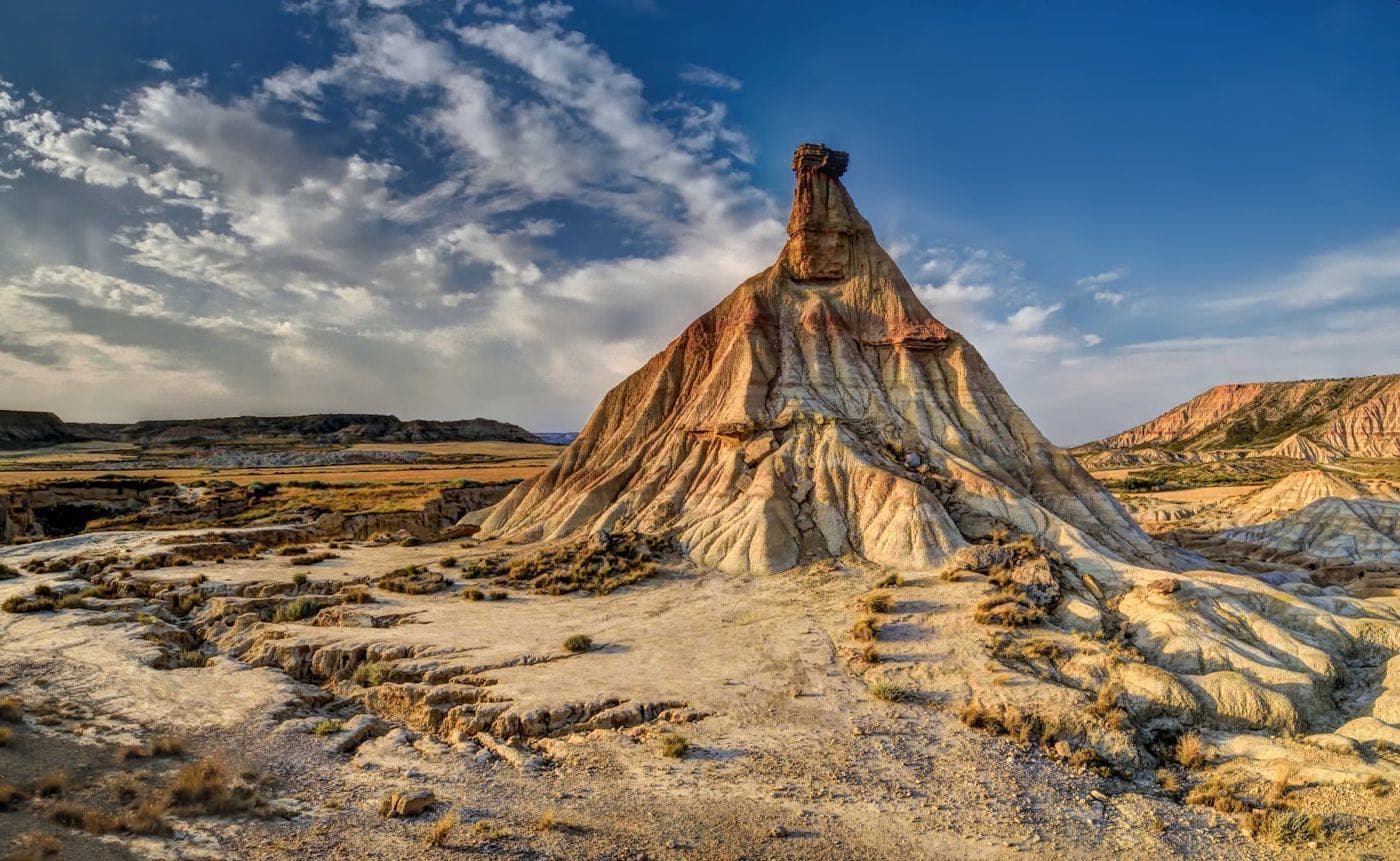
Bardenas Reales
Badlands striped in ochre and grey, a fairy chimney turned icon and gravel tracks open to ordinary cars: Arizona exists in Europe, it sits in Navarre, and entry is free.
What to see
- Castildetierra and the Bardena Blanca on the 34 km gravel loop
- The Alto de Aguilares viewpoint over the chaos of gullies, at sunset
- El Rallón and the plateaus of the Blanca Alta, realm of griffon and Egyptian vultures
Suggested time: 1 to 2 nights
Spain: practical notes
Tolls, fines, money, seasons, budget, rental: the essentials, gathered on this page.
Spain Road Trip Budget: What Does a Day on the Road Really Cost?
"Spain is one of the cheapest road trips in Western Europe" is broadly true, but it covers substantial gaps depending on whether you sleep in a hostal or a parador, eat the menu del día or dine at a tourist restaurant, and rent a hatchback or an SUV to climb up to the Picos de Europa. Fuel around €1.65-1.75/L in mid-August 2026, a double room in a hostal or casa rural from €55, a parador night from €120: here's what a day on the road between white villages, Pyrenean passes and the Bardenas badlands actually costs, cost by cost, and how to split the budget between the two ways of travelling without a nasty surprise.
- Alternate between hostals and casas rurales instead of a parador every night — the most powerful lever on the accommodation line, while keeping one or two exceptional nights for the experience.
- Favour the menu del día at lunch over the full evening menu — it's often the same kitchen, open to tourists and locals alike, for two to three times less.
- Book the hatchback several months ahead flying out of Málaga, Alicante or Seville: rates there are among the lowest in Europe outside last-minute deals.
- Check the excess before signing, especially with discount rental companies at low-cost airports: a reduced excess bought through third-party insurance often costs less than a poorly covered claim.
- Avoid the Costa del Sol and the Balearics in high summer if the budget is tight: accommodation and fuel climb noticeably higher there than in inland Andalusia or the green north.
| Accommodation type | Price for two, per night |
|---|---|
| Hostal / family pension | about €45-70 |
| Casa rural | about €55-90 |
| 3-4 star city hotel | about €70-130 |
| Parador (castle, monastery) | from about €120 |
Tolls in Spain: which motorways still charge in 2026 with a rental car
After Portugal and its seven motorways that went toll-free from 2025, a myth still lingers about Spain: a country supposedly riddled with tolls, best approached with a fat motorway budget set aside. Nearly the opposite happened. Between several concessionaires going bankrupt in 2012, the state rescue of Madrid's radial motorways, and the liberalisation of the Mediterranean AP-7 in 2021, Spain freed almost its entire motorway network from tolls within a decade — to the point that a Seville-Granada-Barcelona road trip can now be driven without ever reaching for a card at a toll booth. A handful of real sections remain worth knowing about before hitting the road with a rental car, though: the Costa del Sol, the Basque Country, Galicia, and a major change due in mid-November 2026 between Bilbao and Zaragoza.
| Motorway | Section | Zone | What to know in 2026 |
|---|---|---|---|
| AP-7 | Málaga – Estepona | Costa del Sol, Andalusia | €9.55 in low season, €15.50 in high season (June-September and Holy Week) |
| AP-8 | Irún – Bilbao | Basque Country, French border | ≈110 km, distance-based toll, Basque concessionaire Bidegi/Interbiak |
| AP-9 | A Coruña – Vigo – Portuguese border | Galicia | Still tolled; some newer sections (around Vigo) run free-flow, with no barrier |
| AP-68 | Bilbao – Zaragoza | Ebro Valley | Toll-free outside the Basque Country from mid-November 2026; Basque sections keep a reduced toll |
| R-2, R-3, R-4, R-5, M-12 | Radial motorways and ring road | Madrid area | Free from midnight to 6am, 30% reduced rate during the day |
| AP-6, AP-51, AP-61, AP-41, AP-15, AP-66, AP-71 | Secondary sections | Castile, Navarre, León, Asturias | Residual network, mostly used by local rather than touristic traffic |
Our flagship guide — €44
Guide available“Spain on Your Own Terms”, the complete edition, is out
10 chapters: day-by-day itineraries, driving and transport, a costed budget and checklists — the same method as our Namibia guide.
The guide is currently written in French — an English edition is in the works.
No time to do it yourself?
A professional can take care of it: tailor-made trip, equipped 4x4 rental or a local guide. Describe your plans and, with your consent, we pass them on to partner professionals.
1. What you need
Explore other countries