Mexico on your own
Turquoise cenotes beneath the jungle, pyramids without the crowds, cactus deserts facing the whales: Mexico by car is a continent in itself — and it drives far better than its reputation.
When to go
Dry season November to April almost everywhere: that is THE window. April-May roast the Yucatán (38 °C and up); June to October bring afternoon rains and hurricane risk on both coasts (August-October above all). One major special case: Baja California's grey whales are visited January to March, La Paz's whale sharks October to April — set your dates by them if that's the point of the trip.
What it costs
Gentle by American standards: a compact €30-50/day WITH third-party liability insurance included — beware the €5/day teaser rates that exclude it; it is compulsory and gets charged at the counter. Fuel ~€1.20/L (Pemex stations with attendants), cuota toll roads pricey but safe (Cancún-Mérida ~€30). Lodging €30-60 in guesthouses, €80-150 in colonial boutique hotels. Budget €2,000-3,000 for two over 15 days excluding flights, with cocinas económicas and markets lightening the bill.
Driving & transport
Right-hand driving. The golden rules: never drive at night (invisible topes, cattle, unlit pedestrians), slow down at EVERY village entrance even without a sign — the unmarked tope is the country's number-one trap — and choose the cuota (toll road) wherever one exists for long hauls. At Pemex stations, check the pump reads zero before filling and pay cash in small notes. Military checkpoints are frequent and uneventful: windows down, a smile, sometimes a look in the boot. The Ángeles Verdes, free roadside-assistance patrols, watch over the main highways.
Forget all-inclusive Cancún: back-road Mexico is one of the finest playgrounds for independent travel. In the Yucatán you string together cenotes, colonial towns and Maya cities on flat, quiet roads; in Oaxaca and Chiapas the indigenous highlands unroll markets, pine forests and waterfalls; in Baja California the Transpeninsular runs between giant cacti and grey-whale lagoons. Each region is a trip in itself — you pick one or two blocks, never everything.
Our guide for this country: See what's inside — €44 →
Driving here takes three reflexes more than courage: drive by day (topes, animals, zero street lighting), lift off at every village entrance — topes, those often-unmarked speed bumps, are the real local police — and take military checkpoints for what they are: a courteous thirty-second formality. A compact sedan suffices almost everywhere; an SUV earns its keep for Calakmul, Cabo Pulmo or the Chiapas back roads.
The destinations that matter
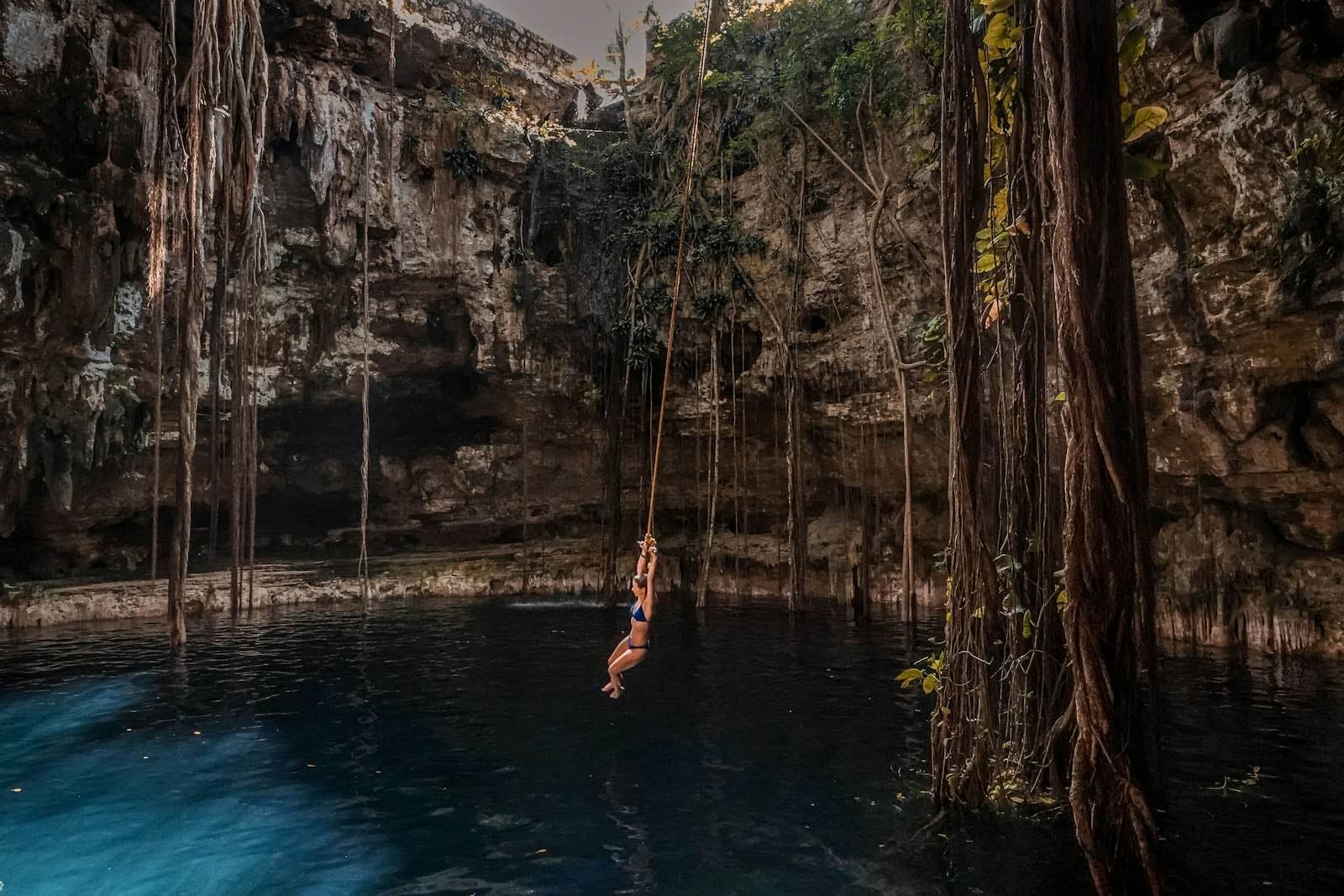
6No. 012 to 3 nightsValladolid and the cenotesA pastel colonial town sitting on a honeycomb of underground rivers: around Valladolid, every country lane leads to a turquoise well where the jungle dips its roots.No. 021 to 2 nightsUxmal and the Ruta PuucAn hour from Mérida, the continent's finest Maya architecture is visited in a silence of birdsong: Uxmal and its Puuc route are the absolute anti-Chichén — and the road trip's clinching argument.No. 033 to 4 nightsOaxaca and the central valleysA colonial city the colour of green cantera stone, markets where tlayudas smoke on the grill, and three Zapotec valleys where every village has its craft: Oaxaca is the beating heart of indigenous Mexico.No. 043 to 4 nightsOaxaca coast: Puerto Escondido to MazunteA coast still free of hotel towers: mythical surf beaches, villages where turtles come to nest, and sunsets from Oaxaca's southernmost point — the Pacific as it used to be.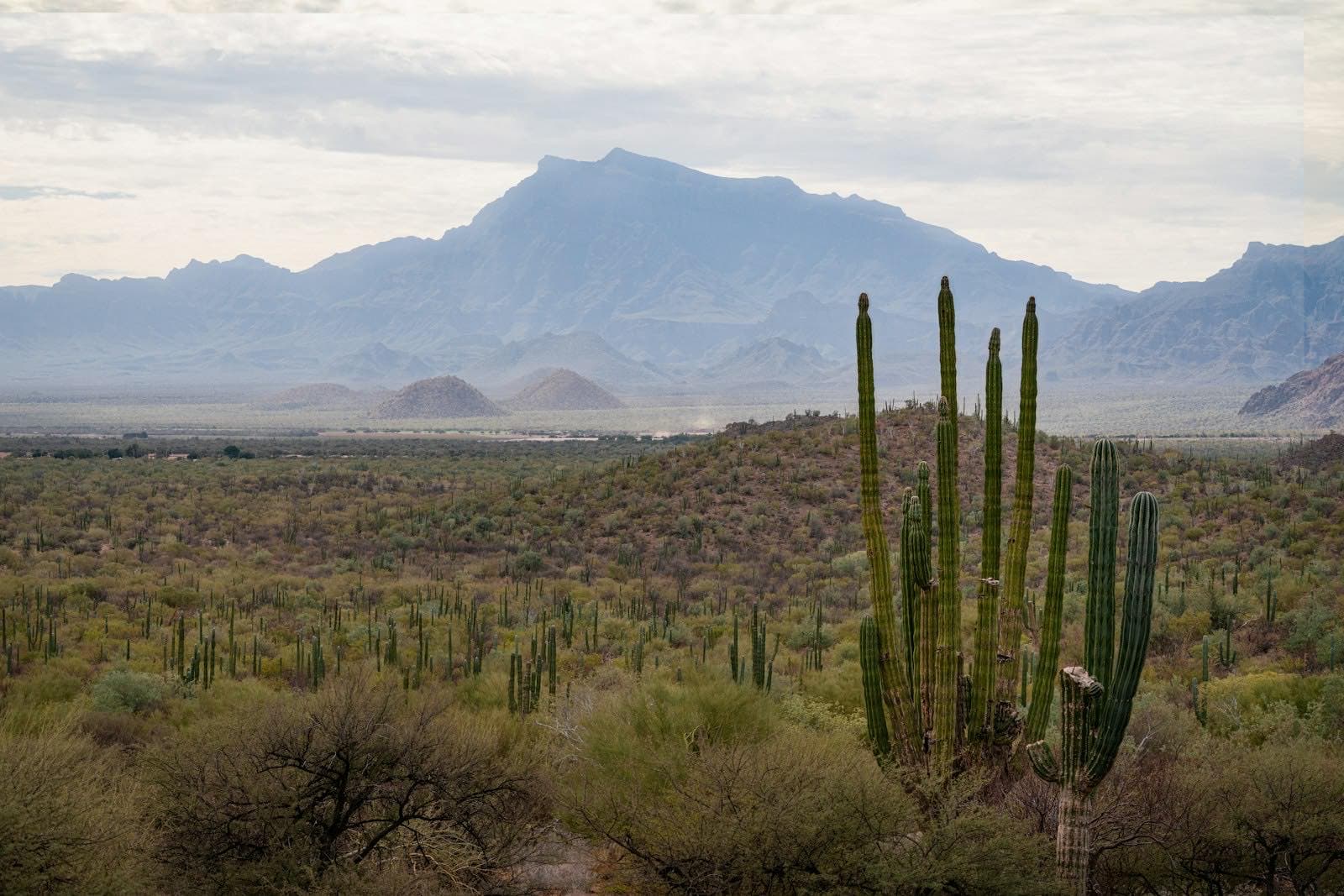 No. 055 to 7 nightsBaja California SurA cactus desert between two seas, lagoons where grey whales come of their own accord to nuzzle the boats: Baja California is Mexico's most unreal road trip.No. 064 to 5 nightsChiapas: San Cristóbal and PalenqueFrom mist-drowned Maya highlands to the jungle-devoured pyramids of Palenque: Chiapas is Mexico at its deepest — and the region that demands the most respect at the wheel.
Free decoder
The Mexico & Costa Rica car rental insurance decoder
TPL / seguro obligatorio no counter can remove, CDW-LDW, the deducible, the blocked deposit, comparison-site teaser rates: our decoder goes through the Mexican or Costa Rican quote line by line, with the check-out checklist and the 5 questions to ask before paying. Instant access, with the current promo code.
Mexico: practical notes
Tolls, fines, money, seasons, budget, rental: the essentials, gathered on this page.
Baja California Sur: a 10-day itinerary between La Paz, Loreto and Los Cabos
Ten days is the sweet spot for a first road trip in Baja California Sur: enough to combine La Paz and its beaches, the drive north to Loreto through the Sierra de la Giganta, the boho charm of Todos Santos and the reef at Cabo Pulmo — without spending your holiday behind the wheel. Here is our loop itinerary from La Paz, day by day, with real distances and the wildlife windows you shouldn't miss, grey whales included.
| Day | Stage | Driving |
|---|---|---|
| 1-3 | La Paz, Balandra, Espíritu Santo | Arrival + local exploring |
| 4 | La Paz → Loreto | 350 km · 4.5 h (Mex 1) |
| 5 | Loreto: Coronado Island or San Javier mission | Local exploring |
| 6 | Loreto → La Paz (whale option at López Mateos in season) | 350 km · 4.5 h |
| 7 | La Paz → Todos Santos | 80 km · 1.25 h (Mex 19) |
| 8 | Todos Santos, Playa Cerritos | Local exploring |
| 9 | Todos Santos → Cabo Pulmo (via San José del Cabo) | 180 km · 3 h incl. final dirt road |
| 10 | Cabo Pulmo → La Paz or Los Cabos airport | 100 to 150 km |
Entry Formalities for a Mexico Road Trip: FMM, Visa, Driving Licence — What to Know in 2026
Before booking a compact car at Cancún airport or heading down to Baja California from San Diego, one piece of paperwork is worth settling in advance: most Western travellers don't need a visa for a Mexico road trip, but a mandatory document — the FMM — must be filled in before, during and until departure from the country. On the road, a second document sometimes comes into play, one almost every traveller renting a car locally can safely ignore: the vehicle's temporary import permit. Here's how to leave nothing to chance, both for you and for the car.
- Make sure your passport stays valid for at least 6 months after your return date, even though Mexico legally only requires validity through your stay.
- Fill in the FMM online within 30 days of departure (flying in) or plan to get it stamped at the land border (driving in).
- Budget 983 pesos (~€50) in cash or by card if your stay exceeds 7 days and you're entering by land.
- In Baja California or with your own car: spot the immigration booth before crossing the border, and don't skip it.
- A locally rented car needs no import permit at all; only a foreign-registered vehicle driven by its owner does, except across the whole Baja California peninsula and Quintana Roo.
- Keep a photo of the stamped FMM on your phone right after crossing the border.
| Document | Who it applies to | 2026 cost |
|---|---|---|
| FMM (people) | Every traveller, regardless of vehicle | 983 MXN (~€50) if staying > 7 days by land; free by air or for stays ≤ 7 days by land |
| TIP (foreign vehicle) | Only a foreign-registered vehicle driven by its owner | ~1,064 MXN ($50-55 US) — except the whole Baja California peninsula and Quintana Roo (within its limits) |
| Locally rented car | Rental company's Mexican registration | No import paperwork at all |
Money in Mexico: pesos, cards and ATMs for a road trip
Between ATMs that offer to bill you in euros instead of pesos, Pemex attendants who don't always reset the pump to zero, and toll booths starting to shift toward electronic-only payment in 2026, managing money on a Mexican road trip takes a few specific habits. From the Yucatán to Baja California Sur and the colonial highlands, here's how to juggle pesos, dollars and cards without getting caught out — figures and sources included.
- Always decline dynamic currency conversion (DCC) at an ATM or card terminal, and choose to be billed in pesos.
- Withdraw comfortable amounts, close to the allowed limit (often 9,000 to 15,000 MXN), to limit the impact of flat fees.
- Withdraw only inside a bank branch or a supermarket, never at a standalone street ATM or after dark.
- Keep 500 to 1,000 MXN in small bills for Pemex stations, tolls and small towns where cards don't work.
- Check that the pump display reads 0 before fuelling starts, and count cash out loud when paying.
| Situation | Typical tip |
|---|---|
| Restaurant (sometimes already added — check the bill) | 10-15% of the bill |
| Pemex attendant, simple fill-up | 5-10 MXN |
| Pemex attendant, with extra service (windows, tyres) | 20-40 MXN |
| Supermarket bagger (empacador) | 10-20 MXN |
| Informal car watcher ("viene-viene") | 20-50 MXN |
Our flagship guide — €44
Guide available“Mexico on Your Own”, the complete edition, is out
10 chapters: day-by-day itineraries, driving and transport, a costed budget and checklists — the same method as our Namibia guide.
The guide is currently written in French — an English edition is in the works.
No time to do it yourself?
A professional can take care of it: tailor-made trip, equipped 4x4 rental or a local guide. Describe your plans and, with your consent, we pass them on to partner professionals.
1. What you need
Explore other countries