Baja California Sur
A cactus desert between two seas, lagoons where grey whales come of their own accord to nuzzle the boats: Baja California is Mexico's most unreal road trip.
Suggested stay — 5 to 7 nights
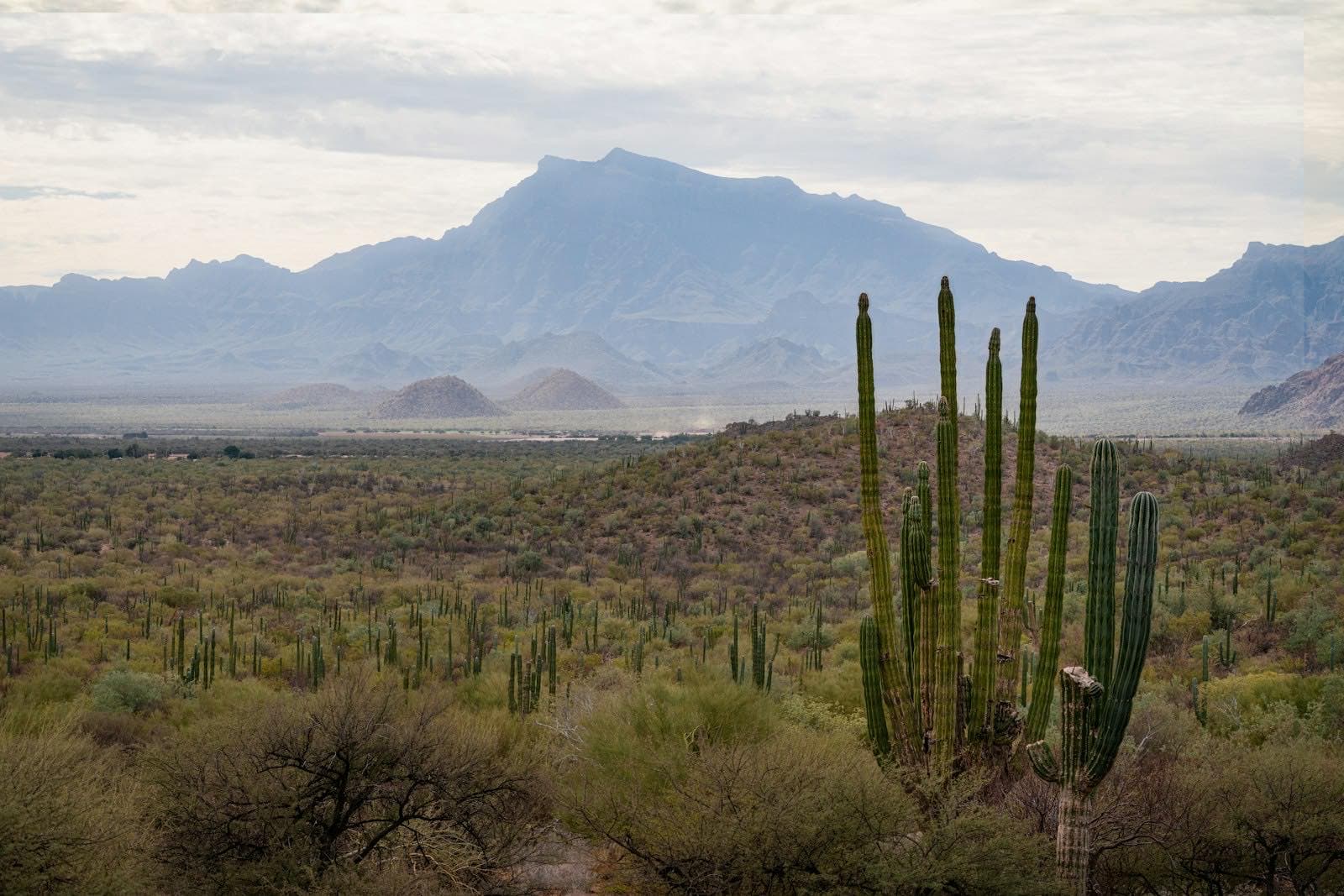
Here the road is the journey: the Transpeninsular (Highway 1) runs between giant cardón cacti and pink sierras, from mission villages to sudden views over the Sea of Cortez — "the world's aquarium", as Cousteau called it. La Paz is its laid-back capital: the malecón at sunset, Balandra beach and its unreal water, whale-shark trips from October to April and the sea lions of Espíritu Santo island year-round.
The absolute pilgrimage plays out January to March in the Pacific lagoons: at San Ignacio or Ojo de Liebre (Guerrero Negro), grey whales calve by the hundreds and — a phenomenon unique on Earth — push their young up against the pangas to have their heads scratched. Round it out with Loreto and its islands, artsy Todos Santos, and the coral reef of Cabo Pulmo, brought back to life by its own fishermen turned wardens: North America's best snorkelling at the end of a washboard track.
Don't miss
- Grey whales at touching distance at San Ignacio or Ojo de Liebre (January-March)
- Balandra beach near La Paz, at dawn before the visitor cap kicks in
- Snorkelling with the Espíritu Santo sea lions or the whale sharks (Oct.-April)
- The Cabo Pulmo reef, at the end of the East Cape track
Our tips on the ground
- Manage fuel as you would in Namibia: fill up systematically, above all around Guerrero Negro and on the East Cape — some stretches run more than 150 km without a reliable station.
- Highway 1 is narrow, shoulderless and strewn with free-ranging cattle: cruise at 80 km/h, overtake only with a long view, and NEVER at night — this is where the rule genuinely saves lives.
- Book the whale trip directly with the ejido cooperatives at San Ignacio or Guerrero Negro: cheaper than via Los Cabos, and the money stays with the lagoons' guardians.
Free decoder
The Mexico & Costa Rica car rental insurance decoder
TPL / seguro obligatorio no counter can remove, CDW-LDW, the deducible, the blocked deposit, comparison-site teaser rates: our decoder goes through the Mexican or Costa Rican quote line by line, with the check-out checklist and the 5 questions to ask before paying. Instant access, with the current promo code.
Our flagship guide — €44
Guide available“Mexico on Your Own”, the complete edition, is out
10 chapters: day-by-day itineraries, driving and transport, a costed budget and checklists — the same method as our Namibia guide.
The guide is currently written in French — an English edition is in the works.
No time to do it yourself?
A professional can take care of it: tailor-made trip, equipped 4x4 rental or a local guide. Describe your plans and, with your consent, we pass them on to partner professionals.
1. What you need
Before you go
Readers' questions about Baja California Sur
Do you need a 4x4 in Baja California?
Not for the classic La Paz-Loreto-lagoons itinerary: it's all paved. A 4x4 (or at least a high-clearance SUV) earns its keep for Cabo Pulmo and the East Cape, the San Ignacio lagoon track (washboard) and the remote Sea of Cortez beaches. Check that your rental contract allows dirt roads — many exclude them.
Is Baja California safe for a road trip?
The South (BCS) is statistically among the country's safest states and has lived off road tourism for fifty years. Military checkpoints punctuate Highway 1 — courteous checks, sometimes a look in the boot, aimed at trafficking rather than tourists. The precautions remain those of all Mexico: daylight, a full tank, nothing visible in the car.