Botswana on your own
Huge unfenced parks, campsites booked months ahead and a delta that floods in the middle of the dry season: Botswana takes more preparation than Namibia, and repays it.
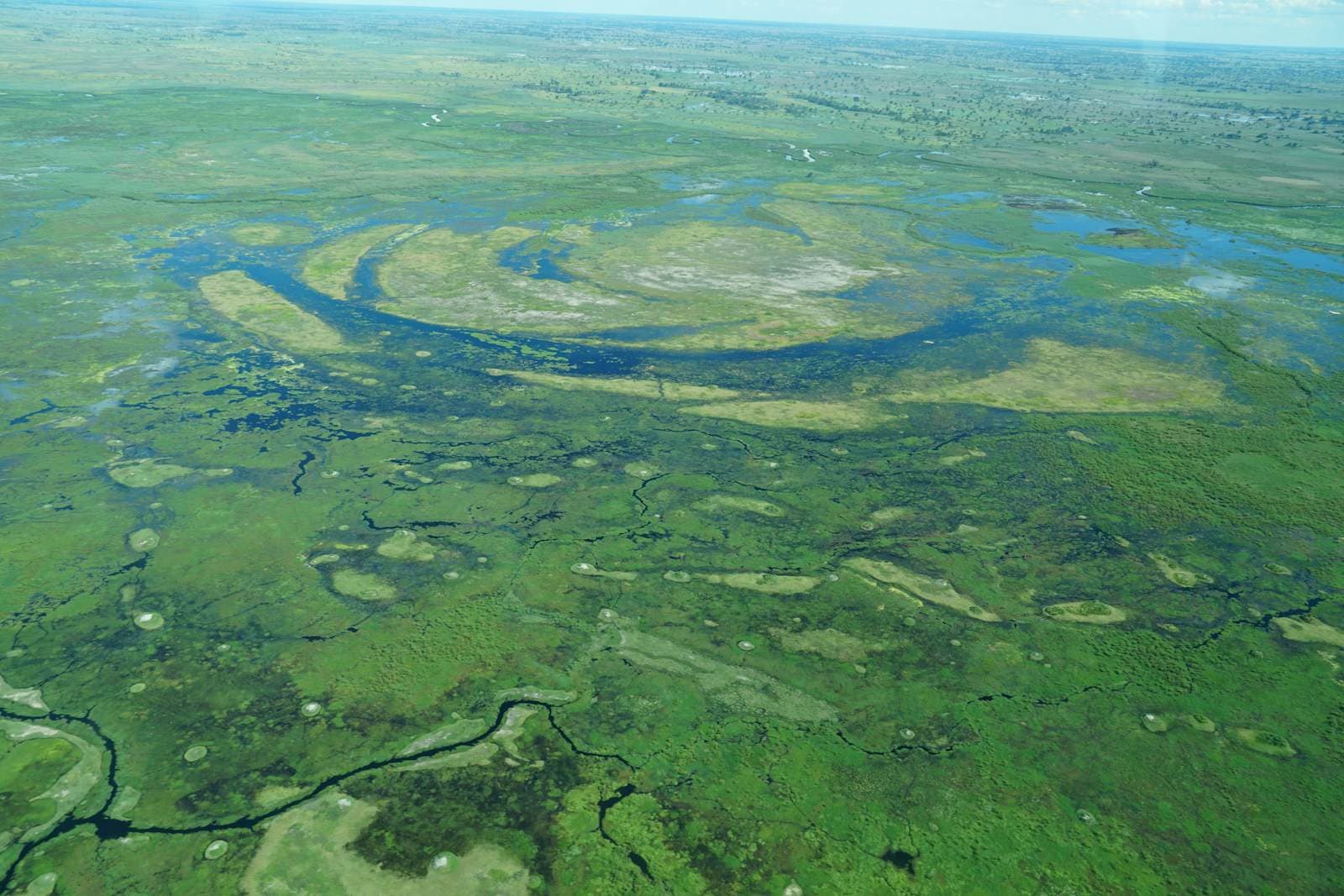
When to go
Dry season May to October: passable tracks and wildlife close to water; it is also when water from the Angolan highlands floods the delta. Rainy season November to April: muddy tracks, some areas cut off, and malaria transmission in the northern half from November to May-June (Institut Pasteur).
What it costs
Checked 23/09/2026: park entry of around P270 per non-resident adult per day at Chobe and Moremi (≈ €18; the DWNP does not publish its tariff online), public campsites $20-50 per person per night according to SKL, plus a vehicle fee. Park campsites are booked months ahead.
Driving & transport
Drive on the left. Tarred Maun–Nata–Kasane axis (610 km, 7 hours' driving per OSRM). Inside the parks: deep sand (Savuti), mud in the rainy season (Moremi), log bridges. A 4x4 is essential, ideally two vehicles, and never drive at night: elephants and cattle on the road, tarred ones included.
Yes, Botswana's Okavango and Chobe can be done self-drive in a fully equipped 4x4, but not the whole of them: you drive the dry-land edge of the delta (Moremi Game Reserve and Khwai) and all three sectors of Chobe, while the flooded heart of the Okavango is only reached by mokoro or light aircraft. The classic loop runs Maun, Moremi, Savuti, then the Chobe riverfront at Kasane, about a hundred kilometres from Victoria Falls. The main roads are tarred; the parks are not. The tourism board says it plainly: you head into areas “accessible only by four-wheel drive, where water, petrol or food may not be available”.
Our guide for this country: See what's inside — €44 →
This page gathers what needs deciding before you book: the season, who runs which campsite, what the parks cost on the date we checked, which border to use, malaria and entry formalities. Every figure points to its source at the bottom of the page; park-by-park details live in the destination pages and linked articles.
updated 13 October 2026 · Clément Lacaille
Okavango self-drive: what your 4x4 can and cannot reach
The Okavango Delta itself has no roads: its permanent swamps and islands are explored by mokoro (dugout canoe) or from the air, from Maun or from a camp. What a self-drive reaches is its eastern, dry-land fringe: Moremi Game Reserve through South Gate, with the Third Bridge and Xakanaxa campsites along the lagoons, and the Khwai area at North Gate, the link towards Savuti and Chobe. The western Panhandle (Shakawe, Mohembo border post) is reached on tarmac from Maun but is fishing and river country rather than a game drive.
In practice: book the Moremi and Khwai campsites first (operators in the table below), cross the log bridges slowly and check the flood level before Third Bridge in the dry season, when the water arrives; then add a mokoro day or a scenic flight from Maun for the inner delta. The Okavango self-drive article details each gate and camp.
Chobe self-drive: riverfront, Savuti, Linyanti
Chobe is really three sectors, each handled differently. The riverfront, along the Chobe River, is reached from Kasane through Sedudu gate: the easiest sector, doable as a day trip, with one public campsite (Ihaha, run by Kwalate Safaris). Savuti, to the south-west, is reached on deep-sand tracks and camped with SKL. Linyanti, to the north-west, is the most remote, also run by SKL.
Chobe is first and foremost about elephants. The Great Elephant Census (Chase et al., PeerJ, 2016), the first standardised continent-wide survey, counted 352,271 savannah elephants on its study sites in 18 countries, 84% of them in protected areas, with populations shrinking by 8% a year, mainly because of poaching. At the water's edge in the dry season, that translates into one simple driving rule: always give way and keep an escape route.
For a day on the riverfront or the Kasane–Savuti–Moremi crossing, see the two Chobe articles below; the Botswana guide details the full itinerary.
Seasons: a flood out of step
The water that floods the Okavango Delta comes largely from rain falling on the Angolan highlands, and it spreads through the delta during the dry southern winter, when tracks are passable and wildlife gathers near water. The extent varies hugely from year to year: using more than 3,000 satellite images, McCarthy et al. (Ambio, 2003) measured a flooded area of roughly 2,450 to 11,400 km² over 1972-2000, a variability tied to rainfall over the Angolan catchment and to local rain.
In practice: May to October for a first self-drive trip (dry tracks, concentrated wildlife, and from July to October outside the malaria transmission period given by Institut Pasteur); the rainy season, November to April, is for experienced crews, with parts of Moremi and Savuti sometimes cut off by water and mud.
Booking campsites: who runs what
In Botswana, camping in the parks and park entry are two separate bills. Campsites are concessioned to private operators; entry fees go to the Department of Wildlife and National Parks (DWNP). The process described by Tracks4Africa: book each night with the operator, then send the confirmations to the DWNP (dwnp@gov.bw) to obtain the entry permit, fees being paid separately. Peak dates are sometimes booked a year ahead.
At each park gate you show your campsite confirmation: without it, no night in the park.
Park fees: where the 2026 increase stands
The government had planned to raise fees on 1 April 2026. On 24/02/2026 the Daily News, the government news service, reported the non-resident entry fee moving from P380 to P500. On 31/03/2026 the Ministry of Environment and Tourism postponed the reform; Minister Wynter Mmolotsi later announced a two-year delay to rework the tariff with the industry.
The fees in force are not published online by the DWNP and reported figures differ: operators and rental companies quote P270 per non-resident adult per day at Chobe and Moremi, the Daily News mentioned P380. Budget for the higher figure in cash and confirm with the DWNP before you leave. The exit day counts as a day: three nights in a park means four days of fees.
Borders: where to cross in a 4x4
From Namibia, three posts serve travellers: Ngoma, on the Chobe River, 57 km from Kasane; Mohembo, at the top of the Okavango Panhandle; Mamuno, on the Trans-Kalahari road, 322 km from Windhoek and 494 km from Maun. From Zambia, the Kazungula bridge is the crossing; in February 2026 the government announced it would move to 24-hour opening.
A foreign-registered vehicle enters under a temporary import permit issued by customs (BURS) and pays the P40 National Road Safety Fund levy, valid until the end of the calendar year. With a rental car, ask for the cross-border authorisation letter when you book.
Health: malaria in the north
According to Institut Pasteur, transmission is seasonal from November to May-June in the northern half of the country (Okavango, Ngamiland, Chobe, Boteti, Tutume…), with chemoprophylaxis recommended for those areas and that period; there is no risk in the south or in Gaborone. France's foreign ministry describes malaria as endemic in the northern districts. Yellow fever vaccination is only required if you arrive from a country with transmission risk, airport transit included.
The country has nonetheless cut its malaria burden sharply. A study of the elimination phase (Chihanga et al., Parasites & Vectors, 2016) records 1,808 cases from October 2012 to December 2014, 60% of them in Okavango district, hit by an outbreak in 2013 and 2014: precisely the delta region. Medical evacuations mostly go to Johannesburg (France Diplomatie): insurance covering repatriation is essential.
Visas, money and formalities
French nationals need no visa: a stay of up to three months is granted at the border at the officer's discretion. Passports must be valid for at least six months after entry. A minor travels with a full certified copy or multilingual birth certificate, plus consent from the absent parent if travelling with only one parent (France Diplomatie, page updated 15/09/2026). Other nationalities should check with their own government: the tourism board notes that most European and Commonwealth citizens need no visa.
The currency is the pula (BWP), divided into 100 thebe. On 22/09/2026 the Bank of Botswana published 1 BWP = €0.0660 and $0.0756 (about 15.2 pula to the euro, 13.2 to the dollar). Cards work in Maun and Kasane; in the parks, carry cash for entry fees and the unexpected (see the money note below).
Distances on the loop and to the borders
| Route | Distance | Driving time |
|---|---|---|
| Maun → Nata | 303 km | 3 h 20 |
| Nata → Kasane | 308 km | 3 h 50 |
| Kasane → Ngoma border post (Namibia) | 57 km | 55 min |
| Kasane → Kazungula bridge (Zambia) | 18 km | 20 min |
| Kazungula → Victoria Falls (Zimbabwe) | 81 km | 1 h |
| Windhoek → Mamuno (border) | 322 km | 3 h 35 |
| Mamuno → Maun | 494 km | 5 h 35 |
| Gaborone → Maun | 855 km | 10 h 25 |
Road routes computed with OSRM on OpenStreetMap data on 23/09/2026, without stops or park tracks: allow noticeably more in practice (animals, veterinary checkpoints, police).
Who runs the park campsites
| Operator | Campsites | Park |
|---|---|---|
| SKL Camps | Savuti, Linyanti | Chobe |
| SKL Camps | Khwai (North Gate) | Moremi |
| SKL Camps | Khumaga | Makgadikgadi |
| Kwalate Safaris | Ihaha | Chobe (riverfront) |
| Kwalate Safaris | South Gate, Xakanaxa | Moremi |
| Xomae | Third Bridge | Moremi |
| Xomae | South Camp, Baines' Baobab | Nxai Pan |
| DWNP | Reserve campsites | Central Kalahari (with Bigfoot for some pans) |
| DWNP | Tree Island | Makgadikgadi |
Allocation published by Tracks4Africa (April 2022); SKL's list (Savuti, Khwai, Kumaga, Linyanti) confirmed on its website on 23/09/2026. SKL quotes nights of $20-50 per person in the parks.
The destinations that matter
6No. 012 to 3 nights (Maun base)Okavango DeltaA river that never reaches the sea, vanishing into a labyrinth of islands and lagoons: southern Africa's most extraordinary ecosystem is discovered by dugout canoe.No. 022 to 3 nightsMoremi Game ReserveThe land side of the delta — mopane forests, lagoons and the country's best predator density: Moremi is the holy grail of African self-driving.No. 031 to 2 nightsSavutiA savanna far from everything, famous for lions that hunt elephants: Savuti is the wildest — and sandiest — leg of the northern crossing.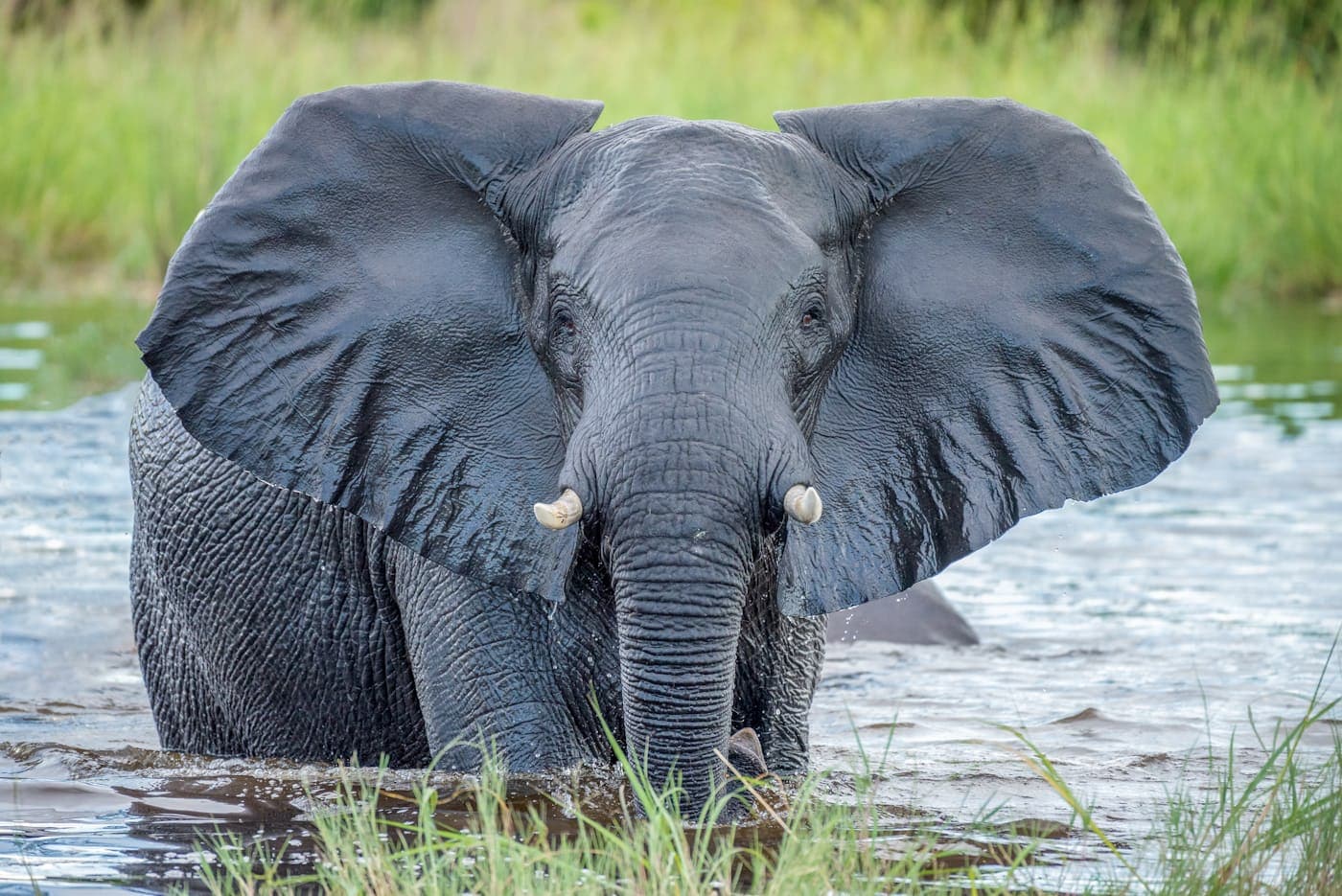 No. 042 nightsChobe ParkHundreds of elephants swimming across the river at sunset: the Chobe riverfront delivers southern Africa's most reliable wildlife spectacle.No. 051 to 2 nightsMakgadikgadi PansThe floor of a vanished lake the size of Switzerland: salt crust to the horizon, lone baobabs, meerkats tamed by patience — and the starriest nights there are.No. 062 to 3 nightsCentral Kalahari (CKGR)A reserve half the size of Portugal, a handful of tracks, zero services: the Central Kalahari is the very definition of African solitude.
Botswana: practical notes
Tolls, fines, money, seasons, budget, rental: the essentials, gathered on this page.
Money in Botswana: Pula, Cards and ATMs for a Self-Drive Road Trip
A self-drive road trip in Botswana crosses two economies at once: Gaborone, Maun and Kasane, where a bank card works almost everywhere, and the tracks of Moremi, Savuti or the Central Kalahari, where no terminal picks up a signal and only cash still works. Unlike neighbouring Kenya, which has gone fully digital on park fees, Botswana remains largely a country of counters and banknotes — and getting your cash balance wrong before leaving the tarmac can block a park entry or ruin a well-earned tip. Here's how to split your budget between pula, dollars and card.
| Expense | Safest payment method | What to plan for |
|---|---|---|
| Equipped 4x4, fuel, hotels in town | Bank card | Notify your bank before departure |
| DWNP park fees | Cash (pula or dollars) | Withdraw before entering the park |
| Public campsites (Xomae, Kwalate, SKL) | Deposit by bank transfer, balance often in cash | Book and pay months ahead |
| Delta lodges and camps | Bank card (charged in pula) | Check whether the signal allows on-site payment |
| Markets, tips, small purchases | Cash in small notes | Always keep a reserve of small bills |
Police checks and fines in Botswana self-drive: speed limits, documents and pula
On the A1 between Gaborone and Francistown, on the road from Nata to Kasane and the Chobe, or around Maun, police checks are part of everyday life on a self-drive road trip in Botswana. The real trap isn't the officers' attitude — travellers consistently describe them as courteous — but the speed limit that drops from 120 to 60 km/h with barely any warning at every village entrance, exactly where patrols like to park. Here are the limits in force, the documents to carry, what a fine actually costs in pula, and how a check unfolds behind the wheel of a rental car.
| Document | What to watch for |
|---|---|
| National licence | Must stay valid for the whole trip |
| International Driving Permit (IDP) | Required by most Botswana rental agencies at handover |
| Passport | Original recommended; a colour copy is often enough for a routine check |
| Rental agreement | Proves the right to drive this specific vehicle |
| Insurance certificate | Issued by the agency, keep it with the agreement |
Renting a Car in Botswana: Licence, Insurance and Excess Before a Self-Drive Road Trip
In Botswana, the rental vehicle is not just a way of getting around: on the tracks of Moremi, Chobe or the Central Kalahari, it determines access to campsites, safety, and sometimes whether the trip can continue into Namibia or South Africa. Before comparing prices, it helps to understand three things rental desks don't always spell out: which licence to bring, what the quoted insurance actually covers, and why some contracts flatly forbid crossing a border.
| Item | What to check | Where it's paid |
|---|---|---|
| International Driving Permit (IDP) | Apply before departure, usually free | Home country licensing authority, before the trip |
| Base excess (CDW) | Amount payable after an incident, exclusions (tyres, underbody, windscreen) | Rental agreement, at the desk |
| Excess waiver | Partial cover or zero-excess option | Optional, at the desk or online before departure |
| Cross-border letter of authority | Required to take the vehicle out of Botswana | Request from the rental company at booking |
References
- France Diplomatie — Botswana, entry and stay (updated 15/09/2026, in French)
- France Diplomatie — Botswana, health (in French)
- Institut Pasteur — Travel preparation: Botswana (in French)
- Botswana Tourism Organisation — Ports of entry (border post hours)
- Botswana Tourism Organisation — Travel info (currency, visas, self-drive)
- BURS — Clearance of motor vehicles (foreign vehicles, P40 levy)
- Daily News (gouvernement du Botswana) — Tourism fees review afoot, 24/02/2026
- Gabz FM — two-year postponement of the fee increase
- AllAfrica — Kazungula Border Post to Operate Round the Clock, 24/02/2026
- Tracks4Africa — How to book campsites in Botswana national parks (2022)
- SKL Group of Camps
- Bank of Botswana — exchange rates of 22/09/2026
- Chase M. J., Schlossberg S. et al. (2016), Continent-wide survey reveals massive decline in African savannah elephants, PeerJ
- McCarthy J. M., Gumbricht T. et al. (2003), Flooding Patterns of the Okavango Wetland in Botswana between 1972 and 2000, Ambio
- Chihanga S., Haque U. et al. (2016), Malaria elimination in Botswana, 2012–2014: achievements and challenges, Parasites & Vectors
Before you go
Readers' questions about Botswana
Can you self-drive the Okavango Delta?
Partly. A 4x4 takes you to the dry eastern edge of the delta, Moremi Game Reserve (South Gate, Third Bridge, Xakanaxa) and Khwai; the flooded inner delta has no roads and is visited by mokoro or light aircraft from Maun. Park campsites must be booked in advance.
Do I need a visa for Botswana?
Not as a French national: a stay of up to three months is granted at the border, with a passport valid six months after entry (France Diplomatie, 15/09/2026). Most European and Commonwealth citizens need no visa either, according to the tourism board; check with your own government.
How much does entry to Chobe and Moremi cost?
Around P270 per non-resident adult per day according to tariffs reported in 2026 (about €18), plus a vehicle fee and camping. The increase planned for 1 April 2026 was postponed; confirm the fee with the DWNP before you leave.
Can you do Chobe as a self-drive?
Yes. The riverfront is a day trip from Kasane through Sedudu gate; Savuti and Linyanti need a 4x4, sand-driving experience and campsites booked with SKL.
Is there malaria in Botswana?
Yes in the northern half (Okavango, Chobe, Ngamiland…), with seasonal transmission from November to May-June; Institut Pasteur recommends chemoprophylaxis there during that period. No risk in the south or in Gaborone.
Which border should I use from Namibia?
Ngoma to start with Chobe (57 km from Kasane), Mohembo for the Okavango Panhandle, Mamuno on the Trans-Kalahari road to reach Maun (494 km).
Our flagship guide — €44
Guide available“Botswana on Your Own”, the complete edition, is out
10 chapters: day-by-day itineraries, driving and transport, a costed budget and checklists — the same method as our Namibia guide.
The guide is currently written in French — an English edition is in the works.
No time to do it yourself?
A professional can take care of it: tailor-made trip, equipped 4x4 rental or a local guide. Describe your plans and, with your consent, we pass them on to partner professionals.
1. What you need
Explore other countries