Okavango Delta
A river that never reaches the sea, vanishing into a labyrinth of islands and lagoons: southern Africa's most extraordinary ecosystem is discovered by dugout canoe.
Suggested stay — 2 to 3 nights (Maun base)
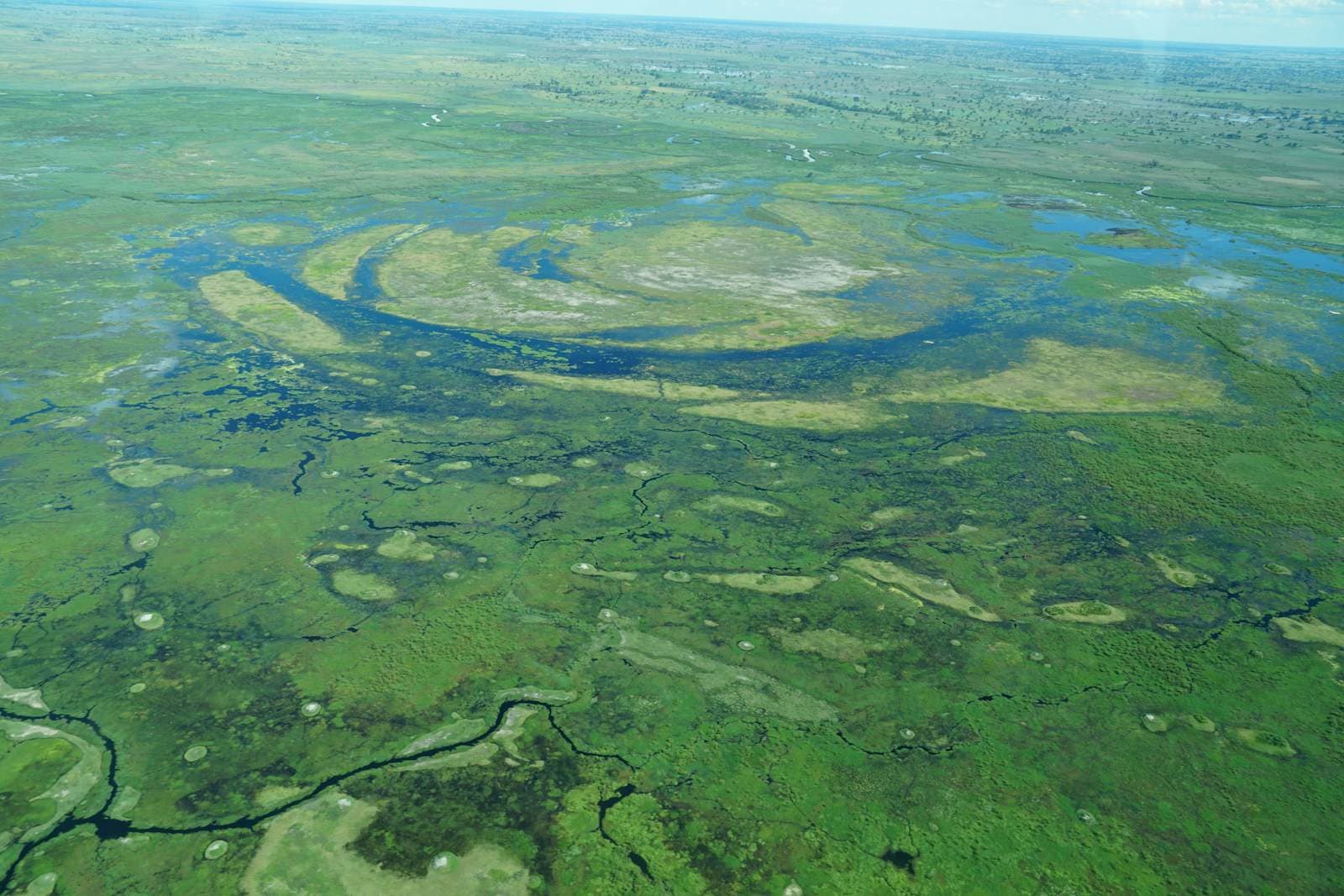
Every year the Okavango pours its Angolan waters into the Kalahari sand, creating 15,000 km² of channels, palm islands and flooded plains, listed as World Heritage. Elephants, hippos, red lechwe, wild dogs: the wildlife lives to the flood's rhythm, at its peak in the dry winter (June-August).
From Maun, everything is reachable without a thousand-euro lodge: a day trip or overnight by mokoro (the traditional pole-pushed canoe) in the community area, a light-aircraft flight over the delta (30-45 minutes that justify the trip), or a 4x4 excursion towards Moremi. Purists treat themselves to a night or two at a boat-access delta camp.
The delta's calendar is a paradox worth understanding before you book: the rains fall in Angola between January and March, then the water takes several months to travel down the panhandle and spread across the delta — so the flood peaks around Maun between June and August, in the middle of the dry winter, when it has not rained for months. That is the mokoro's great moment: full channels, navigable lagoons, wildlife squeezed onto the islands. From November to March, conversely, the water withdraws: some canoe circuits become impossible, but the storms, the clouds of migratory birds and the newborn animals give the delta its other face.
The mokoro outing itself follows a well-oiled ritual: an early departure from Maun by 4x4 or boat to the community cooperative's poling station, two to three hours of silent gliding between the papyrus, a guided walk on an island at midday, return in the afternoon — or a tented night on the island for the two-day version, by far the most memorable. The poler is your guide: he reads the channels, gives hippos a wide berth and picks up tracks on the islands.
For accommodation, three tiers by budget: Maun's affordable campsites and lodges along the Thamalakane (the ideal logistical base); the public campsites of the Moremi reserve — Third Bridge, Xakanaxa, Khwai — reachable by equipped 4x4 and booked long in advance; and the deep-delta camps, reached by boat or light aircraft, where a night costs a month of travelling but comes with water safaris in the heart of the labyrinth.
Don't miss
- The scenic flight from Maun: the delta only makes sense from above
- A day or a night by mokoro with a local poler (island walks included)
- The flooded plains of the Moremi area by 4x4 in the dry season
- Sunset on the Thamalakane river in Maun, while waiting for better
- An overnight camp on a delta island, around the fire, hippos as the soundtrack
- The Moremi reserve and its legendary campsites (Third Bridge, Xakanaxa, Khwai) by 4x4
Our tips on the ground
- Book the flight on arrival in Maun to get the morning slots (calm air, good light).
- By mokoro, everything hinges on silence: it's an atmosphere safari (birds, distant hippos, reed frogs), not a zoo — go without Big Five expectations.
- The flood peaks June to August: the best mokoro period, and high season — plan ahead.
- Choose the overnight version over the day trip if you can: dusk and dawn are when the delta tells its story.
- From November to March, call the cooperative before promising the crew a mokoro: depending on water levels, some departures switch to motorboat or are cancelled.
Our flagship guide — €44
Guide available“Botswana on Your Own”, the complete edition, is out
10 chapters: day-by-day itineraries, driving and transport, a costed budget and checklists — the same method as our Namibia guide.
The guide is currently written in French — an English edition is in the works.
No time to do it yourself?
A professional can take care of it: tailor-made trip, equipped 4x4 rental or a local guide. Describe your plans and, with your consent, we pass them on to partner professionals.
1. What you need
Before you go
Readers' questions about Okavango Delta
Can you visit the delta without paying for a luxury lodge?
Yes: from Maun, a day mokoro trip costs a few dozen euros per person through the community cooperatives, the flight €100-200 depending on duration, and Maun's campsites a few euros. The deep delta by lodge remains a €500-1,500/night dream — but it is not the entry ticket.
Mokoro or motorboat?
The mokoro for immersion: silent, at water level, it slips into the narrow channels. The motorboat for distance: it reaches the hippo lagoons and remote camps. Ideally combine both if time allows.
What is the best season for a mokoro trip in the Okavango?
June to August, at the peak of the flood: the channels are full, the canoe circuits at their finest, and the winter sky is infallible — it is also high season, so book camps and activities ahead. April-May and September-October remain very good with fewer people. From November to March the water withdraws: the mokoro then depends on local levels, to be checked before you plan.
Where to stay to visit the delta: Maun, Moremi or a delta camp?
Maun for logistics and budget: affordable campsites and lodges on the Thamalakane, from which flights and mokoro trips depart. Moremi (Third Bridge, Xakanaxa, Khwai) for the adventure by equipped 4x4, booking the public campsites months ahead. The deep-delta camps, by boat or light aircraft, for one or two exceptional nights if the budget allows — €500 to €1,500 a night.