Makgadikgadi Pans
The floor of a vanished lake the size of Switzerland: salt crust to the horizon, lone baobabs, meerkats tamed by patience — and the starriest nights there are.
Suggested stay — 1 to 2 nights
Remnants of a giant prehistoric lake, the Makgadikgadi and Nxai pans compose a landscape of total nakedness: cracked salt in the dry season, a water mirror strewn with flamingos after the rains, granite islands crowned with baobabs like Kubu Island. It is the contemplative counterpoint of the northern loop, between Maun and Nata.
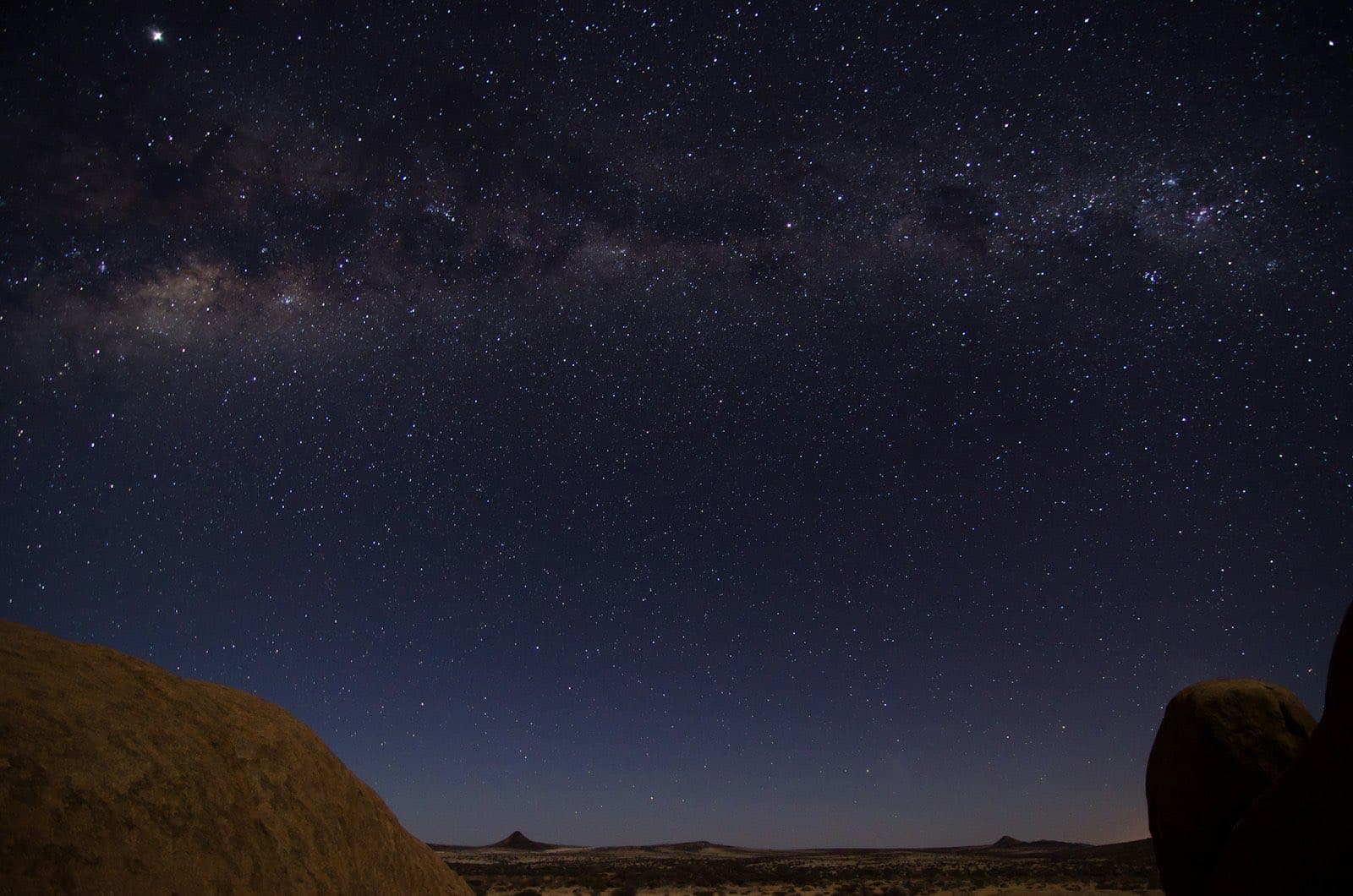
The signature experiences: sitting amid a colony of habituated meerkats (concessions around Jack's Camp), driving to the baobabs painted by Thomas Baines in 1862, and — the must — camping on the open pan on a moonless night, in a silence and under a sky that are never forgotten.
Don't miss
- Kubu Island and its baobabs on the salt crust (4x4 access, sacred to local communities)
- The habituated meerkats at sunrise
- The zebra migration to Nxai Pan in the rains (December-March)
- Baines' Baobabs, unchanged since their 1862 painting
Our tips on the ground
- NEVER drive on the pan after rain: the crust hides bottomless mud, the boggings are legendary and rescue far away.
- GPS, water and long-range fuel mandatory: visual landmarks don't exist.
- The season flips the logic: pans dry and passable in winter (May-October); the flamingo and zebra spectacle in summer — with restricted access.
Our flagship guide — €44
Guide available“Botswana on Your Own”, the complete edition, is out
10 chapters: day-by-day itineraries, driving and transport, a costed budget and checklists — the same method as our Namibia guide.
The guide is currently written in French — an English edition is in the works.
No time to do it yourself?
A professional can take care of it: tailor-made trip, equipped 4x4 rental or a local guide. Describe your plans and, with your consent, we pass them on to partner professionals.
1. What you need
Before you go
Readers' questions about Makgadikgadi Pans
Can you visit the pans without a committed expedition?
Yes: from the lodges and campsites on the pans' rim (Gweta, Nata), guided excursions reach the meerkats, the baobabs and the pan for a supervised night. The Nata Bird Sanctuary even offers easy flamingo access in season.
When is the zebra migration?
December to March, when the rains green Nxai Pan and draw tens of thousands of zebras from the northern rivers — Africa's second-longest land migration. One of the few reasons to visit Botswana in the rains.