Kenya on your own
The savannah of the documentaries in its original version: Mara lions, elephants beneath Kilimanjaro, Rift Valley flamingos — and a steering wheel in your hands to write your own episode.
When to go
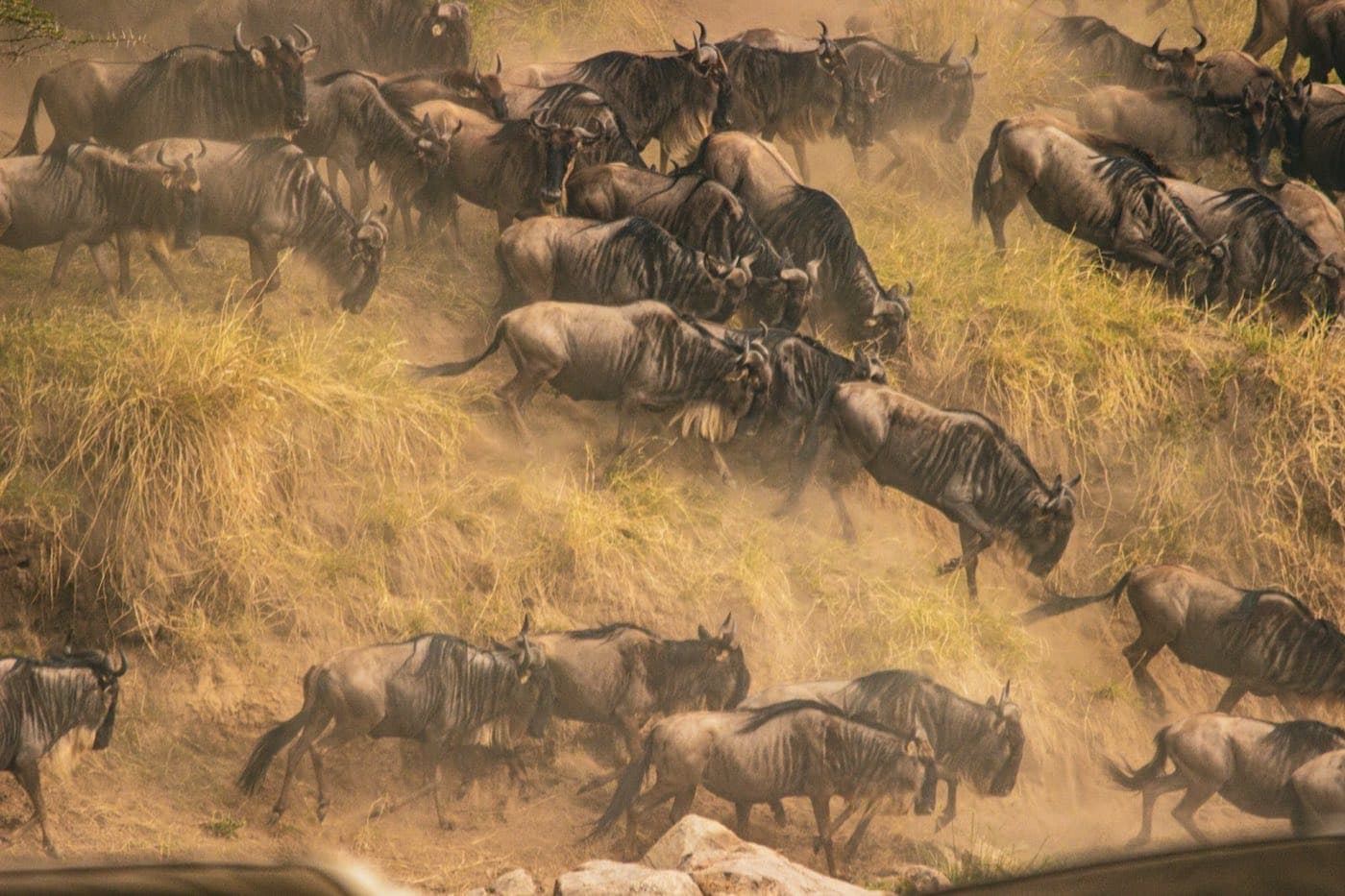
Two dry seasons: January-February and above all June-October, when the migration occupies the Mara (July to October, Mara River crossings as a bonus). The long rains (mid-March to May) turn the tracks to soap — the Mara's black cotton soil traps even Land Cruisers — and many camps close. The short rains (November-December) remain workable: late-day showers, a savannah turned green, prices and crowds down.
What it costs
The vehicle is not the heaviest line: a Land Cruiser or Hilux fitted with rooftop tent and camping kit runs €90-140/day with Nairobi's specialist rental outfits, diesel around €1.20/L. It's the parks that weigh: Masai Mara USD 100-200/person/day depending on season, KWS parks (Amboseli, Tsavo, Nakuru) USD 50-60, public campsites USD 20-35/person. Budget €4,000-6,000 for two over 15 days camping, double that in lodges.
Driving & transport
Left-hand driving, international permit required. The real dangers are on the tarmac, not in the parks: speed bumps rarely signed at the entrance to every village, unpredictable matatus (minibuses), kamikaze trucks on the Nairobi-Mombasa highway, and night driving to be ruled out absolutely. Police checks are frequent but fair if your papers are in order. In the parks everything is now paid online (eCitizen, cards): no more cash at the barriers — set up payments the evening before, the network is temperamental at the gates.
Kenya invented the word safari and has never stopped being its benchmark: the wildebeest migration in the Masai Mara, Amboseli's great elephant herds posed before Kilimanjaro, the rhinos of Nakuru and Laikipia, the red elephants of Tsavo. Contrary to received wisdom, all of it works beautifully as a self-drive: a 4x4 with a rooftop tent, the KWS public campsites, and the tracks become your lodge.
Our guide for this country: See what's inside — €44 →
The country lends itself to a proper loop: Nairobi, the spectacular descent into the Rift Valley, the lakes, the Mara, then Amboseli and the Tsavos down to the Indian Ocean — Diani to park the rooftop tent, Lamu to finish outside of time. Allow two to three weeks, a GPS loaded with offline maps (Tracks4Africa) and an amused tolerance for speed bumps, matatus and zebu cattle on the tarmac.
The destinations that matter
5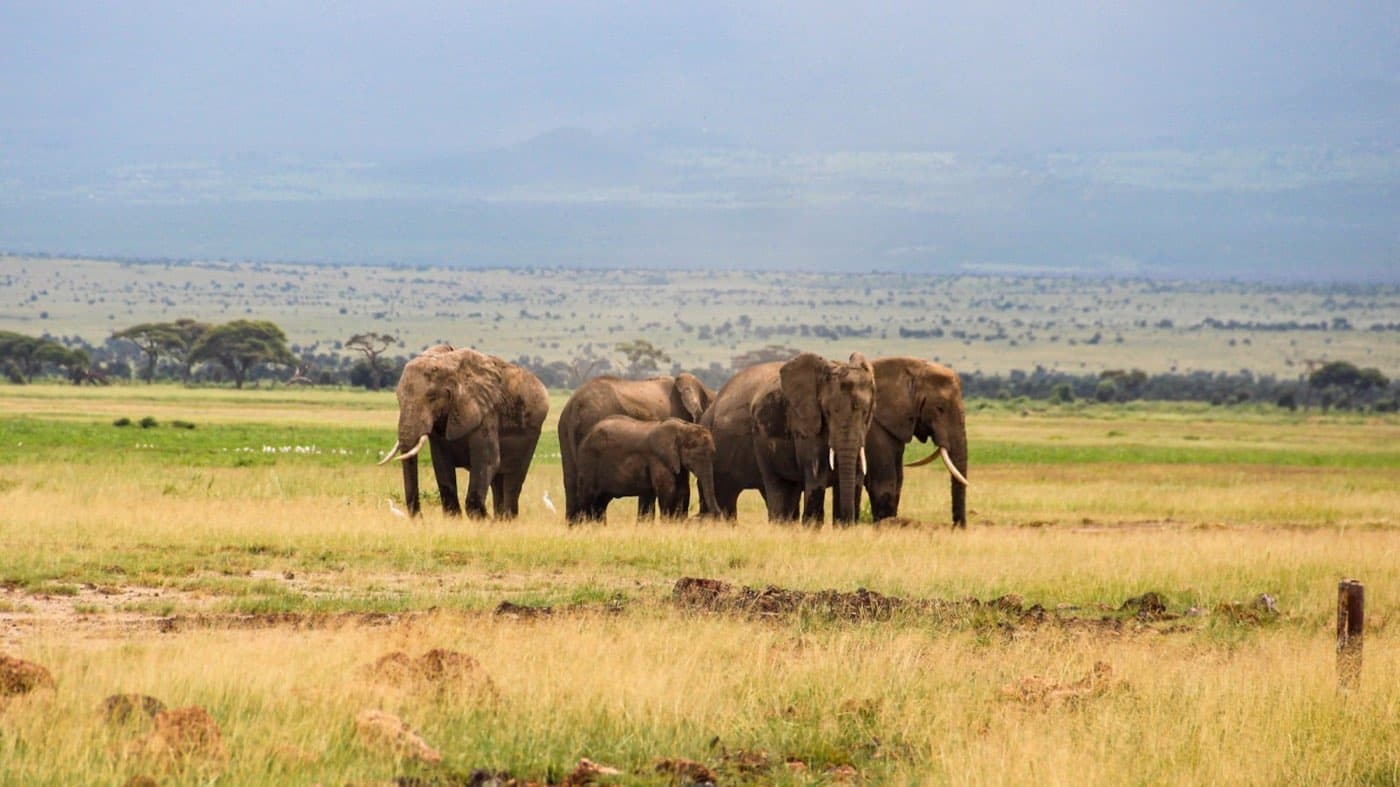 No. 012 nightsAmboseliElephants with immense tusks wading a green marsh, and behind them the snowy roof of Africa: Amboseli is the photograph the whole world carries in its head.No. 022 to 3 nightsLakes Nakuru and NaivashaA fault tearing the continent apart, lakes pink with flamingos, rhinos beneath yellow acacias — and a park you visit by bicycle among the zebras.No. 032 to 3 nightsTsavo East and WestTwo parks the size of a country, elephants dyed red by the laterite, and tracks where you drive for hours without meeting a soul: Tsavo is the Kenya of immensities.No. 042 nightsLaikipia PlateauFormer colonial ranches turned laboratory of African conservation: Laikipia holds more rhinos than anywhere else in East Africa — and the world's last two northern white rhino females.No. 054 to 5 nightsSwahili coast: Diani and LamuAfter the dust of the parks, the Indian Ocean: Diani's white sand, Lamu's thousand-year alleys, dhows under triangular sails — the Swahili reward of the journey.
More stops worth adding to the trip
Masai Mara
Africa's densest big-cat savannah, and from July to October the greatest wildlife spectacle on the planet: the Mara never oversells.
What to see
- A Mara River crossing during the migration (July-October) — patience compulsory
- The Mara Triangle sector, quieter, via the Oloololo gate
- The lions of the Musiara marsh, made famous by the BBC's documentaries
Suggested time: 3 to 4 nights
Kenya: practical notes
Tolls, fines, money, seasons, budget, rental: the essentials, gathered on this page.
Kenya Road Trip Budget: What Does a Day of Self-Drive Safari Really Cost?
"What does a day of self-drive safari in Kenya really cost?" The answer hinges less on the 4x4 you rent than on two levers: camping versus lodge, and the calendar — the great migration’s high season doubles some park fees overnight. Here is what to really budget for driving yourself from the Masai Mara to Tsavo, via the Rift Valley lakes and the foot of Kilimanjaro, item by item.
| Accommodation | Price for two, per night |
|---|---|
| KWS public campsite (inside a park) | about €52 (2 x $30) |
| Simple guesthouse outside parks (Nairobi, Nakuru) | about €15 to €35 |
| Independent tented camp or small lodge outside parks | about €130 to €220 |
Money in Kenya: Shillings, Credit Cards and M-Pesa for a Self-Drive Road Trip
A self-drive road trip in Kenya juggles three payment methods at once: shillings in cash for markets and the bush, a credit card for lodges and fuel in town, and M-Pesa, the mobile wallet the entire country uses for everything from tips to park fees. Since the reform that made park gates fully digital, getting this trio wrong can literally stop a safari at the entrance. Here's how to split your budget across the three, and what to plan for before leaving Nairobi's tarmac behind.
Police Checks and Fines in Kenya for Self-Drivers: the New NTSA System
In Kenya, the real hazard of a self-drive trip isn't inside the parks — it's on the tarmac, and police checks are a routine part of the road network, especially on the Nairobi–Narok road to the Masai Mara and the Nairobi-Mombasa highway. Since 1 June 2026, a new instant-fines system run by the NTSA (National Transport and Safety Authority) has changed what actually happens when an officer stops a rental car: amounts, payment deadlines, payment methods. Here's how to prepare, which documents to carry, and where checks are tightest.
| Document | Why it's asked for |
|---|---|
| National licence | Baseline document, in the language and format of your home country |
| International Driving Permit (IDP) | Official translation required by most Kenyan rental companies |
| Passport (or colour copy) | Identity and visa / eTA validity |
| Rental agreement | Proves the right to drive this specific vehicle |
| Insurance certificate | Issued by the agency, keep it with the rental agreement |
Renting a Car in Kenya: Licence, Insurance and Excess Before a Self-Drive Safari
Masai Mara, Amboseli, the Rift Valley lakes: Kenya is an excellent self-drive destination, and most national parks require neither a driver nor a mandatory guide. But renting a vehicle here comes with rules that often catch European travellers off guard — an international driving permit demanded even though Kenyan law doesn't always require one on paper, insurance excess running into hundreds of euros, and a vehicle choice that determines which safari tracks you can actually reach. Here's what to check before you sign the rental contract.
| Vehicle type | Standard excess | Reduced excess with SCDW | SCDW cost |
|---|---|---|---|
| Saloon or compact SUV (2WD) | ≈ €340-510 (KES 50,000-75,000) | ≈ €130-200 | €10-15/day |
| Land Cruiser or Prado, safari-equipped | ≈ €545-815 (KES 80,000-120,000) | ≈ €130-200 | €15-20/day |
| High-end 4x4 (Range Rover…) | ≈ €1,020-1,360 (KES 150,000-200,000) | varies by company | €15-20/day |
SIM Cards and Internet in Kenya: Staying Connected on a Self-Drive Safari
On a track through the Masai Mara or Amboseli, far past the last stretch of tarmac, the signal bar on a phone screen often matters more than a full tank of fuel. It's what shows the GPS trace when tracks fork without any signpost, what lets you call the camp after a flat tyre at dusk, or check at a glance whether a Kenya Wildlife Service gate is still open. Kenya still surprises many travellers used to picturing patchy African coverage: it actually has one of the densest mobile networks in East Africa, carried by an operator, Safaricom, that became a global reference well beyond phone calls. Here's how to get set up before you go, and where the connection actually drops on a self-drive safari.
- Check what your French plan actually covers in Kenya (data included, cap, duration) before relying on it for the whole trip.
- Activate an eSIM before departure (Airalo, SafariESIM, Holafly) to secure the airport-to-rental-counter leg.
- For a multi-week stay, a Safaricom SIM bought at JKIA is usually cheaper per gigabyte than an eSIM.
- A passport is required to activate any SIM card in Kenya, under local law.
- Download offline maps before entering the Mara Triangle, the outer reaches of Amboseli, and Tsavo's deep conservancies.
- Mount your phone on a dashboard holder and favour voice guidance: holding it while driving has been camera-enforced since June 2026.
| Carrier | Kenya offer | Indicative price |
|---|---|---|
| Free | Outside the international plan, data billed by the Go | ≈ €6.50/Go, €60 cap |
| Orange | Pass Évasion (10 Go) or Pass Voyage 3 (20 Go) | ≈ €29 / 31 days |
| RED by SFR | Spécial Voyage, 35 Go across 137 destinations | €15.99/month |
| Bouygues Telecom | Africa travel pass, 5 Go | depends on duration, check the account page |
Self-Driving the Masai Mara: Access, Entry Fees and Driving in the Reserve
The Masai Mara is so associated with minibus safaris and all-inclusive lodges that people forget the essential: it is a reserve open to private vehicles, and nothing stops you arriving in your own rented 4x4. Self-driving here demands more preparation than in southern Africa — high, cashless entry fees, battered tracks, strict rules — but it delivers the world's most famous savanna at your own pace. Here is everything to know before passing the Sekenani gate.
Tolls in Kenya: The Nairobi Expressway, 2026 Rates and How to Pay in a Rental Car
On a self-drive road trip in Kenya, almost every road is free to use — including the long dirt tracks toward the Masai Mara or Amboseli. There is one exception that many travellers discover the moment they leave Jomo Kenyatta International Airport (JKIA): the Nairobi Expressway, the country's only toll road, an elevated highway that cuts straight across the capital to bypass hours of gridlock. Here is its route, 2026 rates, which class applies to a rented 4x4 or SUV, and how to pay the toll without an international Visa card.
| Route | Class 3 fare | Euro equivalent |
|---|---|---|
| Westlands – Museum Hill | KES 170 | ≈ €1.15 |
| Westlands – Capital Centre / Haile Selassie | KES 250 | ≈ €1.65 |
| Westlands – Southern Bypass | KES 330 | ≈ €2.20 |
| Westlands – JKIA / Eastern Bypass | KES 420 | ≈ €2.80 |
| Westlands – Mlolongo (full length) | KES 500 | ≈ €3.35 |
Our flagship guide — €44
Guide available“Kenya on Your Own”, the complete edition, is out
10 chapters: day-by-day itineraries, driving and transport, a costed budget and checklists — the same method as our Namibia guide.
The guide is currently written in French — an English edition is in the works.
No time to do it yourself?
A professional can take care of it: tailor-made trip, equipped 4x4 rental or a local guide. Describe your plans and, with your consent, we pass them on to partner professionals.
1. What you need
Explore other countries