Masai Mara
Africa's densest big-cat savannah, and from July to October the greatest wildlife spectacle on the planet: the Mara never oversells.
Suggested stay — 3 to 4 nights
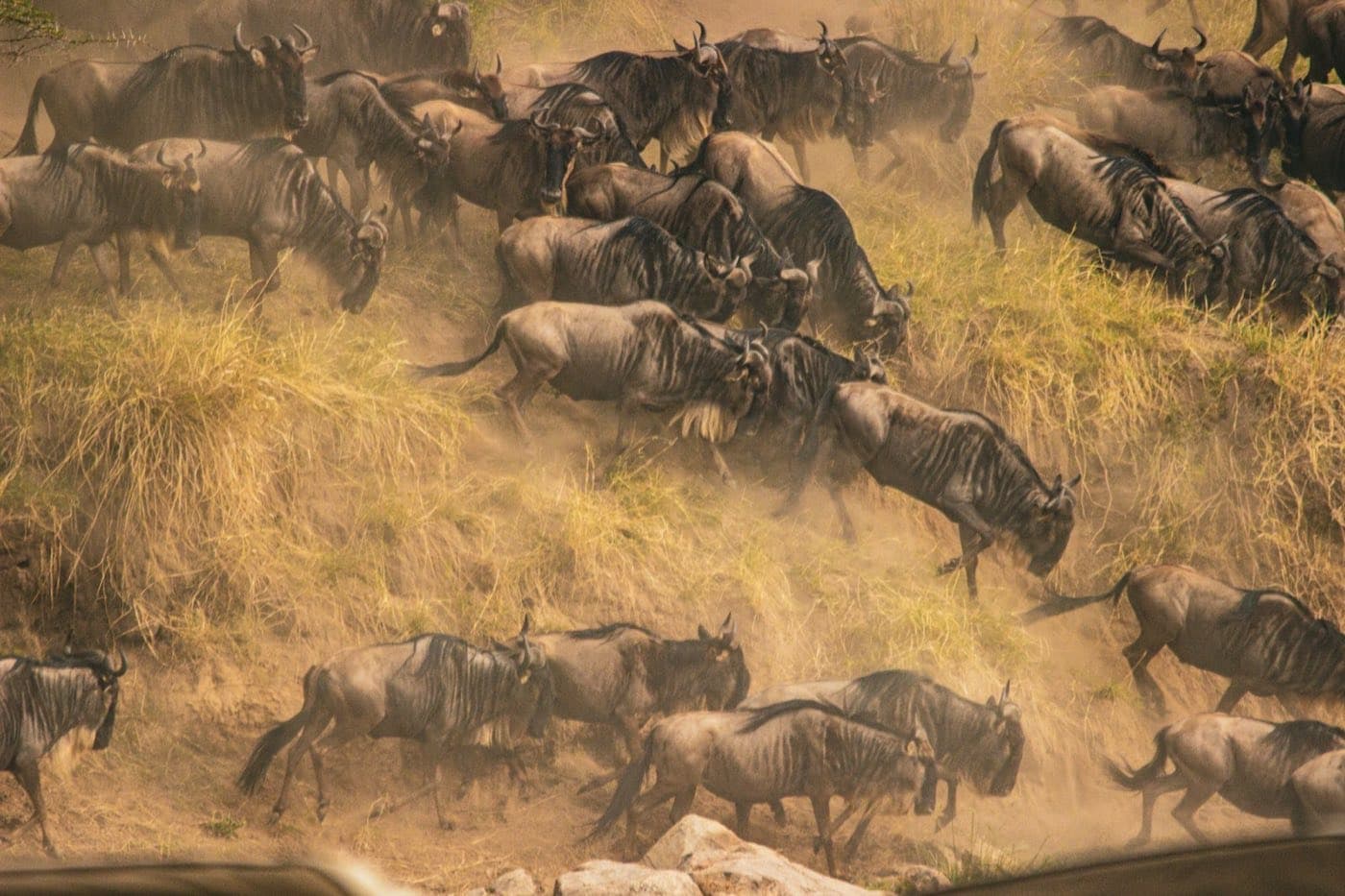
The Kenyan extension of the Serengeti, the Masai Mara concentrates the savannah's finest work: lions in large coalitions, cheetahs hunting in the open across short grass, leopards along fig-lined rivers. From July to October, one to two million wildebeest and zebras move up from the Serengeti and cross the Mara River into the jaws of the crocodiles — the famous crossings, unpredictable, earned through patience on the riverbanks.
Self-driving, the Mara is played with method: a reserve run by Narok County (not KWS), entry at USD 100 per person per day in low season, USD 200 from July to December, valid for 12 hours. The public campsites around Talek or Oloololo let you sleep at the reserve's gates; the neighbouring conservancies (Naboisho, Olare Motorogi) offer fewer vehicles and rates that fund conservation — but often without free self-driving.
Don't miss
- A Mara River crossing during the migration (July-October) — patience compulsory
- The Mara Triangle sector, quieter, via the Oloololo gate
- The lions of the Musiara marsh, made famous by the BBC's documentaries
- A sunrise balloon flight over the savannah, budget permitting (USD 400-450)
Our tips on the ground
- The 12-hour ticket is booked online in advance: time your entry to dawn and sleep outside the reserve so as not to pay twice.
- After a downpour, black cotton soil traps the most serious 4x4s: stay on the main tracks and follow the fresh wheel marks of the lodge vehicles.
- Don't count on a crossing to order: post yourself at the known fords (Paradise, Lookout) in the middle of the day and accept that the show decides without you.
Our flagship guide — €44
Guide available“Kenya on Your Own”, the complete edition, is out
10 chapters: day-by-day itineraries, driving and transport, a costed budget and checklists — the same method as our Namibia guide.
The guide is currently written in French — an English edition is in the works.
Before you go
Readers' questions about Masai Mara
Can you visit the Masai Mara self-drive without a guide?
Yes — the reserve is open to private vehicles, unlike many of the neighbouring conservancies. A 4x4 is essential (battered tracks, fords), offline maps such as Tracks4Africa replace the near-nonexistent signage, and hiring a ranger-guide at the gate for a morning (around USD 30-40) multiplies the sightings in your first days.
Do you absolutely have to come during the migration?
No: the wildebeest leave, the residents stay. Lions, leopards, cheetahs, elephants and hyenas live in the Mara year-round, and low season (January-June) offers a green savannah at half the price (USD 100/day), free of minibus traffic jams. The migration adds the grandiose; it is not the condition of the trip.