Amboseli
Elephants with immense tusks wading a green marsh, and behind them the snowy roof of Africa: Amboseli is the photograph the whole world carries in its head.
Suggested stay — 2 nights
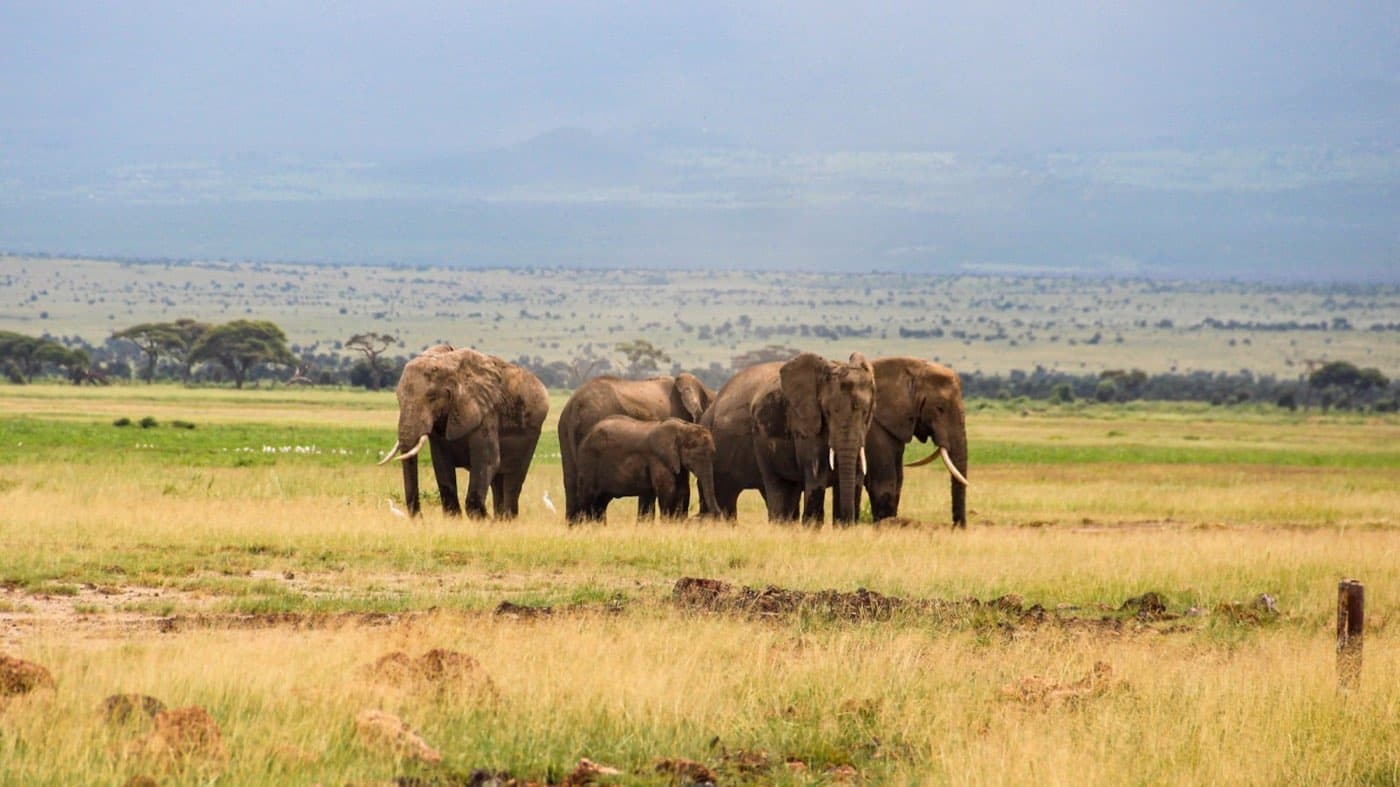
A small park (392 km²) at the foot of Kilimanjaro, Amboseli draws its magic from a paradox: a dusty plain and marshes fed by the volcano's meltwater, where some of Africa's last great big-tusker elephant families wade — studied without interruption since 1972. The herds shuttle morning and evening between the marshes and the dry zones, offering whole processions through golden dust.
The mountain, for its part, must be earned: Kilimanjaro reveals itself mostly at dawn and late in the day, before the clouds swallow it. Hence the self-drive rule at Amboseli: sleep at the park gates (campsites and lodges on the Kimana side) or at the KWS public campsite inside, and be on the track at opening. The viewing is easy, the distances short, the track network simple — the perfect park to begin a safari on your own.
Don't miss
- The elephants crossing the Enkongo Narok marsh, belly-deep in water
- Kilimanjaro clear at dawn from the plains in the park's south
- Observation Hill, the one viewpoint where you may leave the vehicle
- Lake Amboseli in the wet season: flamingos, pelicans — and mirages in the dry
Our tips on the ground
- The elephants-and-Kilimanjaro shot happens between 6 and 8 am: pay the entry on eCitizen the evening before so you clear the gate at opening without delay.
- Amboseli's volcanic dust is the finest in the country: dry bags for the cameras, and check the 4x4's air filter on the way out.
- From Nairobi, take the route via Emali (A104 then C102, decent tarmac) rather than the battered Namanga track: two hours saved.
Our flagship guide — €44
Guide available“Kenya on Your Own”, the complete edition, is out
10 chapters: day-by-day itineraries, driving and transport, a costed budget and checklists — the same method as our Namibia guide.
The guide is currently written in French — an English edition is in the works.
No time to do it yourself?
A professional can take care of it: tailor-made trip, equipped 4x4 rental or a local guide. Describe your plans and, with your consent, we pass them on to partner professionals.
1. What you need
Before you go
Readers' questions about Amboseli
Is Kilimanjaro visible year-round?
It plays hide-and-seek permanently: the best windows are dawn (before 9 am) and sometimes the last hour of daylight, with the highest odds in the dry seasons (January-February, July-October). Plan two nights minimum: over 48 hours it is rare to leave without having seen it clear at least once.
Is Amboseli worth it if you're already doing the Masai Mara?
Yes, because the two don't tell the same story: the Mara for the big cats and the migration, Amboseli for elephants at very close range and the Kilimanjaro backdrop. The park slots naturally onto the road to Tsavo and the coast — the logical stage of a southern loop, two and a half hours from the tarmac of the Nairobi-Mombasa highway.