Japan on your own
Behind bullet-train Japan hides a country of immaculate mountain roads, roadside stations with hot springs and countryside the classic circuits never see: the unexpected paradise of travel behind the wheel.
When to go
Two royal windows: the sakura (late March-April, depending on latitude) and the red maples of koyo (October-November). Avoid Golden Week (late April-early May, the whole of Japan on the road) and the tsuyu rainy season (June to mid-July, except Hokkaido, which escapes it). Summer is hot, humid and typhoon-prone (August-September, especially Okinawa and Kyushu) — but it is THE season for Hokkaido, with Furano's lavender in July. Winter driving is for the equipped: snow tyres compulsory in the north.
What it costs
With the yen weak, road-trip Japan is reasonable: compact car €40-70/day, campervan €80-130/day (Japan Campers, Rental Camper), petrol around €1.10/L. The real hidden cost: tolls, which are ferocious (Tokyo-Kyoto ~€65) — hence the visitor-only unlimited passes (Hokkaido Expressway Pass, Kyushu Expressway Pass). Nights: business hotel €50-90, ryokan with dinner €120-250, michi-no-eki free in a van. Budget €2,500-4,000 for two over 15 days excluding flights, mixing styles.
Driving & transport
Left-hand driving, and an administrative rule that traps travellers every year: the 1949-model International Driving Permit is NOT recognised for French, Swiss or Belgian licences — you need the official JAF translation (about €25, online or in person, allow a few days). Rent the ETC card with the vehicle to sail through tolls. Local traps: stop lines marked 止まれ on the tarmac, an absolute ban on turning at a red light, zero-tolerance alcohol (0.0 g — the passenger who lent the car is guilty too), and urban lanes narrower than your wing mirror. Rental GPS units accept a destination's phone number instead of its address: far more reliable.
Japan by car is a well-kept secret: beyond the megacities, the country becomes a network of perfect roads winding between volcanoes, rice paddies and timber villages, punctuated by more than 1,200 michi-no-eki — roadside stations unique in the world, offering farm produce, hot baths and tolerated overnight parking. Hokkaido by van in summer, Kyushu's Yamanami Highway, the gorges of Shikoku: roads that rival the world's finest, in disconcerting safety and cleanliness.
Our guide for this country: See what's inside — €44 →
The right formula is almost always hybrid: the train to swallow Tokyo-Kyoto and the long hauls, a regionally rented car where it changes everything — Hokkaido, the Alps, Kyushu, Shikoku, Okinawa. You drive on the left, slowly (a real 60 km/h off the expressways), with a rented ETC card for the tolls and a politeness behind the wheel that rubs off fast. One crucial detail for many Europeans: an International Driving Permit isn't always enough — French, Swiss and Belgian licences need the official JAF translation instead.
The destinations that matter
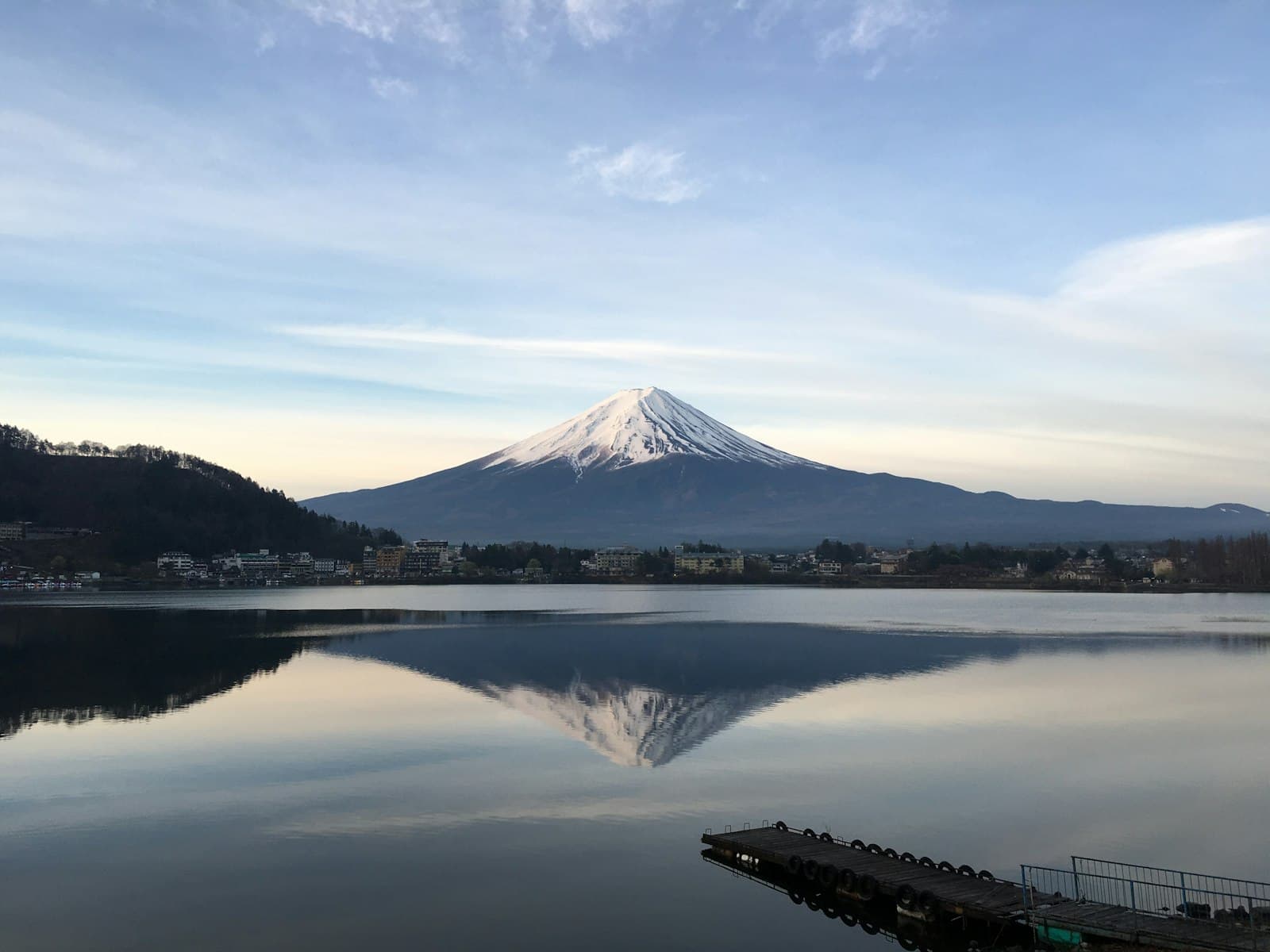
5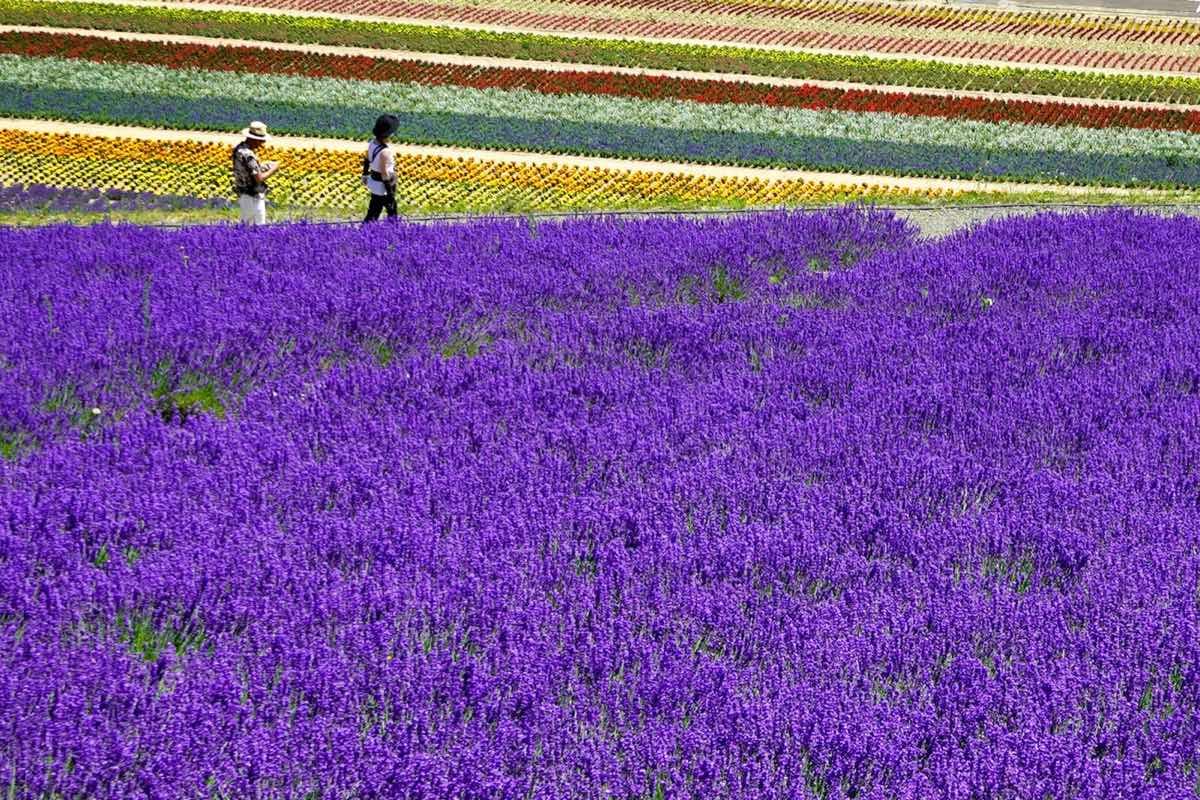 No. 016 to 10 nightsHokkaido by vanLavender fields to the horizon, straight roads between the volcanoes and a roadside station with a hot spring every 30 km: Hokkaido is the great island of Japanese van life.No. 023 to 4 nightsJapanese AlpsPeaks at 3,000 m, a turquoise river beneath the birches, carpenters' villages and thatched farmhouses: alpine Japan drives like a dream — right up to the Kamikochi barriers.No. 035 to 8 nightsShikoku and the 88 Temple RouteA 1,200-kilometre pilgrimage around an island the circuits forgot, vine bridges over emerald gorges and empty coastal roads: Shikoku is the Japan of before, open to anyone who takes the wheel.No. 044 to 6 nightsOkinawaA subtropical archipelago halfway to Taiwan, bridges skimming a turquoise lagoon and a culture that is only half Japanese: Okinawa is another country — and it can only be explored by car.No. 052 to 3 nightsMount Fuji and the Five LakesThe perfect cone must be earned: it's by car, along the five lakes and on the ridge roads of Hakone, that Fuji lets itself be framed — ideally on a winter morning, before the clouds climb.
More stops worth adding to the trip
Volcanic Kyushu
One of the world's largest inhabited calderas, a ridge road between the fumaroles and a volcano dusting ash on the umbrellas of Kagoshima: Kyushu is the great geothermal south.
What to see
- The Yamanami Highway from Beppu to Aso, the country's finest ridge road
- The Aso caldera: the Kusasenri grasslands and the Nakadake crater (gases permitting)
- The rotenburo of Kurokawa Onsen with the tegata pass
Suggested time: 5 to 7 nights
Japan: practical notes
Tolls, fines, money, seasons, budget, rental: the essentials, gathered on this page.
Daily budget for a self-drive road trip in Japan: what a day on the road really costs
"How much does a day of road-tripping in Japan really cost?" Contrary to the country's lingering reputation as expensive — even out of reach for a self-drive trip — the weak yen makes the essentials surprisingly affordable once you know where the money goes: neither fuel (around €0.90/L in mid-2026) nor konbini meals (€10-15 per person per day) really weigh on the total. The real swing comes from three items that vary two- or threefold depending on your choices — the rental car, expressway tolls, and where you sleep — for a total ranging from roughly €125 to over €225 a day for two travelers. Here is, cost by cost, what a day really costs between business hotels, free michi-no-eki stops and toll gates.
- Rent the ETC card with the vehicle and simulate your route on the expressway companies' official calculators: a regional Expressway Pass pays for itself fast on a loop that changes stops every day.
- Sleep at chain business hotels (Toyoko Inn, Super Hotel) rather than independent properties: prices are steadier there and often cheaper when booked through the chain's own app.
- Alternate konbini for lunch and a restaurant in the evening rather than two sit-down meals a day — the gap can run €15-20 per person per day.
- Travel just before or after the cherry blossom and autumn foliage peaks: smoother roads and hotels 30-40% cheaper, for scenery that's still stunning.
- If the itinerary fits (Hokkaido, the Japanese Alps), a pricier camper van rental pays itself back in free michi-no-eki nights within about ten days of travel.
| Accommodation type | Price per night |
|---|---|
| Michi-no-eki (camper van, rest area) | €0 |
| Regional business hotel (twin room) | ≈ €33-49 |
| City or peak-season business hotel | ≈ €54-81 |
| Public onsen (michi-no-eki add-on) | ≈ €4-6/person |
| Ryokan with kaiseki dinner | ≈ €120-250/person |
Money in Japan: Cash, Bank Cards and ATMs for a Self-Drive Road Trip
Japan has a reputation as an ultra-connected country, all vending machines and touchscreens. Yet in 2026, only 58% of payments there are still cashless — well behind South Korea or Sweden, and a figure that hides a real gap between big cities, where cards work almost everywhere, and the countryside, where a small family restaurant, a roadside vegetable stand or a traditional inn will often only take banknotes. On a self-drive road trip, where you quickly leave Tokyo or Osaka behind for back roads and rural stops, that reality changes how you plan your budget. Here's how to split your spending between yen in your pocket, a bank card and ATMs, with no nasty surprise at the pump or in a car park.
| Expense | Safest payment method | What to plan for |
|---|---|---|
| Rental car, hotels, konbini, fuel | Bank card (contactless) | Notify your bank before departure |
| Expressway tolls | ETC card supplied by the rental company | See our dedicated article on Japanese tolls |
| Day-use car parks and parking meters | Cash (¥1,000 notes, ¥100 coins) | Keep small notes on hand, not large bills |
| Small restaurants, family ryokan, festivals | Cash | Budget generously outside big cities |
| Mujin hanbai (honesty-system vegetable stands) | ¥100 coins | A Japanese institution, never card-friendly |
Police Checks and Fines in Japan for Self-Drivers: Kōban, Zero-Tolerance Alcohol Laws and the JAF Translation Trap
Driving in Japan beyond the Shinkansen means sooner or later crossing paths with the traffic police — often at a kōban, those small neighbourhood police boxes found everywhere, right down to country roads in Hokkaido or the Japanese Alps. Japan remains one of the safest and most courteous countries in the world for a foreign driver in a rental car, but three specifics change things for a visitor: a document to present that isn't the standard International Driving Permit, a zero-tolerance alcohol policy that extends to passengers, and a legal duty to report every accident, even a minor scrape, or risk a hit-and-run charge.
| Speed over the limit | Ticket type | Consequence |
|---|---|---|
| Up to 30 km/h (road) / 40 km/h (expressway) | Blue (administrative) | JPY 9,000–35,000, payable within 7 days, no record |
| Beyond those thresholds | Red (criminal) | Mandatory court appearance, fine up to JPY 100,000 |
| 50 km/h or more over the limit | Red (aggravated criminal) | Up to 6 months in prison possible |
SIM Cards and Internet in Japan: Staying Connected When You Can't Read a Word of Japanese on the Road
Past the main highways, Japan's directional signs switch to kanji, the rental car's built-in navigation system displays its menus in the same language, and the smallest detour through the Alps or Hokkaido has to be negotiated without a word of English nearby. In Japan more than anywhere else, a mobile connection isn't a luxury for the digitally attached traveller — it's the tool that lets you read the road itself, from Kamikochi to the most remote michi-no-eki. Yet the country combines two realities that often surprise French travellers: one of the densest networks on earth, and a telecoms bureaucracy that in practice keeps tourists from simply buying a SIM card with a phone number. Here's how to get set up before you go, and where the signal actually disappears.
- Check what your French plan actually covers in Japan (data included, cap, duration) before relying on it for the whole trip.
- Activate an eSIM before departure (Airalo, Sakura Mobile, Holafly) to secure the airport-to-rental-counter leg.
- For a group or family, compare the cost of a pocket wifi booked in advance: often better value than an eSIM per person.
- On the ground, a data-only SIM is easy to pick up at the airport or at Bic Camera — but without a number to call.
- Download offline maps before the Japanese Alps, eastern Hokkaido, or any route riddled with mountain tunnels.
- Mount your phone on a dashboard holder and favour voice guidance: holding a screen while driving is heavily penalised in Japan.
| Carrier | Japan offer | Indicative price |
|---|---|---|
| Free | Free Max, unlimited data included | €29.99/month (€19.99 Freebox) |
| Orange | Pass Voyage 1 or Voyage 250 Go 5G plan | ≈ €30 for 31 days |
| RED by SFR | B&You 250 Go Voyage, 40 Go included | ≈ €16/month |
| Bouygues Telecom | 5G plans 150-300 Go or Pass Confort | 35 to 40 Go included, or ≈ €35 for the pass |
The Japanese Alps by Rental Car: Kamikochi, Tateyama-Kurobe and What You Can Actually Drive
The Japanese Alps hold a big surprise for drivers: their two most famous sites, the Kamikochi valley and the Tateyama-Kurobe Alpine Route, are closed to private cars. Should you give up on the rental car altogether? Absolutely not: the Kiso valley, Takayama, Shirakawa-go, the Venus Line and the Shibu Pass at 2,172 metres are all wonderful drives. We have untangled what you can drive, what you reach by shuttle, and how to stitch the two into one coherent itinerary. Here is our complete manual for the Japanese Alps behind the wheel.
- JAF translation of a French licence: mandatory, to be obtained before renting (the Geneva IDP is not enough).
- Driving on the left: pay extra attention at junctions and when leaving car parks during the first few days.
- The rental company's ETC card: always take it for expressway tolls.
- Narrow mountain roads: slow down in the hairpins and use the convex mirrors.
- Navigation: enter phone numbers or "map codes" of sites into the sat nav — more reliable than names.
- Snow tyres are mandatory in winter in alpine regions: check the vehicle's equipment when booking.
| Road or site | Drivable by car? | Good to know |
|---|---|---|
| Kamikochi | No, year-round | Park-and-ride at Sawando or Hirayu, then shuttle bus or taxi |
| Norikura Skyline / Echo Line | No | Access by bus, taxi or bicycle only |
| Tateyama-Kurobe Alpine Route | No | Funiculars, buses and ropeway; car forwarding must be booked |
| Kiso valley (Magome, Tsumago) | Yes | Car parks at both villages, Nakasendo trail between them |
| Shirakawa-go | Yes | Paid car parks at the entrance, UNESCO-listed village |
| Venus Line (Utsukushigahara) | Yes | Scenic highland road, superb in clear weather |
| Shiga-Kusatsu (Shibu Pass, 2,172 m) | Yes | Highest point of the national road network, closed in winter |
Travel Insurance for Japan: Free Ambulance, Costly Hospital, and Tighter Re-Entry Rules in 2026
Japan has a reputation as an "easy", safe country for a road trip: immaculate roads, increasingly bilingual signage, near-zero crime. That reputation is exactly what leads some French travelers to overlook something that isn't trivial: contrary to popular belief, France has no social security agreement covering health care with Japan, and a sick or injured tourist pays their bill in full, long before any thought of repatriation. On an itinerary that mixes left-hand driving, mountain passes in the Japanese Alps and long stretches of toll highway, understanding what Japan's health system covers — and doesn't — and what changed in 2026 for travelers who leave without paying, matters just as much as choosing the right 4x4 or international driving permit.
- Aim for a medical expense cap of at least €200,000, ideally €500,000 to €1,500,000.
- Confirm repatriation is covered on an actual-cost basis, without a low cap.
- Make sure "driving a rental vehicle" isn't excluded from the policy.
- Always settle any hospital bill before leaving Japan: the re-entry-refusal threshold dropped to ¥10,000 in 2026.
- Don't expect anything from your French carte Vitale in Japan: it has no value there.
- Keep the 24/7 assistance number (paper and a phone photo) in the glovebox, next to the international driving permit.
| Type of cost | Approximate amount |
|---|---|
| 119 call and ambulance transport | Free, for everyone |
| ER consultation (excluding ambulance) | Billed at full rate if uninsured |
| Hospital night, shared room | ≈ ¥30,000 (≈ €185), before treatment |
| Hospitalization with surgery | Can exceed €20,000 |
| Medical repatriation to Europe | Often above €50,000 |
Our flagship guide — €44
Guide available“Japan on Your Own”, the complete edition, is out
10 chapters: day-by-day itineraries, driving and transport, a costed budget and checklists — the same method as our Namibia guide.
The guide is currently written in French — an English edition is in the works.
No time to do it yourself?
A professional can take care of it: tailor-made trip, equipped 4x4 rental or a local guide. Describe your plans and, with your consent, we pass them on to partner professionals.
1. What you need
Explore other countries