Mount Fuji and the Five Lakes
The perfect cone must be earned: it's by car, along the five lakes and on the ridge roads of Hakone, that Fuji lets itself be framed — ideally on a winter morning, before the clouds climb.
Suggested stay — 2 to 3 nights
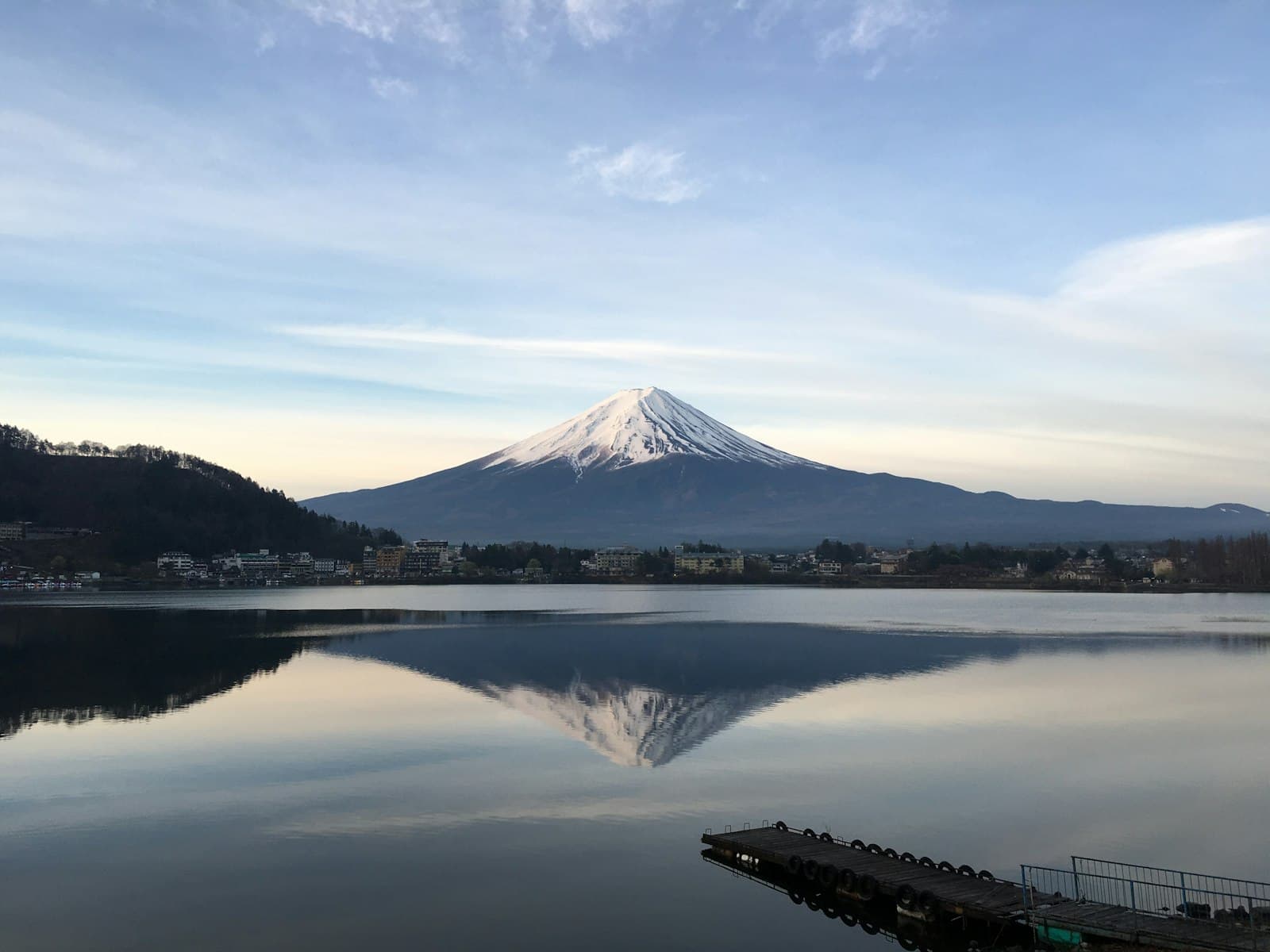
Two hours from Tokyo, the Fujigoko region — the five lakes born of the volcano's lava flows — is Mount Fuji's official balcony, and the car beats every other transport here: the viewpoints are strung out over dozens of kilometres, from Lake Kawaguchi (north shore at sunrise, perfect reflection) to the Chureito pagoda above Fujiyoshida, Japan's most famous image, earned after 400 steps. More discreet, the photographers' Lake Shoji and the sacred springs of Oshino Hakkai complete the round, before the drive up the Fuji Subaru Line to the 5th station, at 2,300 m at the foot of the cone (closed to private vehicles in summer during the climbing season).
The natural sequel is called Hakone: forested passes, Lake Ashi and its torii in the water, black eggs cooked in the Owakudani fumaroles — and, from the ridge roads of the Ashinoko Skyline, the whole of Fuji set above the lake. The regulars' secret fits in one sentence: the volcano shows itself in the morning and veils by noon, especially from April to September; winter, cold and dry, offers 70% clear days against 20% in summer.
Don't miss
- The Chureito pagoda above Fujiyoshida, at dawn (400 steps, the image of Japan)
- The north shore of Lake Kawaguchi and Fuji's reflection at sunrise
- The sacred springs of Oshino Hakkai and the village at the volcano's foot
- Hakone: Lake Ashi, the Hakone-jinja torii and the Owakudani fumaroles
Our tips on the ground
- Sleep locally rather than day-tripping: Fuji is almost always clear at dawn and shrouded by noon — day visitors from Tokyo arrive precisely when it disappears.
- From November to February the odds of a view soar, but the Hakone ridge roads freeze at night: leave after 9 am or make sure your rental has winter tyres.
- Avoid the region at weekends and during Golden Week: Tokyoites pour in and the Lake Kawaguchi loop becomes a traffic jam — on weekdays, everything breathes.
Our flagship guide — €44
Guide available“Japan on Your Own”, the complete edition, is out
10 chapters: day-by-day itineraries, driving and transport, a costed budget and checklists — the same method as our Namibia guide.
The guide is currently written in French — an English edition is in the works.
No time to do it yourself?
A professional can take care of it: tailor-made trip, equipped 4x4 rental or a local guide. Describe your plans and, with your consent, we pass them on to partner professionals.
1. What you need
Before you go
Readers' questions about Mount Fuji and the Five Lakes
Can you drive up Mount Fuji?
Up to the 5th station of the Fuji Subaru Line (2,300 m), yes: 30 km of toll road through forest, above the sea of clouds on certain mornings. But it closes to private vehicles during the summer climbing season (compulsory shuttles from the Fujihokuroku car park) and in snow. The climb to the summit itself is on foot only, from July to early September, with a reservation and an entry fee now required on the Yamanashi side.
Which lake makes the best base?
Kawaguchiko without hesitation for a first stay: the best equipped (ryokan with baths facing the volcano, houtou restaurants, konbini), the best placed for Chureito and Oshino Hakkai. Purists of quiet prefer Yamanaka, larger and residential, or Shoji, tiny and wild — but all are within 30 minutes' drive of one another: that's the advantage of having the wheel.