Sacred Valley and Machu Picchu
A sacred river between two walls of peaks, Inca terraces clinging to the mountainsides and, at the end of the rails, the continent's most famous citadel: the beating heart of the trip.
Suggested stay — 3 to 4 nights
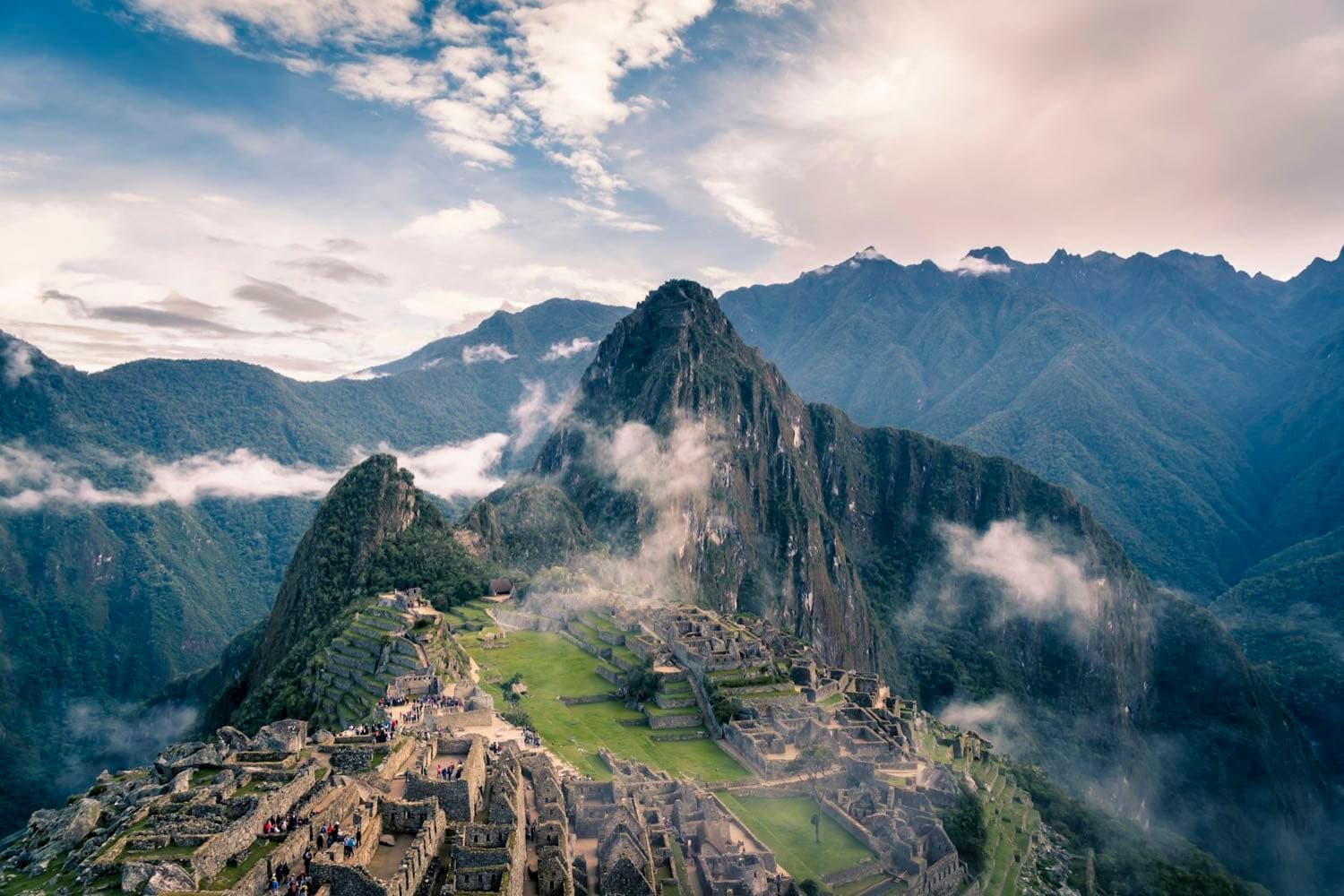
Between Pisac and Ollantaytambo, the río Urubamba unrolls the best of Inca genius at 2,800 m — a blessed altitude where you can finally breathe: Pisac's vertiginous terraces and market, the circular agricultural laboratory of Moray, the Maras salt pans cascading down the mountainside in white pools, and Ollantaytambo, the only Inca village still inhabited on its original plan, running-water lanes included. By car, everything links up in short days on beautiful roads.
Then the road stops: Machu Picchu can only be reached by train (from Ollantaytambo, 1h45 through spectacular gorges) or on foot. Up there, discipline is strict — dated tickets by circuit and time slot, tight quotas, a guide compulsory on your first visit — but that first view from the guardian's terrace, when the mist tears open over the pinnacles of Huayna Picchu, erases all the logistics in the world.
Don't miss
- Ollantaytambo: the fortress at dawn before the groups, then the old village with its Inca canals
- The Maras salt pans and the circular terraces of Moray, combined in a half-day
- Pisac: the ruins from the top (by car), then walk down towards the market
- Machu Picchu on the first time slot, on a circuit with the classic view from the guardian's hut
Our tips on the ground
- Book Machu Picchu several weeks ahead in the dry season (tickets and train): the circuits are not equal — check yours includes the classic photo platform, not all of them still do.
- Sleep in Ollantaytambo rather than Aguas Calientes: the village is charming, the car waits in a guarded car park, and the first morning train is enough for an early slot.
- Add Huayna Picchu or the Montaña to your ticket if your legs allow — tiny quotas, booked together with the entrance, never on site.
Our flagship guide — €44
Guide available“Peru on Your Own”, the complete edition, is out
10 chapters: day-by-day itineraries, driving and transport, a costed budget and checklists — the same method as our Namibia guide.
The guide is currently written in French — an English edition is in the works.
No time to do it yourself?
A professional can take care of it: tailor-made trip, equipped 4x4 rental or a local guide. Describe your plans and, with your consent, we pass them on to partner professionals.
1. What you need
Before you go
Readers' questions about Sacred Valley and Machu Picchu
Can you reach Machu Picchu by car?
No — no road reaches Aguas Calientes. The options: the train from Ollantaytambo (the simplest from the valley), trekking (the Inca Trail on permits booked months ahead, or the quota-free Salkantay), or the budget route via Hidroeléctrica followed by a 2-3 hour walk along the tracks — a long day of hairpins, best left to hardened shoestring travellers.
Is one day enough for Machu Picchu?
Yes for the essentials: a morning slot, 3-4 hours on site with a guide, back by afternoon. Enthusiasts sleep in Aguas Calientes to chain two different circuits or climb Huayna Picchu at daybreak. Don't sacrifice the Sacred Valley for it: Moray, Maras and Ollantaytambo deserve full half-days of their own.