Erongo / Damaraland · Stop 13
Spitzkoppe
Granite domes 700 m high set on a bare plain, a famous stone arch, and one of Africa's finest campsites: the Spitzkoppe is the self-drive night everyone remembers.
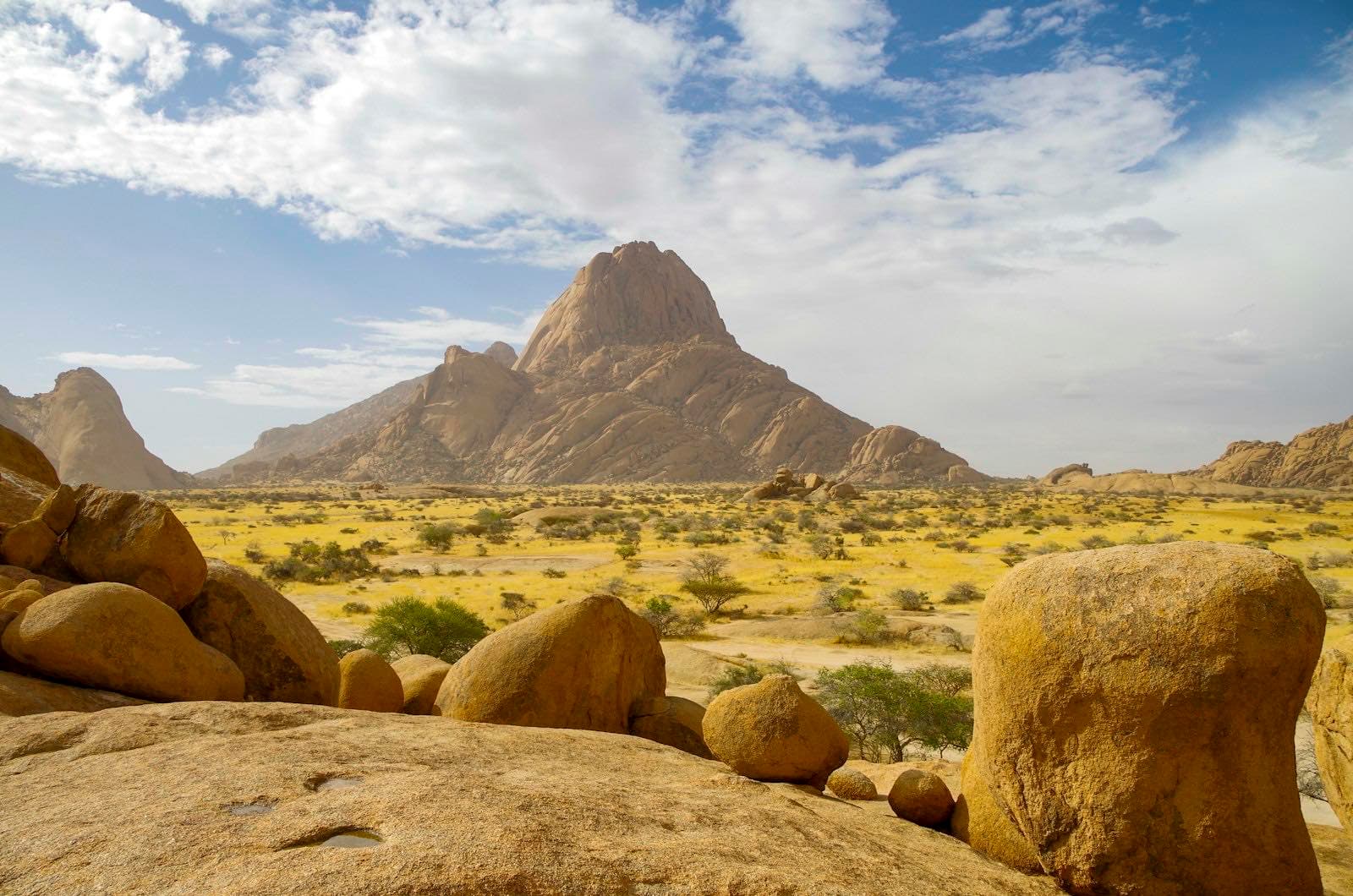
Nicknamed "Namibia's Matterhorn" for its pointed silhouette, the Spitzkoppe (1,728 m) is a granite inselberg some 120 million years old, rising 700 m above the plain between Usakos and the coast. With the neighbouring Pontok massif it composes a mineral landscape of rare purity.
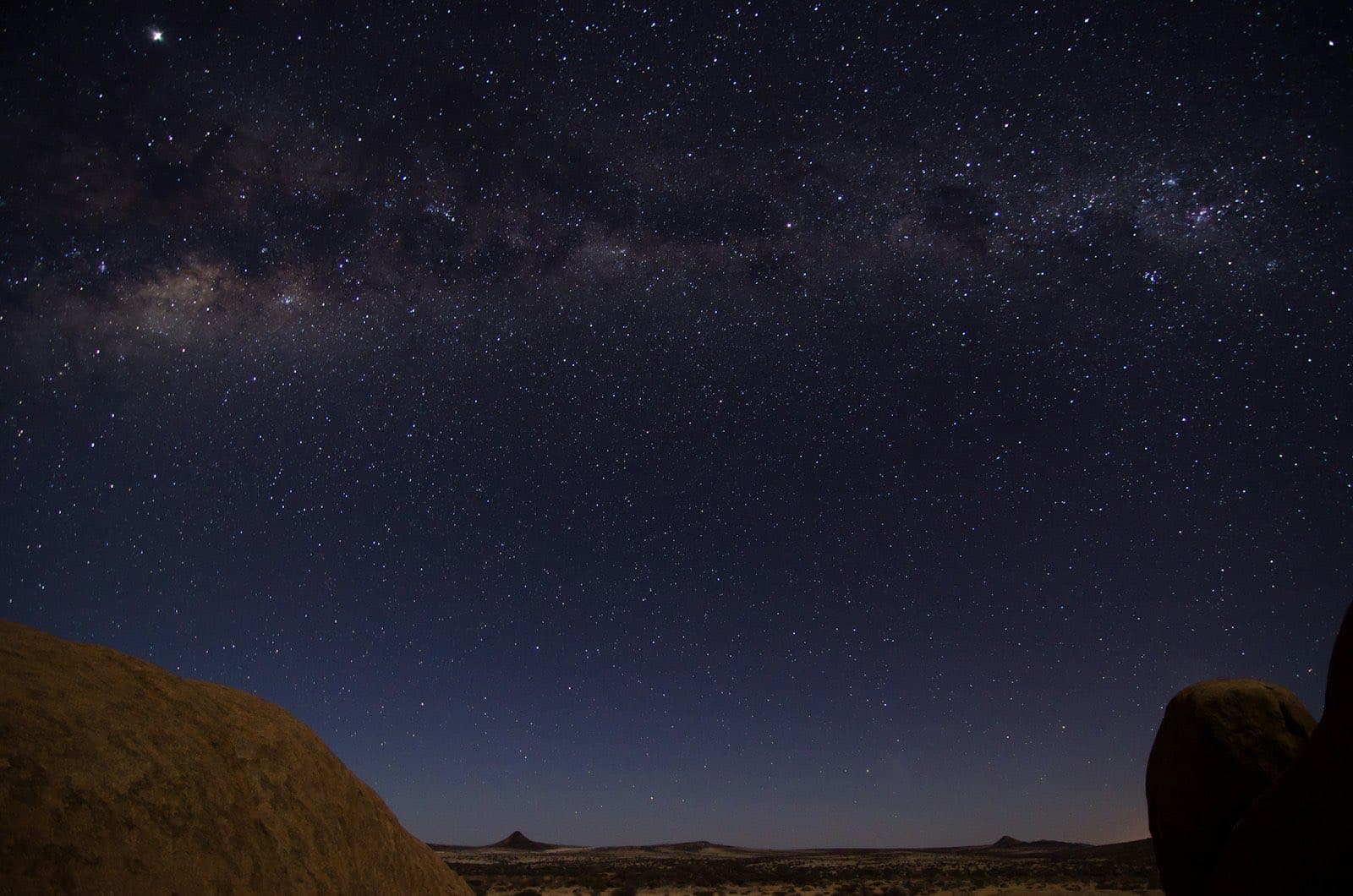
The place's magic lies in its formula: a community campsite, run by the neighbouring village, whose pitches are scattered among the granite blocks — no electricity, basic central ablutions. At sunset the granite shifts from ochre to blood red; at night the Milky Way overwhelms everything.
Positioned between Swakopmund and Damaraland (or Etosha), the stop slots effortlessly into every circuit. One night suffices; climbers and photographers beg for more.
What to see and do
1.The Rock Arch
The country's most photographed natural stone bridge, a few minutes' walk from one of the pitches. At sunset the arch frames the blazing Pontoks — the shot is inevitable, and rightly so.
2.Bushman's Paradise and the rock paintings
A chain-equipped slab leads to a hanging amphitheatre sheltering San paintings (damaged in the past, protected since). Visited with a local community guide — a short walk, beautiful light late in the day.
3.The natural rock pools
After good rains, pools form in the granite (including the "Rock Pool" at the foot of the Pontoks): an improbable swim facing the desert. Dry most of the year — treat them as a green-season bonus.
4.Climbing and scrambling
The Spitzkoppe is a historic high place of African climbing (the summit is for experienced climbers), but anyone can scramble at their own level on the slabs and among the blocks. Grippy shoes, water, and caution: the granite bakes and the ledges trap.
Where to stay
By category — the guide covers how to choose and when to book.
The community campsite
The emblematic experience: isolated pitches among the blocks (€15-25 per person), braai, no electricity, simple central ablutions. The best pitches (arch side or west-facing) go early — arrive early afternoon in high season.
Tented camp and lodge at the entrance
For those who want the landscape without full autonomy: furnished tents and rooms near the site entrance, with a restaurant. Simple comfort, but hot showers and bedding after days of gravel.
Usakos and the B2
40 minutes away, the small town of Usakos helps out (fuel, minimarket, modest guesthouses) if the site is full — but sleeping at the Spitzkoppe itself is precisely the point of the stop.
Driving advice
- Access from the B2 is via the D3716, rolling gravel: an easy 30 minutes, the final few hundred metres sandy between the blocks.
- No supplies on site: fuel at Usakos or Henties Bay, water (minimum 5 L per person), wood and ice bought before arriving.
- Inside the site, drive at walking pace: village children, springboks and dassies move between the pitches.
- Night falls fast: set up camp and locate your ablutions before sunset — walking between the blocks by headlamp is treacherous.
Distances to neighbouring stops
| To | Distance | Driving time | Road |
|---|---|---|---|
| Swakopmund | 150 km | 2 h | D3716 then tarred B2 |
| Damaraland / Twyfelfontein | 200 km | 2 h 30 – 3 h | D1918 then C35 via Uis, gravel |
| Cape Cross | 170 km | 2 h 15 | D1918 towards Henties Bay then C34, gravel then salt |
| Windhoek | 280 km | 3 h | D3716 then B2 via Usakos and Okahandja, tar |
This stop in our itineraries
These stops link together in our three day-by-day circuits:
Our flagship guide — €44
Plan this trip without leaving anything to chance
The “Namibia on your own” guide covers this stop and everything else: renting the 4x4 without the insurance traps, 10/15/21-day itineraries day by day, the Etosha strategy, a full budget and checklists. Now available in English.
Instant download · 14-day money-back guarantee
No time to do it yourself?
A professional can take care of it: tailor-made trip, equipped 4x4 rental or a local guide. Describe your plans and, with your consent, we pass them on to partner professionals.
1. What you need
Before you go
Readers' questions about Spitzkoppe
Should you book the Spitzkoppe campsite?
In high season (July-October) it's wise: the site has become very popular. Off-season you generally find space by arriving early afternoon — which also lets you choose your pitch, the essential criterion here. Booking is online or through your rental company/agency.
Is there water and electricity at the campsite?
Not on the pitches: no electricity, water limited to the central ablution blocks (showers sometimes cold). It is an autonomy campsite: arrive with water, wood, a full coolbox and charged batteries. That sobriety is precisely what preserves the place's magic.
Can you climb to the Spitzkoppe's summit?
The main summit is real climbing (historic routes, crack pitches), attempted roped up and ideally with a guide. The lower slabs, the arch and the Pontok amphitheatres, however, offer everyone hours of superb scrambling. Bushman's Paradise requires a local guide.
Why is the starry sky so famous?
No light pollution for dozens of kilometres, moderate altitude, dry desert air: observing conditions rank among the world's best. At new moon the Milky Way spans horizon to horizon and literally lights the granite. Bring a tripod and a fast wide-angle.