Zanzibar
Swahili lanes charged with a thousand years of the spice trade, then turquoise lagoons at high tide: Zanzibar is the dream decompression after the dust of the tracks.
Suggested stay — 4 to 5 nights
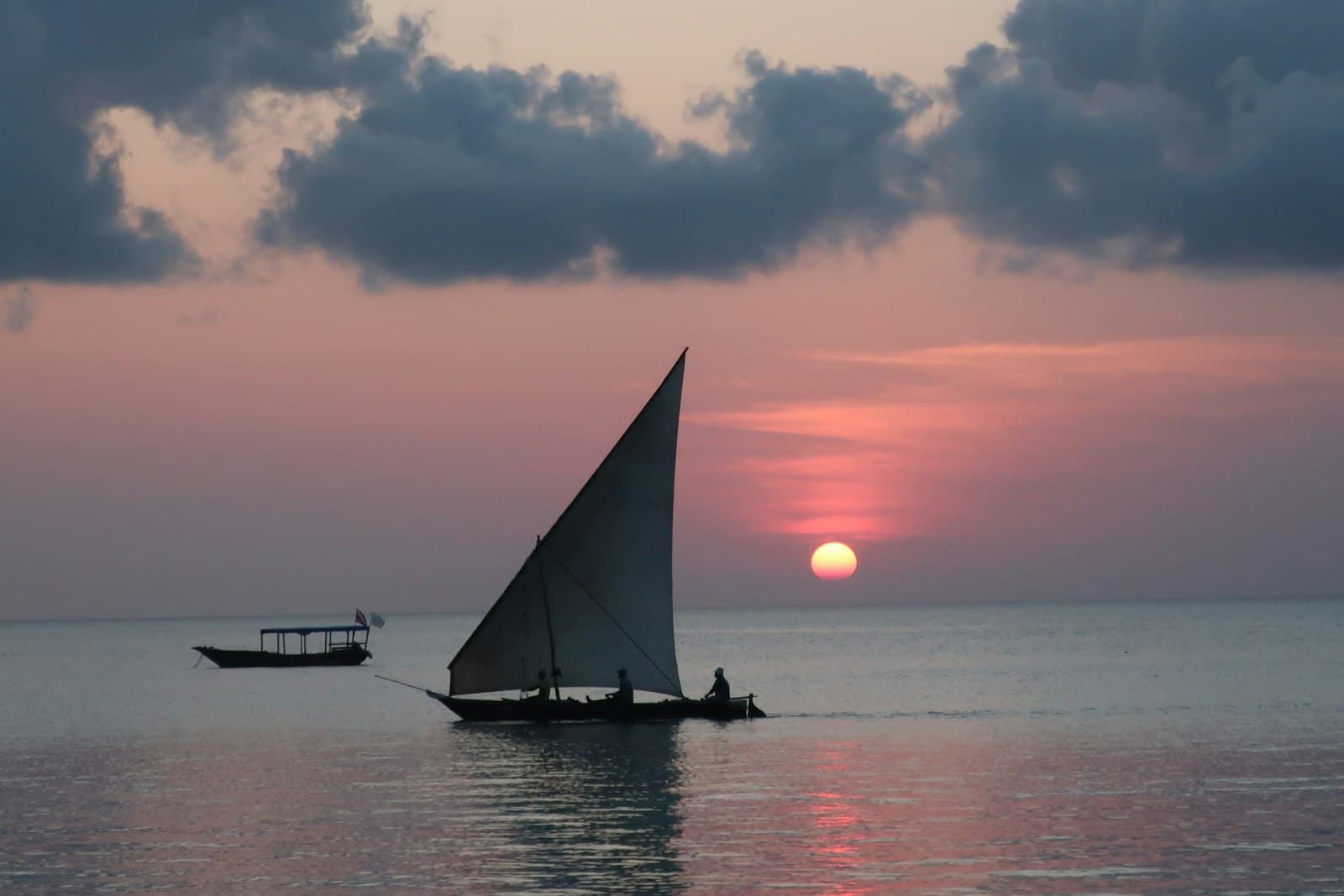
You leave the 4x4 on the mainland and change worlds: Unguja, the archipelago's main island, was the Swahili hub of the spice trade and — painful memory — of the slave trade. Stone Town, UNESCO-listed, reads like a palimpsest: carved Indian and Omani doors, Persian baths, an Anglican cathedral built over the old slave market, muezzins and church bells mingling at dusk. Get lost in it without a map for a full day, then dine on grilled seafood in the bustle of Forodhani Gardens.
The coastline is chosen by tidal temperament: in the north, Nungwi and Kendwa offer swimming at any hour and the sunsets; in the east, Paje and Jambiani live to the rhythm of a lagoon that retreats a kilometre, uncovering the seaweed gardens of the women farmers — and East Africa's best kitesurfing spot. Between beaches: Jozani forest and its endemic red colobus, a spice farm, and the prison islet of Changuu with its century-old giant tortoises.
Don't miss
- Stone Town in the early morning: carved doors, Darajani market and the slavery memorial
- The red colobus of Jozani, an endemic species you approach within a few metres
- A spice farm around Kizimbani — clove, vanilla and nutmeg on the tree
- The Paje lagoon at low tide, between seaweed gardens and kitesurfers
Our tips on the ground
- Return the 4x4 in Arusha and fly to Zanzibar (daily direct flights, about 1 h 20) rather than tackling the road to Dar es Salaam: two bus days and a ferry saved for a modest premium.
- Check the tide tables before choosing your hotel: on the east coast the ocean retreats very far twice a day — magical for walking the reef flat, frustrating if all you dreamed of was swimming.
- Zanzibar is overwhelmingly Muslim: shoulders and knees covered in Stone Town and the villages — swimwear stays a hotel-beach outfit, and Ramadan reshuffles restaurant hours.

Our flagship guide — €44
Guide available“Tanzania on Your Own”, the complete edition, is out
10 chapters: day-by-day itineraries, driving and transport, a costed budget and checklists — the same method as our Namibia guide.
The guide is currently written in French — an English edition is in the works.
No time to do it yourself?
A professional can take care of it: tailor-made trip, equipped 4x4 rental or a local guide. Describe your plans and, with your consent, we pass them on to partner professionals.
1. What you need
Before you go
Readers' questions about Zanzibar
Ferry or flight from the mainland?
The flight, almost always: direct services link Arusha, Kilimanjaro and even the Serengeti airstrips to Zanzibar in about 1 h 30, while the road to Dar es Salaam swallows a full day before you even board the ferry (a 2-hour crossing, frequently choppy). The Azam ferry from Dar keeps its logic if your loop ends in the economic capital anyway.
Which coast to choose, north or east?
Nungwi-Kendwa in the north for swimming at any hour (small tidal range), the lively scene and the sunsets; Paje-Jambiani in the east for the immense lagoon, the kitesurfing and the more authentic villages — accepting an ocean that walks away at low tide. Many mix both: three nights on one side, two on the other, Stone Town as the hinge.