From our field notes
Chobe Self-Drive: From the Riverfront to Savuti, the Elephant Park Without a Guide
Published 28 July 2026 · updated 28 July 2026 · 9 min read
By Clément Lacaille, publisher · our method
Nowhere else in Africa will you see as many elephants as along the Chobe River in the dry season. Yet Chobe National Park, in northern Botswana, is perfectly doable in a rented 4x4, with no guide and no organised convoy — self-drive is allowed, and the riverfront can even be explored as a day trip from Kasane. But Chobe is also a demanding park: deep sand on the tracks to Savuti, interior campsites that must be booked months ahead, and a ban on night driving. Here's how to prepare the crossing, from Sedudu gate to the heart of the park.
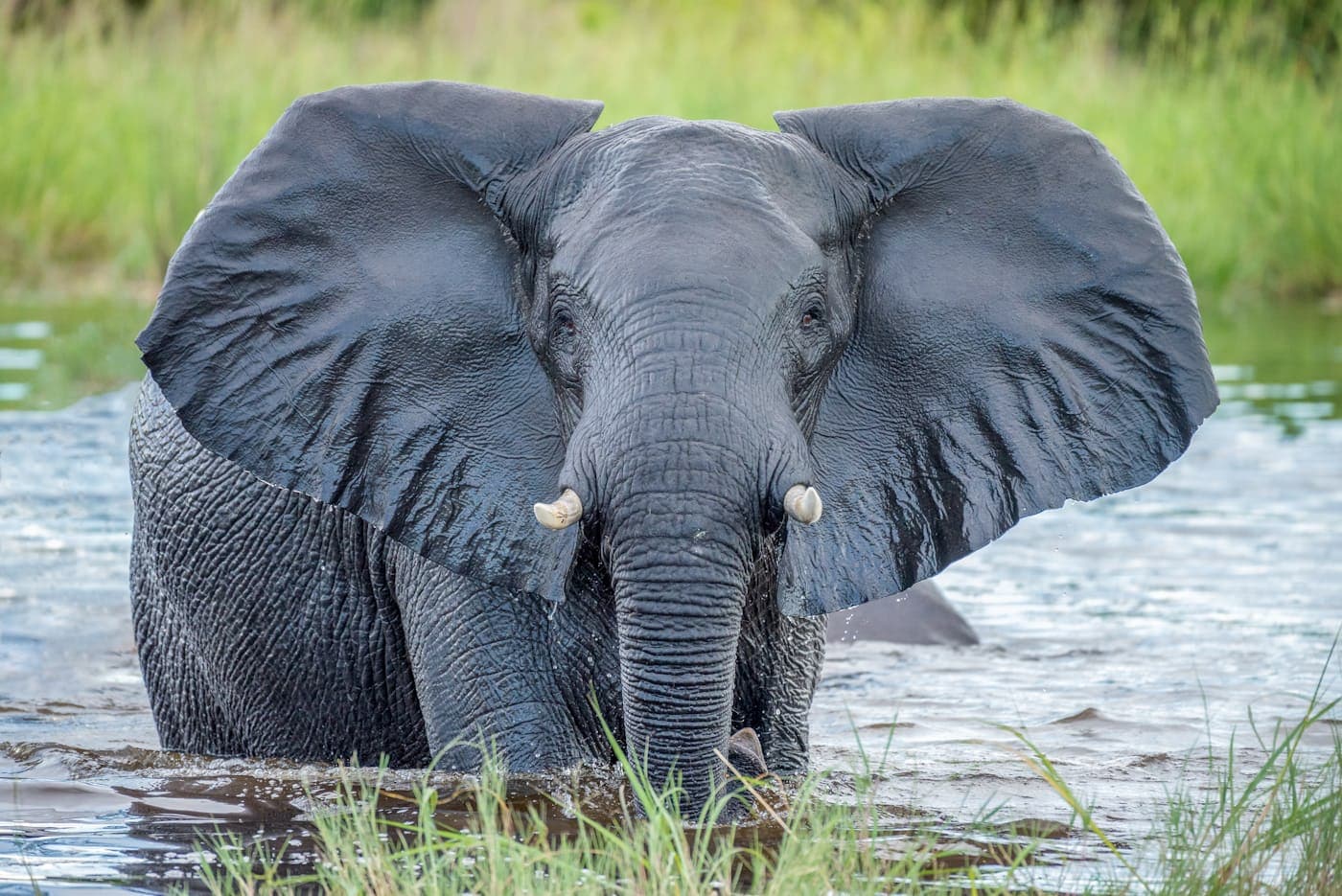
The park of superlatives: why Chobe holds so many elephants
Botswana is home to Africa's largest population of savannah elephants — around 130,000 individuals counted during the Great Elephant Census of 2014-2015 — and it's along the Chobe River that this abundance is most visible. In the dry season, as the waterholes of the interior dry up, the herds converge on the river: elephant density there is then among the highest on the continent, with dozens of animals crossing the track, bathing or spraying themselves with mud a few metres from the vehicles.
This stronghold status matters at a continental scale. The study by Michael J. Chase and co-authors, published in 2016 in the journal PeerJ following the Great Elephant Census — an aerial survey conducted across 18 countries — counted around 352,000 savannah elephants in Africa and measured a decline of about 30% in seven years, with Botswana remaining the species' foremost refuge (study: doi.org/10.7717/peerj.2354). Driving along the Chobe means crossing what remains the beating heart of the world's savannah elephant population.
The riverfront from Kasane: Botswana's most accessible safari
The section known as the riverfront stretches between Kasane — where you enter through Sedudu gate — and the Ihaha and Serondela area, along the river's southern bank. The tracks are sandy but this remains the most approachable part of the park: you can complete a game-drive loop from Kasane, including as a day trip, sleeping at a lodge or campsite in town and entering the park at opening time. It's the ideal formula for a first self-drive experience in Botswana, without committing to the deep sand of the interior.
The best moments come early in the morning and late in the afternoon, when elephants, buffalo, hippos and antelope come down to drink. The tracks follow the river for tens of kilometres, with open views over the floodplains — opposite Sedudu Island, the concentration of animals in September-October surpasses anything you can see elsewhere in southern Africa. Since night driving is banned inside the park, you need to time your day around the gate opening hours and plan your exit before nightfall.
Savuti: deep sand, lions and real adventure
In the heart of the park, Savuti is another world: famous for its lions and elephants, the area is only reachable via deep-sand tracks where a 4x4 is mandatory — and where genuine sand-driving experience is necessary. Deflating your tyres is strongly recommended before setting off: it literally transforms the vehicle's behaviour, letting it float over the sand instead of digging in. Allow a full day of slow, focused driving from the riverfront, with no fuel station and no assistance along the way.
The reward matches the effort: Savuti concentrates spectacular wildlife around its marsh and waterholes, with lion-elephant interactions documented for decades. It's also the section of the park where self-sufficiency counts most — fuel, water, food, a sound spare wheel and a compressor to reinflate the tyres are part of the minimum kit, which Botswana's equipped-4x4 rental companies generally supply as standard.
- Deflate your tyres before the deep-sand sections, and reinflate with the compressor once back on tarmac
- Keep momentum, avoid sudden braking or sharp acceleration, and follow the existing wheel tracks
- Set off with a full tank, generous water reserves and enough food for complete self-sufficiency
- Check the spare wheel, a jack suited to sand (with a base plate) and the compressor before leaving Kasane
- Tell someone your route: there is no reliable network and no assistance between the riverfront and Savuti
Entry fees, campsites, bookings: the paperwork
Self-drive is allowed in Chobe without a guide or escort: you simply pay the entry fees to the DNPW (Department of Wildlife and National Parks) at the park gates. Fees change regularly, so it's best to check current rates directly with the DNPW before departure. The most important rule is simple: night driving is forbidden inside the park, which shapes every leg of the itinerary.
The interior campsites — Ihaha on the riverfront, Savuti in the heart of the park — are run by private concession operators and cannot be booked at the gates: they must be reserved in advance, and in the dry season it's often months ahead that everything is decided. This is the main constraint of a self-drive Chobe itinerary: without a confirmed interior campsite booking, you cannot sleep inside the park, and therefore cannot reach Savuti in good conditions. Last-minute travellers will fall back on riverfront day trips from Kasane, where accommodation is plentiful.
Which season for Chobe?
The dry season, roughly May to October, is Chobe's prime time: animals concentrate along the river, the tracks are passable and elephant sightings peak towards the end of the season. It's also the period when campsites fill up earliest — advance booking then becomes the key to the whole itinerary.
The rainy season flips the equation: the landscape turns green, migratory birds arrive and visitors thin out, but the animals scatter far from the river and the tracks around Savuti and the Mababe area sometimes become impassable, even in a well-equipped 4x4. An interior itinerary in the heart of the rains demands experience, flexibility and the acceptance of a possible turnaround.
| Period | Tracks | Wildlife | Crowds and campsites |
|---|---|---|---|
| May to August (dry, cool) | Passable, sand progressively softer | Growing concentration at the river | Busy; book several months ahead |
| September-October (dry, hot) | Very soft sand, intense heat | Peak density along the Chobe | Very busy; campsites full early |
| November to April (rains) | Savuti and Mababe sometimes impassable | Wildlife dispersed, green landscapes, birds | Quiet; more availability |
Itineraries: day loops or the great crossing to Moremi
There are two ways to approach Chobe. The first, straightforward one relies on the tarred Kasane–Nata road: you base yourself in Kasane and explore the riverfront, as a day trip or over two days with a night at Ihaha, without ever committing to the deep sand of the interior. It's the right option for a first trip or a less-equipped vehicle.
The second is northern Botswana's classic loop: Kasane, the riverfront, the deep-sand crossing to Savuti, then out through Mababe gate towards Moremi and the Okavango Delta. It's one of the continent's finest self-drive safari itineraries, but it's built entirely around campsite bookings — every night must be locked in before departure. Allow at least four to five days between Kasane and Maun to enjoy it without rushing.
Kasane, southern Africa's crossroads: Kazungula and Victoria Falls
Kasane occupies a unique position: the town lies a few kilometres from the meeting point of four countries (Botswana, Zambia, Zimbabwe, Namibia). The Kazungula Bridge, opened in 2021, now lets you cross into Zambia without a ferry, right on the town's doorstep — a real game-changer for cross-border 4x4 itineraries.
Victoria Falls, on the Zimbabwean or Zambian side, is about 1h30 away by road: many travellers combine Chobe and the falls on the same trip, after checking with their rental company that the vehicle is allowed to cross the border (authorisation letter, insurance and crossing fees to plan for). Kasane is also the logical start or end point for a one-way 4x4 rental from Maun or Windhoek.
What our guide covers
Our Botswana guide details the full Kasane → riverfront → Savuti → Moremi itinerary day by day, the concession operators with whom to book each interior campsite, and the equipment to demand from your rental company before committing to the sand. The two reflexes to remember: book the Savuti and Ihaha campsites before even buying your plane ticket in the dry season, and never attempt the crossing to Savuti without prior sand-driving experience — the riverfront day trip is there to build your skills.
Travel tips
Get our independent-travel tips by email
The house methods — costed budgets, driving, itineraries — straight to your inbox. Instant bonus: our free excerpt “The 7 mistakes to avoid on a first Namibia road trip” and the current promo code.
No time to do it yourself?
A professional can take care of it: tailor-made trip, equipped 4x4 rental or a local guide. Describe your plans and, with your consent, we pass them on to partner professionals.
1. What you need
Before you go
Readers' questions
Can you visit Chobe National Park self-drive without a guide?
Yes, unguided self-drive is allowed throughout the park, with entry fees paid to the DNPW at the gates. Night driving is forbidden, however, and the crossing to Savuti requires a 4x4 and experience of driving in deep sand.
Do you need a 4x4 for the Chobe riverfront?
The riverfront tracks between Kasane and Ihaha are sandy: a 4x4 is necessary, but this section remains the park's most accessible and can be done as a loop from Kasane, including as a day trip. The truly deep sand, requiring tyre deflation and experience, mainly concerns the interior tracks to Savuti.
How do you book the Savuti and Ihaha campsites?
The park's interior campsites are run by private concession operators and must be booked in advance — often several months before your stay in the dry season. Without a confirmed booking you cannot sleep inside the park: it's the first thing to lock in on a self-drive Chobe itinerary.
When is the best season to see elephants in Chobe?
The dry season, roughly May to October, peaking in September-October: the interior waterholes dry up and the herds concentrate along the Chobe River, where elephant density is then among the highest in Africa. In the rainy season the wildlife disperses and the Savuti tracks sometimes become impassable.