From our field notes
Moremi Self-Drive: Gates, Campsites and Water Crossings in the Heart of the Okavango Delta
Published 31 July 2026 · updated 31 July 2026 · 9 min read
By Clément Lacaille, publisher · our method
The Okavango Delta is overflown in light aircraft and paddled in mokoros — but there is one door for entering it with your own 4x4: the Moremi Game Reserve, which protects the delta's entire eastern third. It is one of Africa's finest self-drive safari grounds, and one of its most demanding: deep sand, water crossings, unfenced campsites and bookings decided a year in advance. Here is the complete how-to.
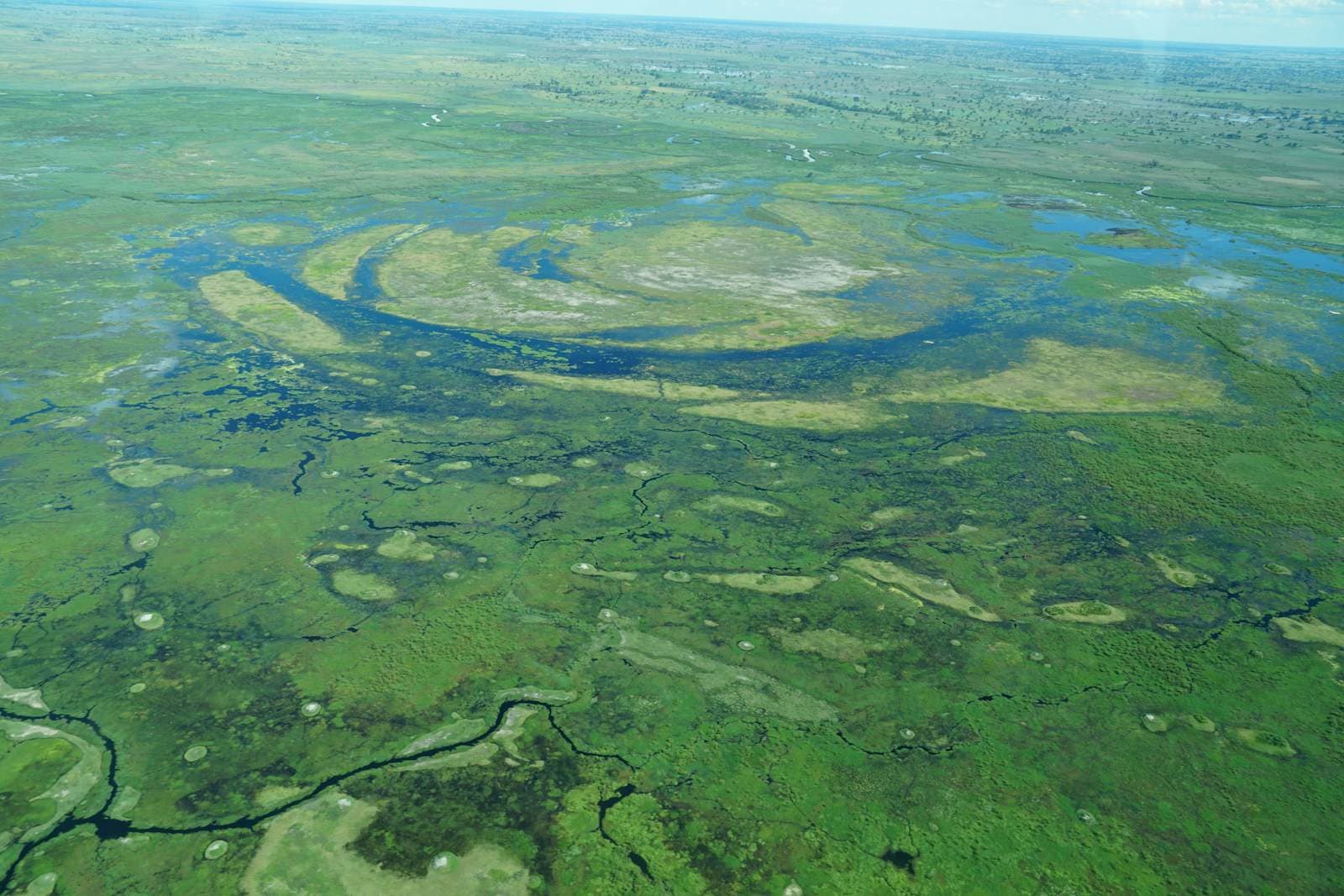
Why Moremi is the jewel of the delta
Moremi covers the eastern part of the Okavango Delta, where the waters of the annual flood meet the dry Kalahari sands: a mosaic of lagoons, palm islands, mopane forests and floodplains that concentrates an exceptional density of life. The system's richness is scientifically documented: the reference inventory published by Lars Ramberg and colleagues in 2006 in the journal Aquatic Sciences counts more than 1,300 plant species in the delta, 444 birds, 122 mammals and 71 fish — one of southern Africa's great biodiversity reservoirs, fed by a flood that paradoxically arrives in the middle of the dry season (study: doi.org/10.1007/s00027-006-0857-y).
For the traveller in a 4x4, this translates very concretely: wild dogs and leopards regularly seen, elephant concentrations among the highest on the continent in the dry season, and lagoon-side vigils where hippos, fish eagles and semi-aquatic antelope like the red lechwe parade past.
Access and gates: where to enter
Everything starts from Maun, Botswana's safari capital, where you usually collect the equipped 4x4. Moremi opens through two main entrances: South Gate (Maqwee), about two hours of gravel north of Maun, and North Gate (Khwai), on the Khwai River at the reserve's north-east. Inside, the two major poles are Xakanaxa and its lagoons, at the end of the central tongue of land, and Third Bridge, the legendary campsite set by a log bridge between two channels.
Distances are short on the map and long on the track: allow half a day between South Gate and Third Bridge in normal conditions, more at the height of the flood. Gate opening and closing times are strict (closure at sunset) and the rangers enforce them — plan your stages accordingly.
Campsites: booking is the real challenge
Moremi's paradox: driving in the reserve is within reach of any attentive 4x4 driver, but getting the campsites is a small war. The historic sites (Third Bridge, Xakanaxa, South Gate, Khwai) are run by separate private concessionaires, each with its own booking system, and the pitches — unfenced, visited at night by hyenas and elephants — number in the dozens, not hundreds. In high season (July-October), the best sites go nearly a year ahead.
Two practical rules: book the campsites before booking the flights, because they are what structures the itinerary; and settle the park fees in advance according to the procedure in force at the time of your trip — the arrangements (prepayment or payment at the gates, cash or card) change regularly in Botswana, so verify them when booking rather than discovering them at the barrier.
Driving: sand, water and reading the terrain
Moremi is earned behind the wheel. The deep sand of the mopane tracks demands deflated tyres and momentum; the water crossings — the local speciality, especially between Third Bridge and Xakanaxa and around Khwai — require the full routine: wade and check on foot when possible, watch another vehicle cross, enter in low first gear and drive out without stopping. Depth varies enormously with the flood: a trivial crossing in November can drown an engine in July.
The non-negotiable equipment: two spare wheels, a compressor, sand boards, a tow strap, a GPS with proper mapping (Tracks4Africa) and enough water and fuel for the entire stay inside the reserve — there is no fuel station or shop inside. Travelling with two vehicles remains the best insurance; alone, tell each gate your route for the day.
Which season for a Moremi self-drive?
The dry season (May-October) is the safe bet: passable tracks, low vegetation, wildlife concentrated at permanent water — with the magnificent paradox of the flood reaching the delta in June-August, filling the lagoons at the driest time of year. It is also the season of impossible bookings and corrugated tracks.
The green season (December-March) transforms the exercise: sumptuous landscapes, newborn animals, lower prices — but sometimes impassable tracks, whole sectors closed by water and daily storms. November and April, the two pivots, offer the best compromise for a first Moremi self-drive: an accessible reserve, few visitors, and an experience that stays adventurous without becoming an expedition.
The classic sequence: Moremi, Khwai, Savuti, Chobe
Moremi combines naturally with its northern neighbours in Botswana's great classic traverse: exit through North Gate, a stop in the Khwai community area (outside the reserve, where campfires and night drives are possible), then up to Savuti and its elephant-hunting lions, and finally the Chobe riverfront and its elephant herds before exiting at Kasane, gateway to Victoria Falls. A week of pure self-sufficient safari that many consider — we among them — the finest wildlife road trip on the continent.
What our guide says
Our 'Botswana on Your Own' guide details the Maun-Kasane traverse day by day: the contacts and booking procedures for each Moremi campsite, GPS points for the tricky water crossings, equipment checklists and the expedition's complete budget.
Travel tips
Get our independent-travel tips by email
The house methods — costed budgets, driving, itineraries — straight to your inbox. Instant bonus: our free excerpt “The 7 mistakes to avoid on a first Namibia road trip” and the current promo code.
No time to do it yourself?
A professional can take care of it: tailor-made trip, equipped 4x4 rental or a local guide. Describe your plans and, with your consent, we pass them on to partner professionals.
1. What you need
Before you go
Readers' questions
Can you visit Moremi in a rental 4x4 with no prior experience?
Moremi should not be your very first 4x4 terrain: deep sand and water crossings are the norm. If your experience is limited to Namibian gravel, plan a proper induction (Maun rental companies give serious briefings), travel with two vehicles if possible and avoid the height of the flood for your first crossings.
Are Moremi's campsites fenced?
No — that is the whole experience: hyenas, elephants and sometimes lions walk through camp at night. Basic rules keep you safe: food locked in the vehicle, tent zipped from dusk, a headlamp for any night movement, and never any food inside the tent.
Should you combine Moremi with a scenic flight or a mokoro trip?
Yes, if the budget allows: the 4x4 only shows the delta's eastern fringe. A light-aircraft flight from Maun reveals the system's scale, and a mokoro (poled canoe) outing from Khwai or the delta stations adds the water-level perspective. The three angles — track, air, water — complement each other more than they compete.