From our field notes
Argentina's Ruta 40: a legendary Patagonia road trip
Published 25 July 2026 · updated 25 July 2026 · 8 min read
By Clément Lacaille, publisher · our method
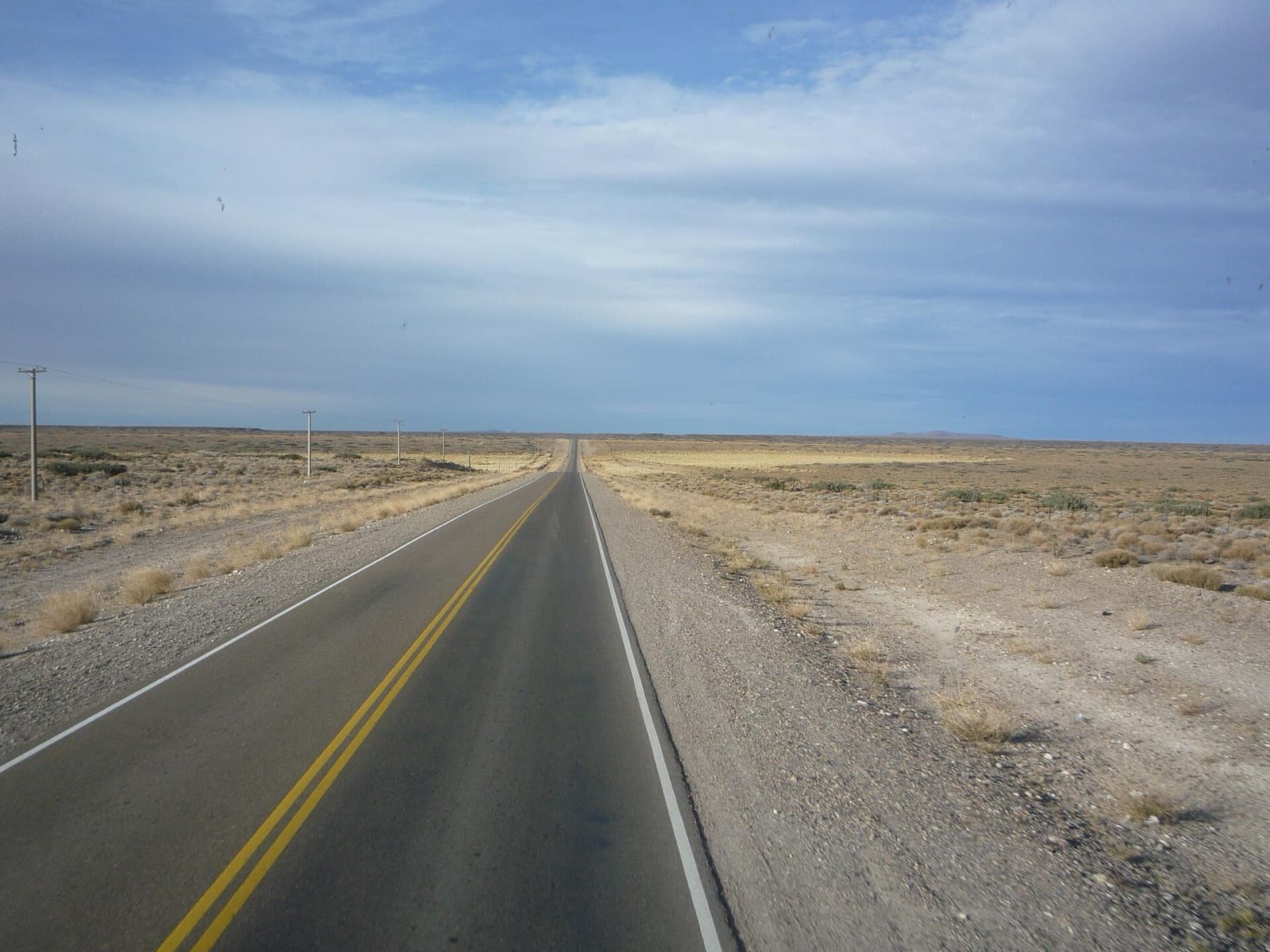
Ruta Nacional 40 is to Argentina what Route 66 is to the United States: over 5,000 km along the Andes, from the Bolivian border in the north to the ends of southern Patagonia. No one drives it all, but its Patagonian section — from Bariloche to El Calafate, via El Chaltén — concentrates the landscapes that fuel the dream: endless steppe, icy peaks, guanacos and a wind that becomes a character in its own right. Here's how to tackle this road trip, section by section, without being caught out by the distances.
A 5,000-km legend: which section to choose
Ruta 40 crosses Argentina north to south along the full length of the Andes. The self-drive traveller must choose: the north-west (Salta, colourful gorges, altiplano) offers colours and Andean villages, while the Patagonian south (Bariloche, El Chaltén, El Calafate) unrolls steppe, glaciers and mythic peaks like Fitz Roy. The two don't combine easily in one trip: better to focus on one or the other.
The Patagonian section is the most sought-after and impressive. From Bariloche to El Calafate, allow about 1,500 km, but a string of sites justifies taking your time: the Seven Lakes region near Bariloche, the Cueva de las Manos (Cave of the Hands, World Heritage), then the swing to El Chaltén, Argentina's trekking capital.
Gravel, fuel and wind: the three Patagonian realities
Much of Patagonian Ruta 40 is now paved, but some stretches remain ripio (gravel track), where caution is essential: reduced speed, safe distance to avoid flying stones, and care with washboard corrugations. The golden rule is fuel: stations can be 200 to 300 km apart, and running dry in the steppe isn't an option — fill up whenever you can, never below half a tank.
The Patagonian wind is the other challenge, often underestimated: crosswind gusts can shove a high vehicle and make opening the doors acrobatic. Drive with both hands on the wheel, anticipate the gaps between hills where the wind funnels, and beware oncoming vehicles that throw gravel and gusts.
Guanacos and wildlife: slow down in the steppe
The Patagonian steppe is home to guanacos, ñandús (Darwin's rheas), foxes and, around the lagoons, flamingos. The guanaco, the llama's wild cousin, readily crosses the road in herds — a frequent cause of accidents in Patagonia. Research on wildlife road mortality in Argentina has shown that road expansion fragments habitats and kills a notable share of mammals, particularly around Patagonia's protected areas.
In practice, this means easing off the moment a guanaco is in sight by the road: they're unpredictable and move in groups. Dusk is the riskiest time. That same vigilance also protects the rheas and the rare pumas, and is part of the experience: Ruta 40 is savoured slowly, not at breakneck speed.
| Patagonian section | Indicative distance | Key point |
|---|---|---|
| Bariloche – Esquel (Seven Lakes) | ~300 km | Forests, lakes, paved |
| Esquel – Perito Moreno (town) | ~600 km | Steppe, gravel in places |
| Cueva de las Manos | detour | Painted cave, UNESCO |
| Perito Moreno – El Chaltén | ~600 km | Strong wind, rare stations |
| El Chaltén – El Calafate | ~215 km | Fitz Roy then Perito Moreno glacier |
Free checklist
The Chile–Argentina border checklist for rental cars
The rental company's customs permit (ACM, OM-2261, Aduanas), insurance valid in the neighbouring country, SAG food checks at the paso, Andean passes and snow closures: every formality of a Chile–Argentina itinerary, in chronological order, on one printable page. Instant access, with the current promo code.
No time to do it yourself?
A professional can take care of it: tailor-made trip, equipped 4x4 rental or a local guide. Describe your plans and, with your consent, we pass them on to partner professionals.
1. What you need
Before you go
Readers' questions
Can you drive the whole of Ruta 40?
In theory yes (over 5,000 km), but almost no one does it in one go. Better to choose a section: the Andean north-west (Salta) for the colours, or the Patagonian south (Bariloche to El Calafate) for the steppe, glaciers and Fitz Roy.
Is Ruta 40 paved?
Largely yes, especially in the south, but some stretches remain ripio (gravel track): reduce speed, keep your distance and watch for washboard corrugations and flying gravel.
Should you worry about fuel on Ruta 40?
Yes, it's crucial: fuel stations can be 200 to 300 km apart in Patagonia. Fill up whenever you can and never drop below half a tank — running dry in the steppe is to be avoided at all costs.
Is there a wildlife risk on the road?
Yes, especially guanacos, which cross in herds and cause accidents in Patagonia. Ease off the moment an animal is in sight, especially at dusk, the riskiest time.