From our field notes
Driving in Norway: Speed Limits, Tunnels, Ferries and Wildlife — the Practical Guide
Published 2 August 2026 · updated 2 August 2026 · 8 min read
By Clément Lacaille, publisher · our method
Norway is probably the easiest country in Europe to drive in — immaculate roads, disciplined drivers, light traffic as soon as you leave Oslo — and at the same time one of the most disorienting: some of the lowest speed limits on the continent, near-zero alcohol tolerance, more than a thousand tunnels including some that dive under fjords, and ferries that are an integral part of the road. Here are the rules and reflexes to know before taking the wheel between two fjords.
Low speed limits and unforgiving fines
The basic rule always surprises visitors: outside built-up areas, the default speed limit is 80 km/h, and 50 km/h in towns. Only a few motorways around Oslo go up to 100 or 110 km/h. On fjord roads, posted limits often drop to 60 or even 50 km/h through bends and hamlets — and they should be taken seriously: Norwegian fines are among the highest in Europe, running to several hundred euros for even a moderate offence, with licence confiscation possible for serious speeding.
Enforcement is largely automated: fixed speed cameras ('fotoboks', announced by signs) and average-speed sections that measure your speed between two gantries, notably in tunnels. Another absolute rule: dipped headlights (or daytime running lights) must stay on at all times, day and night, all year round. Finally, the blood alcohol limit is 0.02% — effectively zero: a single drink is enough to exceed it, and penalties apply from the first offence.
The essential rules in one table
Here is a summary of what changes compared with driving in most of Europe.
| Rule | In Norway | Worth remembering |
|---|---|---|
| Speed outside towns | 80 km/h by default | Lower than most of Europe; frequent cameras |
| Speed in towns | 50 km/h, often 30 in residential zones | 30 zones heavily enforced near schools |
| Motorway | 100–110 km/h on a few stretches | Essentially around Oslo |
| Drink-driving | 0.02% blood alcohol | In practice: zero alcohol |
| Lights | Dipped headlights mandatory 24/7 | Check they are set to permanent mode |
| Tolls | Automatic number-plate charging (AutoPASS) | Nothing to do: the bill follows the rental car |
| Priority | Priority-to-the-right common off main roads | Except with the yellow diamond sign (priority road) |
More than 1,000 tunnels, some running under fjords
Norway has more than a thousand road tunnels, from 200-metre cuttings to the Lærdal Tunnel, the longest road tunnel in the world at 24.5 km between Aurland and Lærdal. Some are spectacular: subsea tunnels that plunge steeply under a fjord before climbing back up the other side, spiral tunnels, and even roundabouts carved into the rock where two galleries meet. Most are lit and well maintained, but the older, narrower and darker ones demand a real reduction in speed.
One point deserves particular attention: the entrance. A study by Finn Harald Amundsen and Guro Ranes covering nearly 600 Norwegian road tunnels, published in 2000 in the journal Tunnelling and Underground Space Technology, shows that accident rates are markedly higher in the entrance zone of tunnels than in their interior sections — the abrupt transition from daylight to darkness and the trajectory adjustment play a large part (study: doi.org/10.1016/s0886-7798(00)00024-9). The right reflexes: take off your sunglasses before entering, slow down, and leave a generous gap to the vehicle in front.
Ferries are part of the road
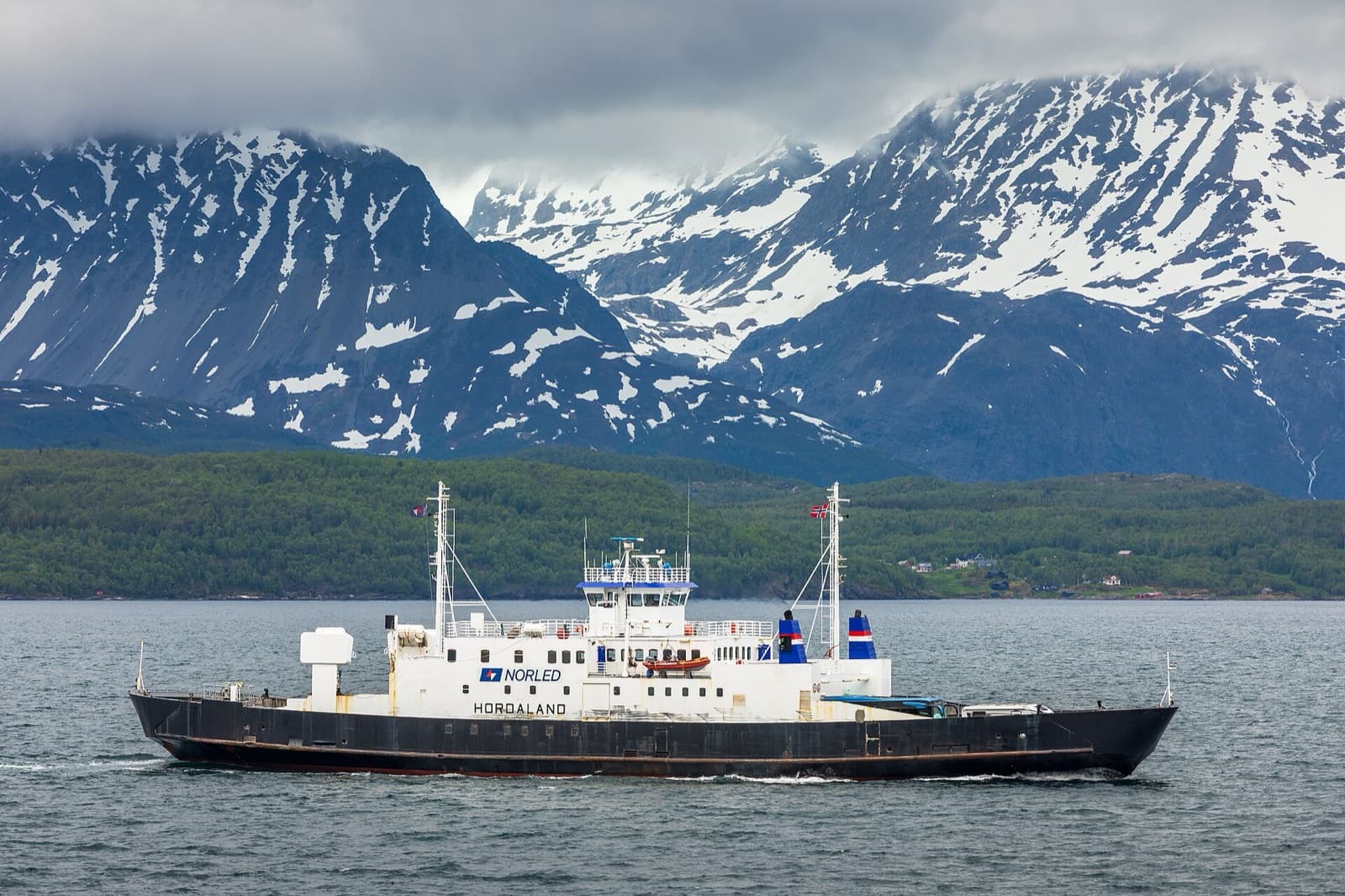
On the west coast there is no avoiding them: many national roads cross the fjords by ferry, and your GPS route includes these crossings like any other stretch of road. The main links run every 20 to 40 minutes during the day in summer, with no booking needed in most cases: you join the queue, drive on board, and payment increasingly happens automatically by number-plate recognition (the AutoPASS ferry system), billed to the rental company which then charges the card left as guarantee.
Two planning tips: first, build in slack — a longer-than-expected queue on a July Saturday can push your whole day back; second, check evening timetables, as some smaller crossings stop early or switch to reduced service off season. Crossings also count in the budget: from a few euros to several tens of euros depending on length, on top of urban tolls and toll tunnels — our article on tolls and AutoPASS explains exactly how it works with a rental car.
Moose, reindeer and winter driving
The triangular moose warning signs are not decorative: collisions with large wildlife are a real risk, especially at dawn and dusk, and even more so along forest edges in the east and centre of the country. In the north, reindeer occupy the road instead, sometimes in whole herds. The rule: slow down as soon as a sign marks a crossing zone, scan the verges, and never swerve violently to avoid an animal — hard braking in a straight line is always the better option.
Norway is very much drivable in winter — Norwegians drive all year round — but not in just any conditions: winter tyres are standard (rental companies fit all their vehicles in season, often with studded tyres in the north), mountain roads close or switch to convoy driving behind a snowplough, and days are very short above the Arctic Circle. If you are chasing the northern lights in a rental car, stay on cleared main roads and check pass closures before each leg — our article on when to visit Norway details what each season changes on the road.
Our verdict: easy, provided you change rhythm
Norwegian driving presents no technical difficulty in summer: roads in excellent condition, clear signage, calm drivers. The real adjustment is mental: between 80 km/h limits, winding fjord roads and ferries to slot in, you rarely average more than 50 to 60 km/h in real terms. A route that looks short on the map — Bergen to Geiranger, for instance — fills an entire day. Plan legs of 200 to 300 km at most, and Norway becomes one of the most beautiful countries in the world to drive.
To plan the full itinerary — fjords, the Atlantic Road, Lofoten — our 'Norway on Your Own' guide compiles the driving rules, ferry crossings and the opening calendar of the scenic mountain roads.
Travel tips
Get our independent-travel tips by email
The house methods — costed budgets, driving, itineraries — straight to your inbox. Instant bonus: our free excerpt “The 7 mistakes to avoid on a first Namibia road trip” and the current promo code.
No time to do it yourself?
A professional can take care of it: tailor-made trip, equipped 4x4 rental or a local guide. Describe your plans and, with your consent, we pass them on to partner professionals.
1. What you need
Before you go
Readers' questions
What is the speed limit in Norway?
80 km/h by default outside built-up areas, 50 km/h in towns, and 100 to 110 km/h on the few motorway sections, essentially around Oslo. Speeding is heavily penalised, with frequent fixed and average-speed cameras.
What is the drink-driving limit in Norway?
0.02% blood alcohol, one of the lowest thresholds in Europe. In practice a single drink is enough to exceed it: the only reasonable rule is not to drink at all before driving.
Do you need to book ferries in Norway?
In most cases, no: the main links run continuously, you board in queue order and payment happens by number-plate recognition. Just build in slack in high season and check evening timetables on the smaller crossings.
Can you drive in Norway in winter without snow experience?
Yes on the main roads, which are ploughed and where rental companies fit proper winter tyres. However, mountain roads can close or switch to convoy driving, and days are very short in the north: a flexible itinerary and short legs are essential.