From our field notes
Epupa Falls and Kaokoland by 4x4: how far can you go without a guide?
Published 26 August 2026 · updated 26 August 2026 · 7 min read
By Clément Lacaille, publisher · our method
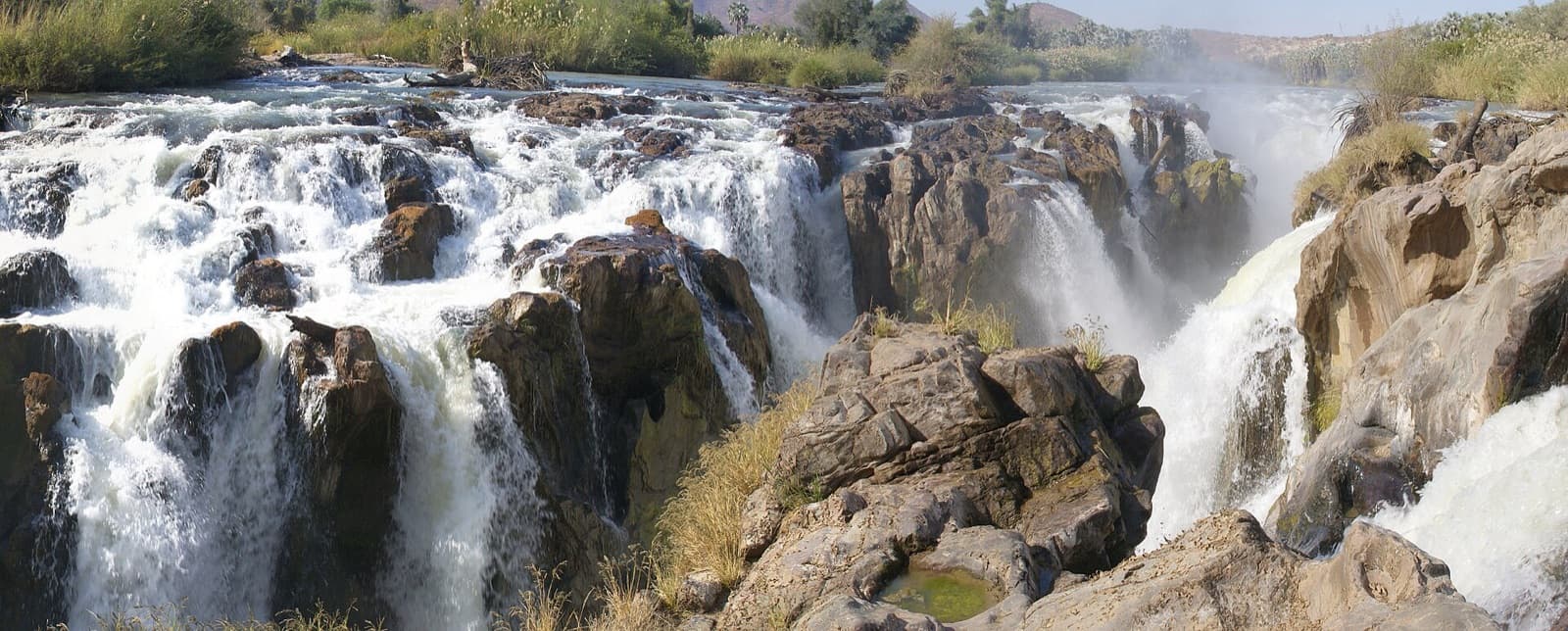
Past Opuwo, Namibia changes character: no more tar, no more supermarkets, and distances between water points are measured in hours of driving rather than kilometres. Kaokoland, the country's most remote region, draws a growing number of self-drive travellers toward Epupa Falls, on the Kunene River at the Angolan border — and many wonder how far they can push alone, without a guide or convoy. The D3700 track is manageable in a standard rental 4x4 without extreme off-road experience; Van Zyl's Pass, further north toward the Marienfluss, belongs to an entirely different category. Here's how to tell the two apart, what recent research says about tourism among the Himba, and where to find the last fuel stop.
Where Kaokoland begins, and why it needs different planning
Kaokoland — now part of the Kunene region — forms Namibia's north-western corner, beyond Damaraland and Etosha, past the triangle most self-drive travellers cover. Opuwo, its small regional capital, marks the turning point: the last town of any size before several days of gravel track, holding the last real shops, the last reliable fuel pump and the last continuous mobile signal before the Kunene River.
It's also Himba territory — semi-nomadic pastoralists whose traditional way of life remains visible from the road, which explains much of the region's tourist appeal, and some of the ethical questions that come with it.
To Opuwo: a road still manageable for most vehicles
From Kamanjab or Etosha, the C40 then the C41 link up to Opuwo on a wide, well-maintained gravel road, drivable much of the year in a high-clearance sedan as well as a 4x4 — the real shift only happens past the town. Fill up, load your water containers and check your signal before setting off again: beyond Opuwo, reliable fuel stations disappear.
The D3700 to Epupa: manageable in a standard 4x4, no extreme experience needed
From Opuwo, the D3700 track runs roughly 180 km north-west to Epupa Falls, following the Kunene valley for much of the way. Expect roughly two and a half to four hours of driving depending on pace and current conditions — a gravel track, rocky in places, but one that doesn't demand extreme off-road skills: a high-clearance 4x4 is enough, with no need to engage low range.
Caution still applies during the rainy season (November to March), when sections can deteriorate or temporary streams can cut the track after a storm — worth checking with your rental company or local lodges before setting off if you're travelling then.
Fuel, water and signal: Opuwo is the point of no return
Opuwo is the last reliable fuel stop before several days on gravel: beyond it, fuel outlets become scarce and unreliable, and Epupa's shops are limited to what campsites and lodges sell. The rule that already applies across self-drive Namibia — top up at every opportunity rather than waiting for the reserve — holds here with even less margin for error.
Mobile signal fades progressively past Opuwo and isn't reliably available in the Epupa valley, let alone further north: a satellite communication device (phone or beacon) becomes a genuine safety asset for anyone pushing beyond the established lodges, given how far help can be from a breakdown or accident.
Stopping at a Himba village: what the research says about tourism
Meeting the Himba is one of the region's main draws, but it comes with guardrails: visits are generally arranged with a local guide, for a contribution around N$1,000 a day according to guides specialising in the area, and spontaneously stopping at a village without permission or mediation is discouraged. Opuwo's Kaoko Information Centre, run by Himba people, organises visits with direct payment to the community visited — often presented as more respectful than an improvised roadside stop.
A 2024 study by Emilia Inman published in the journal Sustainability, on cultural dynamics and land use among the Himba of the Kunene region, notes that while tourism and community conservancies have brought income since Namibian independence, the direct monetary benefits for communities often remain modest and call for more transparent benefit-sharing models (study: doi.org/10.3390/su16041582). A reminder that a spontaneous, unpaid visit rarely benefits the community hosting it.
Beyond Epupa: Van Zyl's Pass and the Marienfluss, a different league of difficulty
For travellers wanting to push further toward the Marienfluss and Hartmann Valley, the notorious Van Zyl's Pass marks a sharp break from everything before it: roughly 15 km of descent over rocky, very rough terrain, with gradients reaching 24%, requiring low range and taking anywhere from three to six hours to cover barely ten kilometres of descent. The pass is only driven one way, toward the Marienfluss — climbing it is considered too dangerous, especially if meeting a vehicle coming down.
Specialist guides and Namibian 4x4 forums agree: this crossing is for drivers experienced in technical off-roading, ideally travelling in a convoy of several vehicles with a ground spotter guiding each manoeuvre — a world away from a standard rental 4x4 driven solo. A longer but noticeably less technical bypass track reaches the Marienfluss without the pass, for those who'd rather not risk it.
Summary: how far to push in a standard self-drive
Difficulty changes radically once past Epupa: this table summarises the sections rental-4x4 travellers encounter in Kaokoland.
| Section | What to know |
|---|---|
| Opuwo → Epupa Falls (D3700 track, ~180 km) | Manageable in a standard high-clearance 4x4, no extreme off-road experience needed |
| Around the Epupa lodges | The region's last comfort stop and last reliable mobile signal |
| Van Zyl's Pass (toward the Marienfluss) | Extreme: low range mandatory, convoy and ground spotter strongly recommended, for experienced drivers only |
| Marienfluss via the bypass track | Longer but without the pass: an option for those skipping Van Zyl's Pass |
What our guide covers
The "Namibia Self-Drive" guide details the logic to apply before any isolated track: fuel-range calculations, a checklist to run before a stretch with no mobile signal, and the criteria that should make you turn back rather than push through.
Travel tips
Get our independent-travel tips by email
The house methods — costed budgets, driving, itineraries — straight to your inbox. Instant bonus: our free excerpt “The 7 mistakes to avoid on a first Namibia road trip” and the current promo code.
No time to do it yourself?
A professional can take care of it: tailor-made trip, equipped 4x4 rental or a local guide. Describe your plans and, with your consent, we pass them on to partner professionals.
1. What you need
Before you go
Readers' questions
Do you need a guide to reach Epupa Falls in a rental 4x4?
No: the D3700 track from Opuwo is manageable self-drive in a standard high-clearance 4x4, without needing a guide or extreme off-road experience. A local guide is, however, recommended for visiting a Himba village properly.
What vehicle is needed for the track to Epupa?
A high-clearance 4x4 is enough for the 180 km of gravel between Opuwo and Epupa; low range isn't needed on this section, unlike Van Zyl's Pass further north.
Can you do Van Zyl's Pass alone in a standard rental 4x4?
It's not recommended. The pass requires low range, real experience of technical off-roading on rocky terrain and, ideally, a convoy of several vehicles with a ground spotter — a very different setup from a standard rental 4x4 road trip.
Where can you fill up before heading to Epupa?
In Opuwo, the last reliable fuel stop before several days on gravel: beyond it, fuel outlets become scarce and mobile signal fades progressively.