From our field notes
When to Visit Scotland? Weather, Seasons, Light and Midges
Published 30 July 2026 · updated 19 August 2026 · 8 min read
By Clément Lacaille, publisher · our method
Scotland is not a country to visit at random: between the endless days of June, the autumn colours and the summer invasion of midges in the Highlands, each season has its own character. Here is how to choose your time of year based on the weather, the light and your tolerance for biting midges.
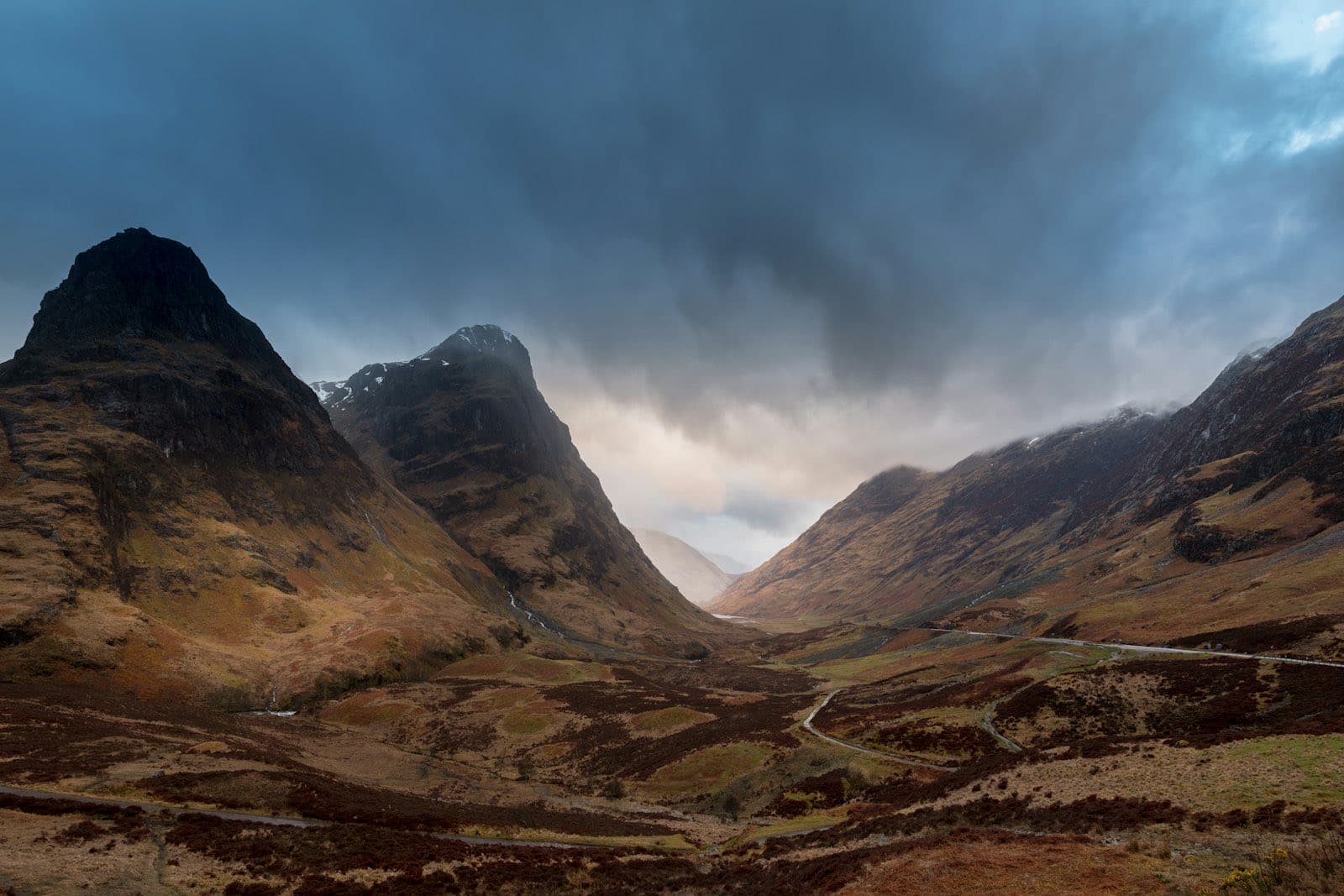
The Scottish climate: changeable, but rarely extreme
Forget the idea of a Scotland permanently drowned in rain. The climate is above all unpredictable: you can experience four seasons in a single day, with a shower, a burst of sunshine and a gust of wind within an hour. Temperatures stay mild, rarely scorching in summer (often 15 to 20 °C) and rarely freezing in the lowlands in winter. The west coast, watered by the Atlantic, is wetter than the drier east.
This variability changes everything about trip planning. You rarely come to Scotland to sunbathe, but for the light, the landscapes and the atmosphere. The golden rule: layer your clothing and bring a good waterproof jacket in every season. A fine day is never guaranteed, but bad weather can also deliver spectacular misty moods over the lochs and mountains.
Light and the long summer days
One of Scotland's great assets is its light. From May to September, the days grow remarkably long thanks to the northern latitude. Around the June solstice, it gets light very early in the morning and daylight lingers late into the evening, especially in the north and the islands where the twilight stretches on endlessly. This means long days for hiking and driving the scenic routes.
Conversely, winter pays the price of this latitude: in December, the sun rises late and sets in mid-afternoon. The days are short, which limits exploration time but offers in return superb low-angled light and sunrises you can catch without waking at dawn. Every season has its own quality of light.
The midge question: the real factor that changes everything
It's impossible to talk about a summer trip to Scotland without mentioning midges, those tiny biting flies (mainly Culicoides impunctatus) that haunt the Highlands and the west coast. They are active from roughly late May to September, with a marked peak in July and August, in damp and wooded areas, in calm weather, at dawn and dusk. Wind and full sunshine make them disappear: even a light breeze is enough to keep them at bay.
Their abundance is far from random. A study by Purse et al. published in 2012 in Medical and Veterinary Entomology ("Impacts of climate, host and landscape factors on Culicoides species in Scotland") modelled the influence of climate, host animals and landscape on these populations (study: doi.org/10.1111/j.1365-2915.2011.00991.x). It confirms why midges thrive above all in the damp, cool landscapes of the Highlands: humidity and vegetation favour them. In practice, you avoid them by favouring windy or exposed coastal areas, spring or autumn periods, and hours of bright, sunny daylight.
Season by season: strengths and drawbacks
Each Scottish season offers a different balance between light, crowds, prices and the presence of midges. Spring and autumn are often the best compromises for those who want the light without the summer invasion of flies.
Here is a concise overview to help you decide according to your travel priorities.
| Season | Strengths | Drawbacks |
|---|---|---|
| Spring (April-May) | Daffodils, lambs, lengthening days, few or no midges | Still fickle weather, cold water |
| Summer (June-August) | Maximum light, very long days, everything open | Crowds, high prices, peak midges |
| Autumn (September-October) | Blazing colours, deer rut, fewer people, midges declining | Shortening days, first rains |
| Winter (November-March) | Atmosphere, low prices, low-angled light, no midges | Very short days, roads and passes sometimes snowbound |
Spring and autumn: the best compromises
Spring, from April to May, is an ideal and underrated time to visit. The days grow longer, the countryside fills with daffodils, lambs frolic in the fields and, above all, midges are still absent or very rare. Visitor numbers remain moderate and prices are gentler than in high summer. It's the perfect moment to discover the Highlands without being eaten alive.
Autumn, in September and October, offers another magnificent face: the ferns and forests turn russet and gold, the roar of the deer rut echoes through the valleys, the summer crowds disperse and the midges decline sharply. The days shorten but stay comfortable, and the golden autumn light enhances the landscapes. Two seasons to favour for a successful first trip.
Summer and winter: who are they for?
Summer (June to August) remains the high season for good reasons: maximum light, endless days, festivals, everything open and accessible. But it is also the busiest and most expensive period, and the one when midges reach their peak in the Highlands and on the west coast. You go with your eyes open, betting on windy areas and keeping a repellent within reach.
Winter (November to March) is for travellers seeking atmosphere and quiet. Prices drop, sites are deserted and the low-angled light can be magical. In return, the days are very short and some mountain roads, passes and sections of the North Coast 500 can be snowbound or closed. It calls for careful driving and a flexible itinerary, but winter Scotland has a unique charm.
Our practical tips for choosing well
If you dread midges, aim for April-May or September-October, favour wind-exposed coasts and the east of the country rather than the damp interior of the Highlands. Always carry an effective repellent and a head net for summer evenings in high-risk areas. Plan your hikes and outdoor moments for the sunniest, windiest hours.
Whatever the season, pack clothing for all weathers, a good waterproof jacket and suitable footwear. Book early for summer, stay flexible in winter because of snow, and keep in mind that the northern light amply rewards those who accept the unpredictability of the Scottish sky.
Travel tips
Get our independent-travel tips by email
The house methods — costed budgets, driving, itineraries — straight to your inbox. Instant bonus: our free excerpt “The 7 mistakes to avoid on a first Namibia road trip” and the current promo code.
No time to do it yourself?
A professional can take care of it: tailor-made trip, equipped 4x4 rental or a local guide. Describe your plans and, with your consent, we pass them on to partner professionals.
1. What you need
Before you go
Readers' questions
What is the best time to visit Scotland?
For a good balance of light, weather and crowds, spring (April-May) and autumn (September-October) are ideal. You enjoy fine days, fewer people and, above all, very few midges compared with summer.
When are there midges in Scotland?
Midges are active from roughly late May to September, peaking in July and August, mainly in the Highlands and on the west coast, in damp and wooded areas, in calm weather, at dawn and dusk. Wind and full sunshine make them disappear.
Can you visit Scotland in winter?
Yes, winter offers a unique atmosphere, low prices and no midges. However, the days are very short and some mountain roads, including sections of the North Coast 500, can be snowbound. Careful driving and a flexible itinerary are essential.
How can you avoid midges on a summer trip?
Favour windy areas and exposed coasts, go out during sunny hours rather than at dawn or dusk, and carry an effective repellent as well as a head net. The damp interior of the Highlands is worst affected; wind remains your best ally.