From our field notes
When to Visit Sri Lanka: Understanding the Double Monsoon to Pick Your Season
Published 2 August 2026 · updated 2 August 2026 · 8 min read
By Clément Lacaille, publisher · our method
It's the question that stalls the most travellers when booking a flight to Sri Lanka: "when should I go?" The answer often confuses, because the island lives under two monsoons that never hit the same coasts at the same time. While the southwest is soaked in rain, the east stays dry and sunny — and the reverse six months later. Understanding this mechanism changes everything for choosing dates, building an itinerary and avoiding calendar traps (a park closure, a festival that slows the whole country).
The rule to remember: two monsoons, never in the same place
Sri Lanka is swept by two opposing monsoon systems. The southwest monsoon soaks the west coast, the south coast and the tea-growing hills, peaking between April and June with lighter, more scattered rain through September. The northeast monsoon, shorter and gentler, hits the east coast and the Jaffna peninsula, peaking in November-December with leftover showers into January. Between the two, two transition periods (March-April and October-November) bring short, localised thunderstorms across the whole island, mostly late in the day.
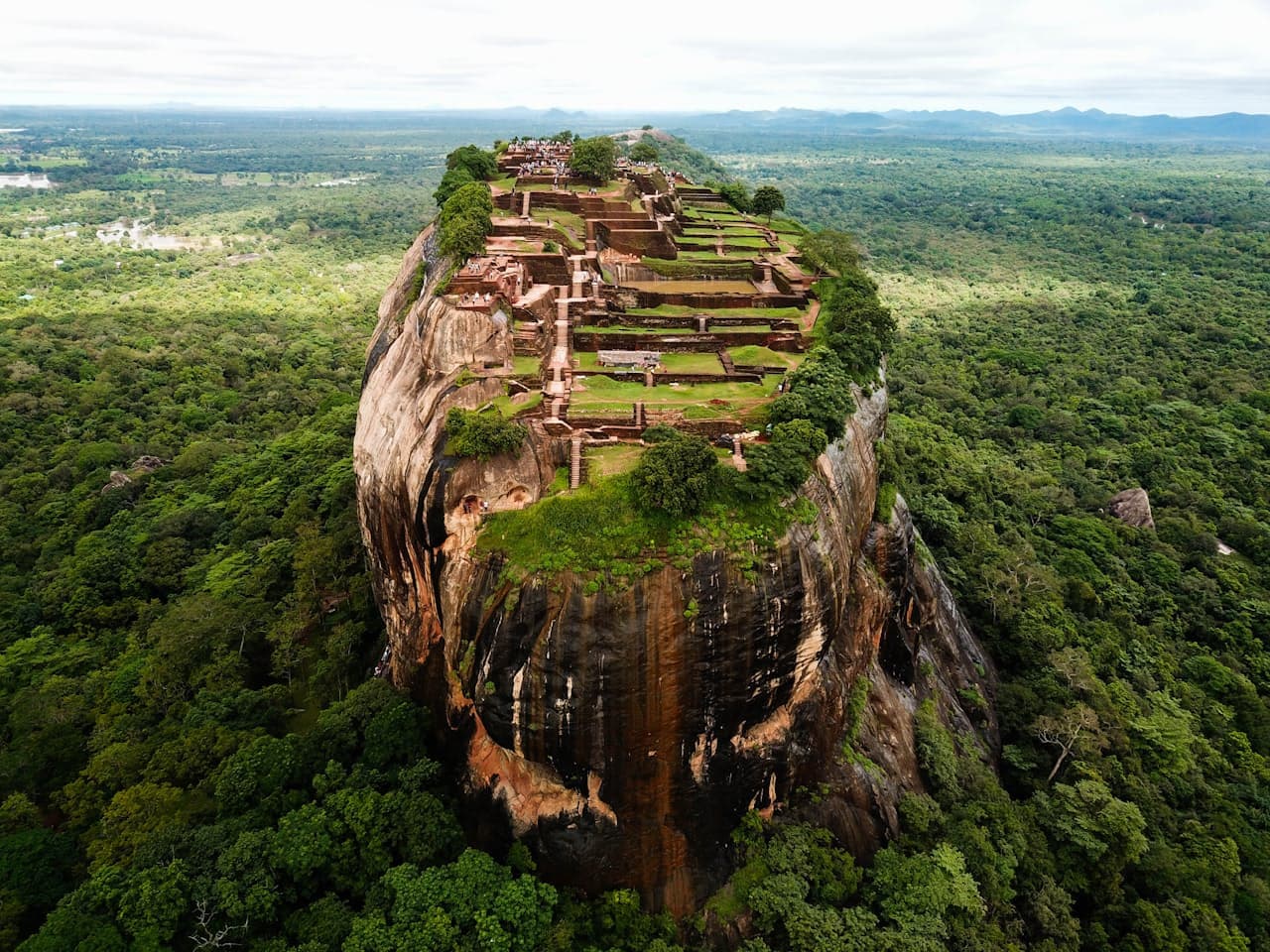
The practical, reassuring consequence: there is almost always a dry coast somewhere in Sri Lanka. The cultural triangle, centrally located and more sheltered, stays reasonably manageable for much of the year, which is why it often serves as the anchor of an itinerary whatever season you choose.
The calendar, region by region
This table sums up the windows to favour depending on the area — the base for building an itinerary that follows the dry weather rather than enduring the wet.
| Period | South and west (Galle, Mirissa, tea hills) | East and north (Arugam Bay, Trincomalee, Jaffna) | Cultural triangle (Sigiriya, Kandy) |
|---|---|---|---|
| December to March | Ideal: clear skies, calm sea | Rainy season, rough sea | Good, busiest period |
| April (New Year) | Transition, brief late-day storms | Improving gradually | Fine, but the country slows down |
| May to September | Active monsoon, frequent rain | Ideal: dry, flat sea, surf at Arugam Bay | Good, often clear skies |
| October to November | Transition, short storms | Transition, rain setting in | Fine, more humid |
December to March: the classic high season
This is the most in-demand window, and for good reason: the south, the west and the tea hills go through their driest, brightest period of the year, ideal for stringing together Kandy, Ella and its plantations, then the south coast towards Galle and Mirissa. It's also the best window for leopard spotting at Yala, where visibility benefits from vegetation that's thinner than in the green season.
The trade-off: this is the most expensive and most booked-out period, especially around Christmas and the Western New Year. On the classic circuit (cultural triangle, tea, south), it's best to book accommodation and the Kandy-to-Ella train several weeks ahead.
Yala closes at the end of the dry season: a calendar trap to plan around
Counter-intuitive but real: Yala, the star park for leopard safaris, closes every year for several weeks, generally from early September to mid-October depending on that year's rainfall, to let the vegetation and waterholes recover after the drought. Exact dates vary and are only confirmed late — worth checking with the Department of Wildlife Conservation before locking in an itinerary that includes this stop at the end of the southern dry season.
If it's closed, two parks stay open year-round and complement a road trip well: Udawalawe, more modest but reliable for elephants, and Wilpattu, wilder and less visited, on the northwest coast.
May to September: switch to the east coast, the best crowd-free option
When the southwest turns to rain, the east coast takes over with clear skies and a flat sea: this is high season at Arugam Bay, a surf spot known well beyond Asia, and at Trincomalee, quieter, known for diving and whale watching. The Jaffna peninsula, further north, also enjoys dry conditions in this period and pairs well with a detour to the islands of Delft and Nainativu.
This reversed season's appeal goes beyond weather alone: it's also when the classic south-and-west circuit empties of tourists and accommodation rates drop, for anyone willing to accept a few late-day showers on that side of the island.
Formalities: the free ETA for 40 nationalities since May 2026
Sri Lanka works on an Electronic Travel Authorization (ETA) system, applied for online before departure — never on arrival. Since 25 May 2026, this tourist ETA has become free for nationals of 40 countries, including France, Belgium, Switzerland and Canada, for tourist stays of up to 30 days; it's obtained online in about ten minutes, with confirmation within 24 to 48 hours. You'll need a passport valid at least six months past your arrival date, a return or onward ticket and an accommodation address for the application. Season has no bearing on these formalities, but it's worth finalising the ETA before booking non-changeable flights, in case of the rare refusal.
What a scientific study says about the ideal climate for Sri Lankan destinations
A study published in 2023 in the journal Climate by Samarasinghe, Wickramarachchi and colleagues applied the Holiday Climate Index to Sri Lanka's urban and beach destinations, comparing month-by-month climate scores over 2010-2018 (study online: doi.org/10.3390/cli11030048). Notable finding: the link between climate score and actual tourist arrivals is not as clear-cut as expected — several destinations keep a decent climate score outside the classic high season, which empirically confirms the on-the-ground intuition: there isn't one single good season to visit Sri Lanka, but a good season per region.
In practice, this invites thinking in terms of itinerary rather than fixed dates: rather than pinning the whole trip to December-March, a route that follows the dry weather — cultural triangle then east in May-September, or cultural triangle then south in December-March — noticeably widens the travel window without sacrificing the weather.
Two more calendar traps: New Year and the Perahera
Two highlights of the Sri Lankan calendar deserve planning around, regardless of the weather. The Sinhala and Tamil New Year, in mid-April, slows the country down for several days: shops close, roads get busy with family travel, transport sometimes fills up — a culturally rich moment to experience, but not ideal for a tight itinerary. Kandy's Esala Perahera, a grand procession of elephants and dancers honouring the relic of the tooth of the Buddha, is held in July or August depending on the Buddhist lunar calendar: an exceptional spectacle, but Kandy's accommodation gets booked out weeks ahead for the procession nights.
Our recommendation by traveller profile
First trip, classic circuit combining the cultural triangle, tea hills and south, hoping to spot leopards at Yala: aim for December to March and book early. Drawn to surfing, diving or escaping the classic circuit's crowds: May to September on the east coast, Arugam Bay and Trincomalee first. Tight budget and flexible about late-day showers: the shoulder seasons of March-April or October-November offer a good price-weather compromise on the cultural triangle.
Whatever season you choose, the question of how to get around stays separate from timing: our article on driving licences in Sri Lanka details why a car with driver or a rented tuk-tuk remain the best-suited options for the island, in dry season as in the rains. Our "Sri Lanka on Your Own" guide devotes a full chapter to the month-by-month calendar, with the traps to avoid for each type of trip.
Travel tips
Get our independent-travel tips by email
The house methods — costed budgets, driving, itineraries — straight to your inbox. Instant bonus: our free excerpt “The 7 mistakes to avoid on a first Namibia road trip” and the current promo code.
No time to do it yourself?
A professional can take care of it: tailor-made trip, equipped 4x4 rental or a local guide. Describe your plans and, with your consent, we pass them on to partner professionals.
1. What you need
Before you go
Readers' questions
What is the best time to visit Sri Lanka?
There isn't just one: December to March for the south, west and tea hills; May to September for the east coast (Arugam Bay, Trincomalee) and the north. The cultural triangle, more sheltered, stays manageable almost year-round.
When is Yala National Park closed?
Generally from early September to mid-October, to let the park recover after the drought. Exact dates vary each year with rainfall: worth checking before booking a safari over that period. Udawalawe and Wilpattu stay open year-round.
Should you avoid Sri Lanka during the monsoon?
No, as long as you adapt the itinerary: the southwest monsoon (April to September) affects the west and south, but leaves the east and north dry, and vice versa in winter with the northeast monsoon.
Is the tourist ETA free?
Since 25 May 2026, Sri Lanka's tourist ETA is free for nationals of 40 countries, including France, Belgium and Switzerland, for stays of up to 30 days. It must be applied for online before departure, never on arrival.