From our field notes
Camping in Namibia: NWR, private and community sites — how to book without a bad surprise
Published 17 July 2026 · updated 17 July 2026 · 9 min read
By Clément Lacaille, publisher · our method
"We'll book the campsite once we're there, we'll figure it out" — the sentence that breaks the most Namibia itineraries. Unlike the 4x4 or the flights, some campsites fill up months, sometimes a year in advance — and they're not the least scenic ones. Here's how Namibia's three camping families actually work, and in what order to book them.
Namibian camping is an institution, not a fallback
Forget European municipal campsites. In Namibia, camping is often the best choice, not just the budget default: huge, spaced-out pitches — often thirty metres between neighbours — an individual braai (the local built-in barbecue), clean ablutions, sometimes a shower open onto the savanna. Most self-drive travellers camp for at least half their trip, not out of budget necessity but because sleeping under a rooftop tent, braai fire and desert stars, is part of the experience.
The downside of this popularity: the best pitches, the ones giving privileged access to a site (Sesriem's gate into the park, Etosha's floodlit waterholes at night), are limited in number and run by a single public operator. That's where booking becomes a strategic variable in your itinerary — one to sort out before you even pick your 4x4.
The three camping families, and where to book them
Not all Namibian campsites are booked the same way, or with the same urgency. Telling the three families apart saves you stressing over pitches that almost never fill up, while missing others that sell out months ahead.
| Camp type | Examples | How to book |
|---|---|---|
| NWR (national parks) | Sesriem, Okaukuejo, Halali, Namutoni, Hobas, Ai-Ais | Only via nwr.com.na or reservations@nwr.com.na, often months ahead in high season |
| Private and lodge camps | The largest network, across the whole country | Online, by email or through an agency; flexible, bookable late except over peak holidays |
| Community camps | Spitzkoppe, Damaraland (Aba-Huab, Ugab...) | Often on arrival or the night before; rarely full, the money goes to the village |
NWR: the booking that locks in your itinerary
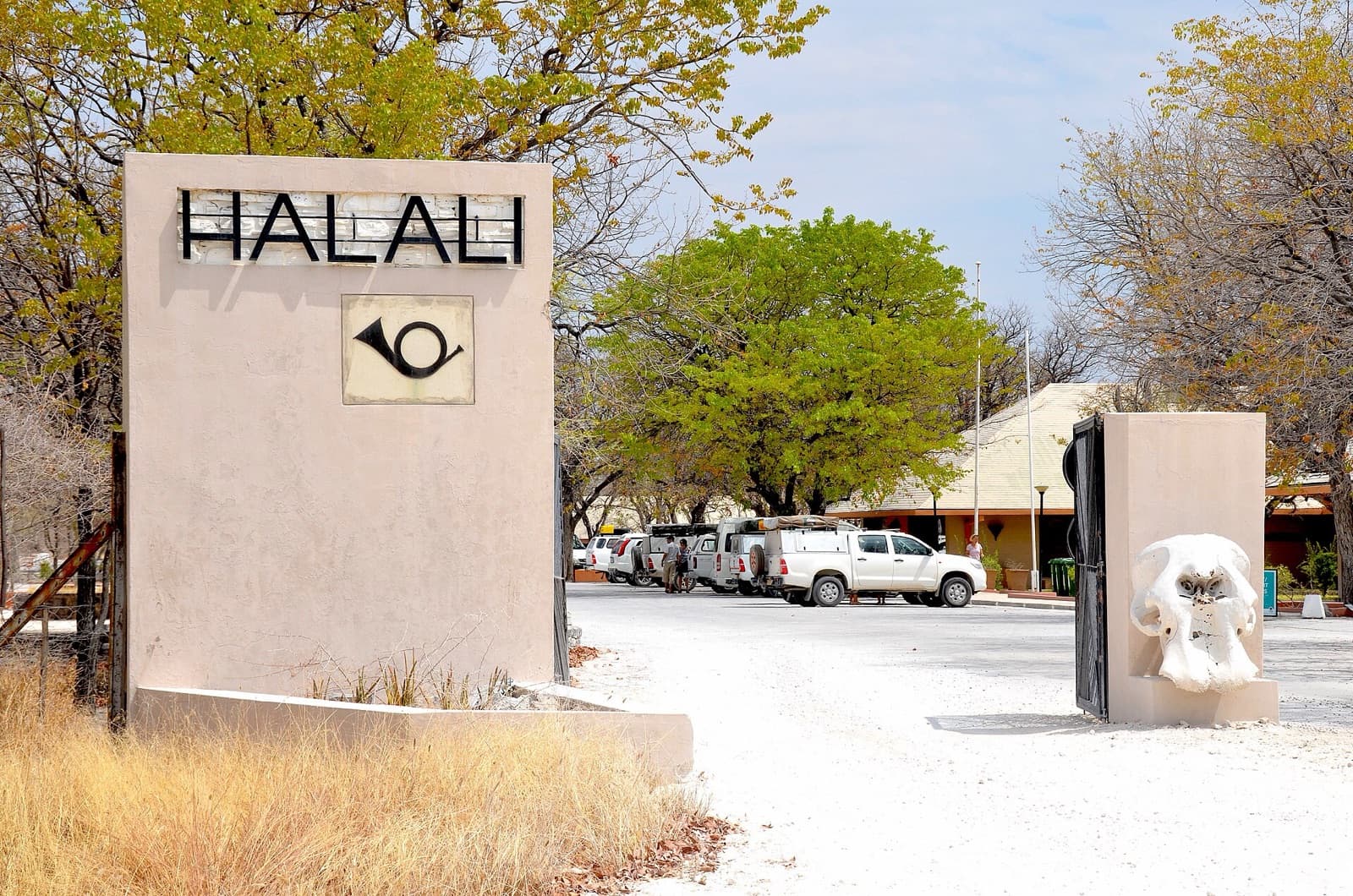
Namibia Wildlife Resorts (NWR) is the public body running the only campsites located inside the national parks — Sesriem for Sossusvlei and Deadvlei, Okaukuejo, Halali and Namutoni for Etosha, Hobas for Fish River Canyon, Ai-Ais for its hot springs. Their advantage is undisputed: staying at Sesriem gives you access through the park gate before the official opening time for visitors coming from outside, and Etosha's camps let you watch the floodlit waterholes at night, where wildlife keeps passing through after the tracks close.
Bookings are made directly with NWR, online or by email, and a deposit is in principle required no later than 60 days before your stay. In practice, for the dry high season (June to October, peaking July-August), spots at Sesriem and in Etosha's camps commonly book up to a year in advance: four months before departure, it's not unusual to find only a single night still available across your whole desired window. In low season, especially January-February, the pressure eases and booking a few weeks ahead is usually enough, except at the most sought-after pitches.
Wild camping in Namibia: what the law actually says
The question keeps coming up: can you just pitch a tent anywhere, outside official campsites? Legally, wild camping isn't explicitly banned across the whole country, but in practice it's nearly impossible to pull off. Almost all Namibian tracks run alongside private land (fenced farms) or protected areas where camping outside designated sites is prohibited, and the rare pockets of public land are neither marked nor safe.
The sensible move is simple: use the very dense network of official campsites that covers the whole country, rather than risk an improvised stop with poor access and poor safety. On the most remote stretches of the Kaokoland or the Caprivi Strip, community campsites play exactly that role of a reliable stopover — basic, but legal and safe.
Calendar: when to book depending on your season
The right time to book depends directly on when you're travelling. Here are the rules of thumb to plan your preparation timeline around.
| Travel period | Recommended booking lead time | Camps under pressure |
|---|---|---|
| Dry high season (June-October) | 9 to 12 months ahead | Sesriem, Okaukuejo, Halali, Namutoni |
| Shoulder season (April-May, November) | 3 to 6 months ahead | Mainly Sesriem, the rest more flexible |
| Green season (December-March) | 4 to 8 weeks usually enough | Year-end holidays and South African school holidays (December) |
Safety and common sense in an unfenced camp
Many Namibian campsites, especially community camps and some lodge camps in Damaraland or the Caprivi, are unfenced: wildlife roams freely at night. Nothing edible should stay outside or inside the rooftop tent — cooler box and food go into the vehicle, doors shut. Check the ground with a headlamp before climbing down the ladder after dark, more out of caution against scorpions than genuine worry.
- Set up camp before nightfall (6-7pm depending on the season): wandering around an unfamiliar pitch in the dark serves no purpose.
- Always carry water and a little cash in NAD: some community campsites and nearby fuel stations don't take cards.
- Bring your own complete cooking and sleeping gear: Namibian campsites provide the pitch and the braai, rarely more.
- Always confirm your NWR booking in writing and keep the receipt: the most in-demand camps check bookings on arrival.
Lock in your campsites before the 4x4: the right prep order
The classic mistake is booking the 4x4 first, then discovering the wanted NWR camps are full on those dates. The safer order runs the other way: fix your dates and route first, lock in the must-have NWR nights (Sesriem, Etosha) if travelling in high season, and only then book the vehicle and the rest of your accommodation, which stay far more flexible right up to a few weeks before departure.
That's exactly the logic laid out in the "Camping or lodge" chapter of our Namibia self-drive guide, with the mixed formula we recommend (roughly 70% camping nights, 30% indoors) and the full booking calendar, park by park, month by month.
Free excerpt
The 7 mistakes to avoid on a first Namibia road trip
A real excerpt from our Namibia expertise: 4x4 insurance, gravel speed, NWR bookings, season, fuel, Etosha… The 7 costly mistakes, and the right reflex for each. Instant access, with the current promo code.
No time to do it yourself?
A professional can take care of it: tailor-made trip, equipped 4x4 rental or a local guide. Describe your plans and, with your consent, we pass them on to partner professionals.
1. What you need
Before you go
Readers' questions
Do you really need to book campsites months ahead?
It depends on the camp and the season. For NWR camps at Sesriem and Etosha in the dry high season (June-October), yes: allow 9 to 12 months to be sure of your dates. For private and community campsites, a few weeks ahead is almost always enough, except over the year-end holidays.
Can you camp anywhere outside official Namibian campsites?
In practice, no, despite the lack of an explicit blanket ban: tracks run alongside fenced private land or protected areas where camping outside designated sites is forbidden. The network of official campsites, including community ones, covers the whole country and remains the only reliable, safe option.
How do you pay for a campsite in Namibia?
NWR campsites are booked and paid for in advance, with a deposit usually required up to 60 days before your stay. Private campsites mostly take cards on site; more remote community campsites sometimes run on cash (NAD) only — always keep some on you.