From our field notes
The Skeleton Coast in Namibia: Permits, Gates and Self-Drive Route
Published 21 July 2026 · updated 27 September 2026 · 8 min read
By Clément Lacaille, publisher · our method
In short: self-drive visitors can only enter the southern half of the park (from Ugab or Springbokwasser Gate up to Terrace Bay); the day permit is bought at the gate, and you must be out before closing unless you have booked Torra Bay or Terrace Bay. The Skeleton Coast fires the imagination before you've even set a tyre on it: rusting shipwrecks on an endless beach, dunes plunging into the Atlantic, a silence Namibia offers nowhere else. It's also one of the few stretches of the country where self-drive improvisation simply doesn't work — a permit to buy at the entrance, gates that close at a fixed hour, and a northern zone that's flatly closed to independent visitors. Here's how to plan this leg without ending up stuck at a barrier.
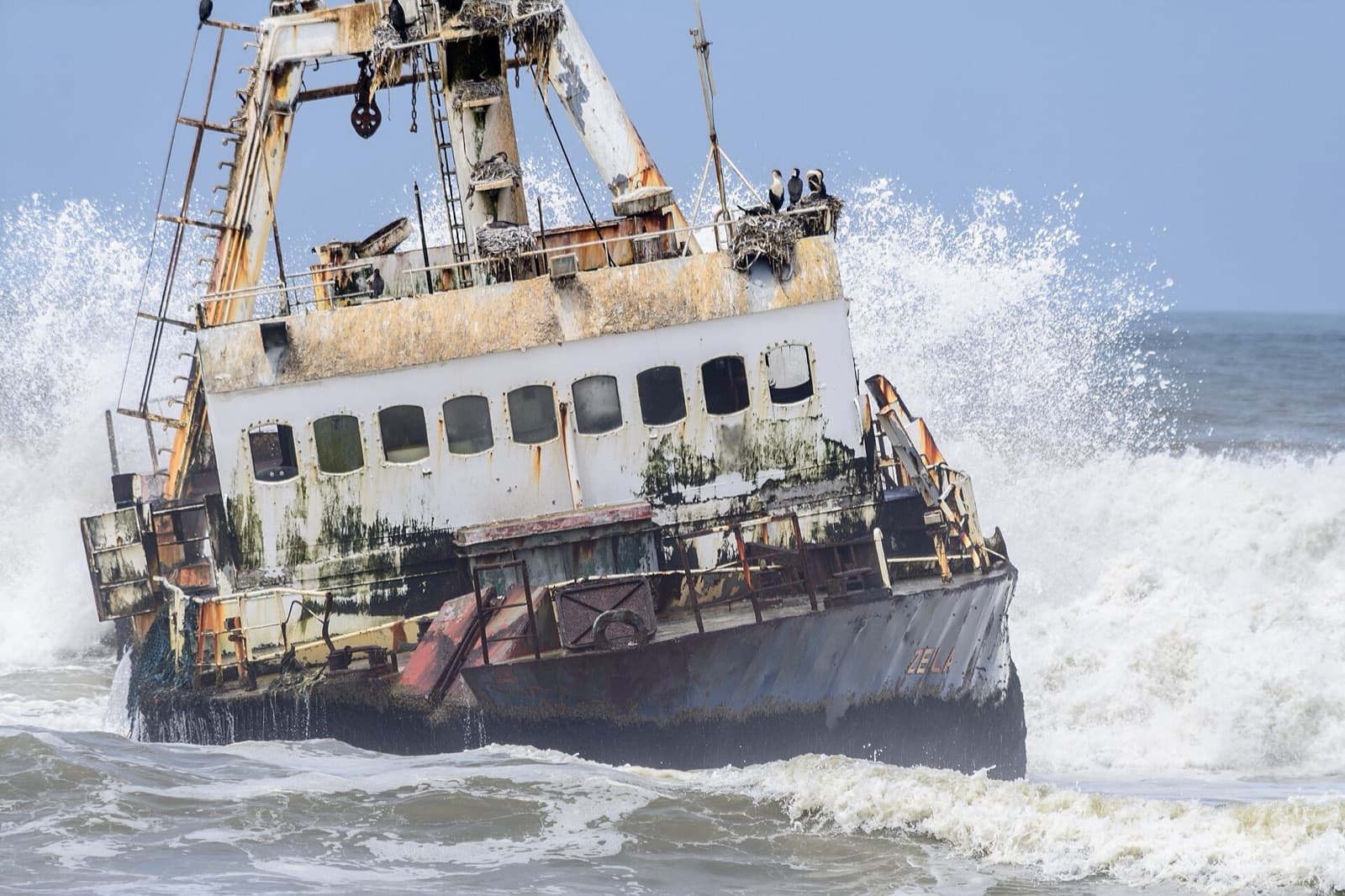
Two zones, two very different regimes
Skeleton Coast National Park runs for roughly 500 km of coastline, from the mouth of the Ugab River in the south to the Kunene River and the Angolan border in the north. For a self-drive traveller, only the southern half of the park, between Ugab Gate and Terrace Bay, is freely accessible — the section that holds the best-known wrecks (the Suiderkus, the Atlantic Wanderer), the cairns at the Skeleton Coast Gate, and the great lichen fields of the coastal desert.
North of Terrace Bay, the so-called "Skeleton Coast Wilderness" isn't open to self-drive at all: it's only reached by private plane or with the handful of upmarket concession camps that arrange their own guests' transport from Windhoek or Swakopmund. There's no point planning a route as far as the Kunene in a rental 4x4 — no one will wave you through the Terrace Bay barrier without a booking at one of those camps.
The entry permit, bought at the gate
Unlike Etosha or Sossusvlei, the Skeleton Coast isn't booked online in advance for a simple day crossing: the day permit is bought in cash or by card directly at Ugab Gate (south) or Springbokwasser Gate (east, coming from Damaraland), at the standard daily rate for Namibian parks, per person and per vehicle.
The entry form asks for your arrival time and planned route for the day — park rangers genuinely track vehicles that head into this isolated stretch, a useful safety net in case of a breakdown or getting bogged down far from any signal.
Gates that close on the dot — no exceptions
The most rigid rule of the Skeleton Coast: nobody sleeps on the road. The park opens at sunrise and closes its gates in the late afternoon; any visitor who hasn't booked one of the park's two campsites (Torra Bay, open in season only, and Terrace Bay) must be back out through a gate before closing, whichever entrance they used.
| Gate | Location | Typical use |
|---|---|---|
| Ugab Gate | South, on the coastal B2 from Henties Bay | Entry/exit for a day crossing |
| Springbokwasser Gate | East, link to Damaraland/Twyfelfontein | Cross-country route, often combined with Ugab Gate |
| Torra Bay | Seasonal campsite (mainly December–January) | Overnight stay, NWR booking required |
| Terrace Bay | Year-round campsite and lodge | Stopover with catering, northern limit of self-drive |
Fog, soft sand and fuel: the three traps of the terrain
Coastal fog — generated where the cold Benguela current meets the warm desert air — can cut visibility to a few dozen metres, most often in the morning. Drive slowly with headlights on, and don't trust the apparent straight line of the track: shifting dunes regularly encroach on the coastal road.
This fog is more than a driving hazard — it's also the main water source for an entire coastal ecosystem. A now-classic study by William Hamilton and Mary Seely, published in 1976 in the journal Nature, showed how a Namib Desert beetle, Onymacris unguicularis, climbs to the crest of a dune facing the wind to collect fog droplets on its body and let them trickle down to its mouth (study available online) — a behaviour that has become emblematic of this stretch of the Namibian coast.
Some secondary tracks inland cross pockets of soft sand where a poorly deflated vehicle can bog down fast; stick to the marked main routes if you have no desert driving experience. As for fuel, there's no filling station between Henties Bay and Terrace Bay: leave with a full tank and, if your route pushes further, carry a spare jerry can as detailed in our article on fuel range.
How much time to allow
A day crossing from Henties Bay or Damaraland, with a few stops at the wrecks and the Ugab ranger post, takes half a day to a full day. Spending a night at Terrace Bay lets you enjoy the coast at sunrise and sunset, the two moments when raking light best reveals the wrecks and coastal dunes — but book the campsite or lodge well ahead, availability there is limited.
Sources
Free excerpt
The 7 mistakes to avoid on a first Namibia road trip
A real excerpt from our Namibia expertise: 4x4 insurance, gravel speed, NWR bookings, season, fuel, Etosha… The 7 costly mistakes, and the right reflex for each. Instant access, with the current promo code.
No time to do it yourself?
A professional can take care of it: tailor-made trip, equipped 4x4 rental or a local guide. Describe your plans and, with your consent, we pass them on to partner professionals.
1. What you need
Before you go
Readers' questions
Can you book the Skeleton Coast entry permit in advance?
No, for a simple day crossing the permit is bought directly at Ugab Gate or Springbokwasser Gate. Only the campsites at Torra Bay and Terrace Bay are booked ahead through Namibia Wildlife Resorts (NWR).
Can you drive as far as the Angolan border in a rental 4x4?
No. North of Terrace Bay, the Skeleton Coast Wilderness isn't open to self-drive: it's only visited by private plane or via concession camps that arrange their own guests' transport.
Is there fuel along the Skeleton Coast's coastal road?
None between Henties Bay and Terrace Bay. Leave with a full tank and, depending on your route, carry a spare jerry can.
Can you sleep in your vehicle by the roadside inside the park?
No. Gates close in the late afternoon and any visitor without a booking at Torra Bay or Terrace Bay must have left the park before closing.